Willoughby Canal Algae Alert Lifted: Lake Conway Canal Clears on November 18 Samples
After a month of warnings east of Lake Conway, Orange County health officials lifted the Willoughby Canal algae alert on November 20 following November 18 DEP samples that detected no toxins, though a bloom remained visible in the water.
4 minute read
For a month, the water behind the houses east of Lake Conway — the water people paddle before breakfast and walk their dogs beside in the evening — carried a plain warning: stay out. This week, that warning came off. On November 20, 2026, the Florida Department of Health in Orange County (DOH-Orange) announced that it had lifted the health alert for harmful blue-green algae toxins in Willoughby Canal, east of Lake Conway, after follow-up water samples taken by the Florida Department of Environmental Protection (DEP) did not detect algae toxins. The public, the department says, may resume water-related activities.
What turned an old advisory into news this week is a change in the calendar. The alert now lifted was issued on October 23, 2026, based on water samples taken October 19. When this desk weighed that alert in earlier runs, it declined to present it as current news: a health claim resting on October water, with no newer result behind it. The result behind this week’s change is new. DEP’s Algal Bloom Dashboard records a sampling visit to Willoughby Canal, east of Lake Conway, on November 18, 2026, at 12:20 p.m.: a bloom was observed, and microcystin — the blue-green algae toxin the alert system tracks — was not detected. Two weeks earlier, a November 4 sample at the same point had detected microcystin at a low estimated level, flagged on the dashboard as falling between the laboratory’s detection and quantitation limits.
Lifted is not the same as gone
Even as it lifted the alert, DOH-Orange stopped short of declaring the canal clear for the season. “It is important that the public exercise caution as blue-green algae bloom status can change when conditions are favorable,” the department says, advising residents and visitors to avoid contact with the water if they see algae blooms. The November 18 dashboard entry makes the same point in data: the bloom remained visible on the day the toxin test came back clean. Blue-green algae, the department notes, can produce toxins harmful to humans and pets as well as to fish and other aquatic animals, and sensitive individuals — children, the elderly and the immunocompromised — may still be at risk even at low concentrations and should avoid any exposure.
A canal in the Conway chain’s front yard
Willoughby Canal feeds the east side of Lake Conway in the Conway neighborhood, where the chain of lakes serves as the front yard for hundreds of homes. For those residents, the practical news is narrow and real: the October alert is over, on the strength of a November sample, and the standing advice returns to the ordinary rule — look at the water before you or your animals get in.
Elsewhere on the water this week, the algae news ran in both directions, which is the honest shape of this beat in November. Three days before the Willoughby lift, DOH-Orange issued a new health alert for Lake Pearl, based on November 12 samples; on the same day the Willoughby alert came off, DOH-Osceola issued a health alert for Lake Marian in Osceola County, based on November 18 samples. Each water is its own measurement. The Citizen’s water and wildlife coverage is collected in the Environment archive, and much of this watershed is governed by the Middle St. Johns River Basin Plan that the water management district adopted this month.
How to report a bloom, and where to ask
Current water-quality status and health notifications are published on Protecting Florida Together, where residents can also subscribe to notifications for their area. Algae blooms can be reported to DEP online or at 855-305-3903. Symptoms from exposure to a harmful algae bloom should be reported to the Florida Poison Information Center at 800-222-1222, and a pet believed ill after contact with blue-green algae water should be taken to a veterinarian. Dead, diseased or abnormally behaving fish or wildlife go to the Florida Fish and Wildlife Conservation Commission online or at 800-636-0511; other health questions about blue-green algae go to DOH-Orange at 407-723-5004.
Sources & notes
Every fact in this article comes from primary sources checked November 21, 2026. The lift is from the Florida Department of Health in Orange County’s release, “DOH-Orange Lifts Blue-Green Algae Health Alert for Willoughby Canal (East of Lake Conway),” dated November 20, 2026, at orange.floridahealth.gov: the lifting of the alert issued October 23, 2026; the statement that follow-up water samples taken by DEP did not detect algae toxins and that the public may resume water-related activities; the caution that bloom status can change and that visible blooms should be avoided; the description of blue-green algae and of the risk to sensitive individuals; and the reporting and contact channels (DEP 855-305-3903, Florida Poison Information Center 800-222-1222, FWC 800-636-0511, DOH-Orange 407-723-5004). The sample dates are from the Florida DEP Algal Bloom Dashboard (floridadep.gov/AlgalBloom), checked live November 21, 2026: Willoughby Canal – E of Lake Conway, November 18, 2026, 12:20 p.m., bloom observed, microcystin not detected; and November 4, 2026, 9:43 a.m., bloom observed, microcystin detected at a value the dashboard flags with its “I” qualifier (between the laboratory method detection limit and the practical quantitation limit; the dashboard shows no unit, so no figure is asserted here). The October 19, 2026 sample date behind the original alert is from DOH-Orange’s October 23, 2026 alert release, on this desk’s record. This story notes a genuine change from this desk’s earlier position: the Willoughby alert was previously not reported as current because it rested on October 19 samples; the November 18 resample is the new fact that changes that.
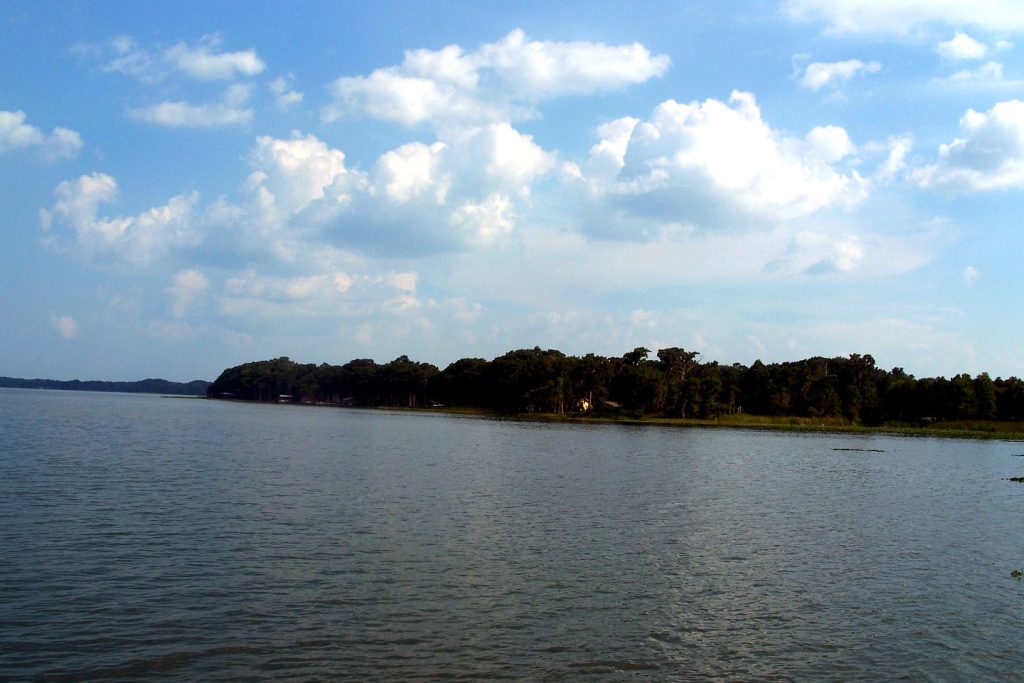
File photo: Lake Harris shoreline at Leesburg, in Lake County — not Willoughby Canal. Photo: Ebyabe, CC BY-SA, via Wikimedia Commons; the paper’s photo grade applied. Featured image reused from the Citizen’s Lake Pearl algae coverage.
Orlando Citizen by email
The weekly edition, in your inbox
One email, every Saturday: the week’s edition of Orlando Citizen — the week’s stories, rankings and winners, gathered in one place. Free, and you can unsubscribe at any time.
Related Stories
Editor’s Picks
Spotted an error? Tell us — corrections · How we rank
