Orlando Growth: 300,000 New Residents Since 2020, and a $400,000 Home Testing Whether They Can Stay
Orlando has added close to 300,000 new residents since 2020 and grown into an economy of almost $250 billion, yet the Orlando Economic Partnership reports that more domestic residents left than arrived last year as a roughly $400,000 median home price tests whether teachers, nurses and new graduates can afford to live there.
5 minute read
Real Estate & Growth
Orlando Growth: 300,000 New Residents Since 2020, and a $400,000 Home Testing Whether They Can Stay
For a teacher, a nurse or a new graduate weighing a future in Central Florida, the price of staying now hovers around $400,000 — a threshold that hung over the room on November 17, when more than 200 business, community and elected leaders gathered at Full Sail University in Winter Park to hear the region’s growth story told back to them. Orlando has added close to 300,000 new residents since 2020 and built a regional economy of almost $250 billion, the Orlando Economic Partnership reported at its 2026 Regional Economic Summit. Yet last year, on the Partnership’s own account, more domestic residents left the region than arrived — and its researchers believe the price of a home is a reason why.
The figures come from the summit account published on November 17, 2026, by the Orlando Economic Partnership (OEP), the region’s economic development organization. They represent the Partnership’s own data and its own reading of that data, and this story reports them as such: the numbers below are OEP’s, stated by OEP, and where this desk tracks a related measure in another series, it is named separately and never merged.
Growth with, in the Partnership’s words, real pressure points
At first glance, the labor numbers still read like a boom. On OEP’s count, the region added 14,300 new jobs in the year ending in September 2026 — more than at the same point a year earlier, and faster than both the state and national rates. In the Partnership’s latest survey of local businesses, a majority reported feeling optimistic about their prospects, largely, OEP said, on the strength of recent performance. (For the state’s separate count of the labor market, this paper’s Jobs desk reported that metro unemployment held at 4.2% in October, a distinct source kept apart here.)
The strain appears in the narrower detail OEP itself laid out. According to Neil Hamilton, OEP’s Senior Vice President of Research & Strategy, just two sectors accounted for more than 80% of net job growth over the past year, while several others lost jobs, contributing to a rise in unemployment. “Much of that softness has been in highly-competitive, consumer-facing sectors – retail and restaurants – where businesses simply aren’t able to pass along higher costs to customers after a period of sustained high inflation,” Hamilton said. “The economics for those businesses are really challenging right now.”
Housing is one of three factors being watched — and the one named as a workforce issue
In the Partnership’s telling, three forces now require close monitoring: migration, housing, and innovation. Migration has historically driven Central Florida’s growth, but affordability challenges have affected people’s ability to live in the region. The median home price is currently around $400,000 in the Orlando region, OEP says — its own rounded figure. In a separate closed-sale series compiled by the Orlando Regional REALTOR® Association, this desk’s metro market coverage recorded an October median sale price of $398,719. The two figures sit close, though they are not the same figure, and neither stands in for the other here.
Hamilton drew the line directly from home prices to the hiring pool. “I have to believe these dynamics – higher home prices, and a slowdown in migration – are related,” Hamilton said. “This is a workforce issue and an economic one: if our teachers, nurses and new graduates can’t live here, employers can’t hire here.” Nor can the region count automatically on arrivals from abroad: recent changes in U.S. immigration policy, OEP added, cast a shadow over the future inflow of international residents, leaving Central Florida facing a new reality in which future population growth, in the Partnership’s words, can no longer be assumed but will need to be earned.
“So, our region is a story of growth with real pressure points,” Hamilton said. “People continue to choose Orlando, employers continue to invest, and there’s never been more opportunity. But at the same time shifting migration patterns, reduced housing affordability, and transportation challenges have all emerged as constraints on reaching our full potential.”
What the Partnership counts as its own record since 2017
Alongside those warnings, OEP President and CEO Tim Giuliani pointed to the Partnership’s own ledger since its start in 2017. Its economic development efforts, OEP says, have led to more than 250 company relocations and/or expansion projects representing nearly 35,000 new jobs and $4.2 billion in capital investment. Today, OEP estimates, those jobs and investments support $17.6 billion in annual regional GDP — 7.5% of the regional economy — along with $6.8 billion in annual payroll and $71.6 million in annual local tax revenue across Orange, Osceola and Seminole counties and the City of Orlando. Those totals are the Partnership’s estimates of its own program, reported here as its claims rather than as this desk’s independent count.
At Full Sail University in Winter Park, with the Greater Orlando Aviation Authority as presenting sponsor, the audience also heard a national perspective from keynote speaker Daniel Silver, Head of Industry & Regional Insights for J.P. Morgan Commercial Banking. OEP’s Sheena Fowler, Senior Vice President of Economic Development & Innovation, laid out four interconnected capabilities the Partnership treats as the region’s differentiating strengths: sensing and advanced hardware; autonomous and intelligent systems; synthetic environments and experiences; and human performance. “Orlando is an economy at the intersection of art and science, with the ability to create, test, build and scale the boldest ideas, all in one market,” Giuliani said.
What lingered after the summit, though, was the question Hamilton posed from inside the growth story itself. A region that added close to 300,000 people in six years now has to earn its next arrivals — and on the Partnership’s own evidence, whether they come, and whether they stay, turns in part on whether a teacher or a nurse can afford to live in the region’s neighbourhoods.
More from this desk: the Real Estate & Growth archive, the beats index, and this desk’s October existing-home sales report.
Sources & notes
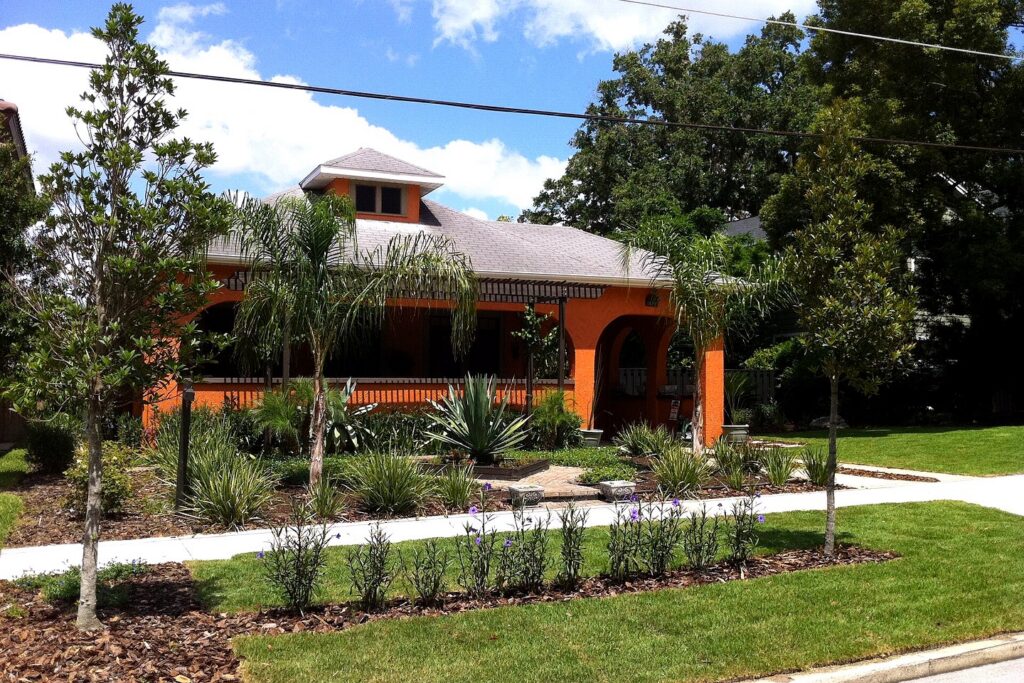
All figures and quotations are from the Orlando Economic Partnership’s account of its 2026 Regional Economic Summit, “The Orlando Economic Partnership Defines Orlando’s Economic Advantage at 2026 Regional Economic Summit,” published November 17, 2026 at news.orlando.org, read in full on November 22, 2026: attendance of more than 200 leaders at Full Sail University; close to 300,000 new residents since 2020; regional GDP almost $250 billion; 14,300 new jobs in the year ending September 2026; two sectors accounting for more than 80% of net job growth; median home price currently around $400,000 (OEP’s figure); more domestic residents leaving than arriving last year; OEP programme totals since 2017 (more than 250 projects, nearly 35,000 jobs, $4.2 billion capital investment, and its estimates of $17.6 billion annual GDP supported, $6.8 billion payroll and $71.6 million local tax revenue) — all reported as OEP’s data and estimates, as stated in the story. Quotations from Neil Hamilton and Tim Giuliani are reproduced verbatim from the OEP account. The ORRA closed-sale median of $398,719 for October 2026 is this desk’s prior reporting, named in the story as a separate measure. Featured image: series file photograph carried from this desk’s October Zillow home-value report, reused as a file photo.
Orlando Citizen by email
The weekly edition, in your inbox
One email, every Saturday: the week’s edition of Orlando Citizen — the week’s stories, rankings and winners, gathered in one place. Free, and you can unsubscribe at any time.
Related Stories
 Real Estate & GrowthOrlando Rent Prices: Renting a House Takes $16,911 Less Income Than Buying One, Zillow FindsReal Estate & GrowthOrlando Housing Market: U.S. Building Permits Fall 7.4% in October, Single-Family Permits Drop 8.7%
 Real Estate & GrowthOrlando Home Prices: Single-Family Median Slips to $439,685 as Metro Sales Fall 9.2% in October
Editor’s Picks
Spotted an error? Tell us — corrections · How we rank