Orange County Data Centers: Growth Must Pay for Its Water and Power Before It Builds
A commissioner said a data center exceeding 50 megawatts could use up to 5 million gallons of water a day, and Orange County should make such projects disclose what they will draw and who will pay before it accepts an application.
4 minute read
OPINION — Fair Share
In September, Commissioner Kelly Martinez Semrad asked her colleagues to consider how much water a single data center could use. A large-scale facility exceeding 50 megawatts, she told the commission, could consume up to 5 million gallons a day. That was the equivalent, in her words, of 1.5 Winter Parks, or 50,000 people, every day. Orange County already projects a 96-million-gallon water shortfall by 2045. At the scale the industry now builds, a single facility could make a claim on the county’s water supply comparable to that of a city.
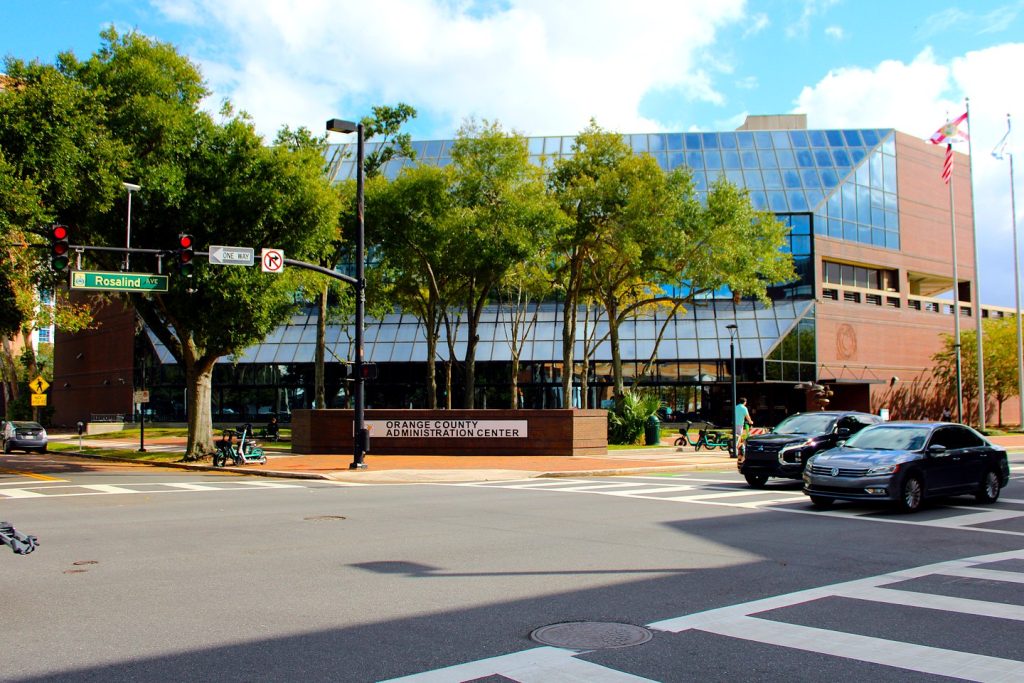
On Tuesday, December 1, the commission will hear an ordinance that would give county staff twelve months to write rules for data centers in unincorporated Orange County. During that time, the county would pause the acceptance, processing and review of applications. The draft, listed as item 16, File 26-1371, identifies a basic gap. Neither the comprehensive plan nor the county code specifically defines a data center.
A boom that bills the people who live here
Dozens of residents spoke at the September meeting. No one there, including Semrad, said an application was already in the queue. By the time of the discussion, she had received over 800 emails asking for a moratorium, all before the county had received any applications. Residents had looked at a proposed land use their code did not define and at a water supply the county already expected to fall short. They asked for rules before the first filing arrived. I have argued since this column began that Orlando’s growth is a set of choices. That request put one of those choices plainly.
The region knows the other sequence. A project wins approval under rules written for warehouses and office parks. Once the concrete is poured, residents learn what it takes to power and cool the facility and how much noise it makes. Semrad said operations could be as loud as 100 decibels. Hearings then take up decisions that are hard to reverse. State Representative Anna Eskamani made that point about the land during public comment. Once a data center is built, she said, it is very hard for the land to ever be something else again.
What the other side gets right
Clarence is right that a moratorium imposes a cost on landowners and that the county should say so plainly. He has spent a career catching governments that obscure costs like this one. He is also right about the blank effective date in the draft. The county should fill it in and publish it. The question before the commission is whether a county with no definition, no load standard and no water rule should allow the first hyperscale filing to set a precedent by default. Clarence and I agree that drawing from a shared aquifer without paying for that use amounts to a subsidy. Both of us oppose subsidies to profitable industries on principle.
The industry can pay its own way. Before the county accepts an application for a facility above the draft’s 20-megawatt threshold, it should publish the project’s water and power demands, put a price on them and set conditions. The public should know who will supply the water and power, who will pay for the capacity and what happens to ratepayers and the aquifer if the projections are wrong. Growth must pay for what it uses. A facility that can meet that test can proceed under rules the county has taken twelve months to write.
The vote that matters
SB 484, the state law the governor signed earlier this year, preserved local governments’ authority to regulate these facilities. Eskamani said she was grateful that authority exists. So am I. The commission has the chance to use it on December 1. A yes vote pauses applications covered by the draft for twelve months. The pause expires unless a future board extends it in public, and the draft exempts smaller facilities, repairs, life-safety work and vested rights. A no vote leaves the first applicant’s lawyers to shape the rules the county could have written in public.
Howard’s ledger case against the pause is here, and Shepherd asks what it looks like from the street. The Citizen’s news report on the December 1 agenda is here, and this desk’s other arguments live at the Opinion hub. The people who cool, clean and power this county’s boom were never asked to subsidise it with their water. On December 1, their commissioners can take up the question of who pays before an application comes in.
Sources & notes
Every factual claim in this column was checked against: Orange County’s published Long Range Agenda for Tuesday, December 1, 2026 (item 16, Ordinance Public Hearings); the Clerk of the Board’s record for File 26-1371 and its attached draft ordinance (marked DRAFT, October 7, 2026), including the draft’s twelve-month duration, its 20-megawatt exception and its blank effective date; Central Florida Public Media’s September 15, 2026 report of the commission discussion at which the moratorium was set in motion, including the quotations used here; and the Citizen’s own coverage of the December 1 commission agenda and of Lake County’s December 1 moratorium hearing. This is an opinion column; the argument is the columnist’s, the facts are the record’s.
Orlando Citizen by email
The weekly edition, in your inbox
One email, every Saturday: the week’s edition of Orlando Citizen — the week’s stories, rankings and winners, gathered in one place. Free, and you can unsubscribe at any time.
Related Stories
 OpinionDisney World Maintenance Contract Vote in Orlando: Test the Next Offer on International Drive and at HomeOpinionDisney World Maintenance Contract Vote in Orlando: Publish the Wage Ledger Before the Next OfferOpinionDisney World Maintenance Workers Reject Contract 735 to 231 in Orlando: Wages Must Catch the Cost of Living
Editor’s Picks
Spotted an error? Tell us — corrections · How we rank