Orlando Rent Prices: Renting a House Takes $16,911 Less Income Than Buying One, Zillow Finds
In the Orlando metro, the same single-family house now demands $96,915 in income to rent and $113,826 to buy — a $16,911 divide that coincides with a 21.1% jump in rental demand, Zillow finds.
4 minute read
Real Estate & Growth
Orlando Rent Prices: Renting a House Takes $16,911 Less Income Than Buying One, Zillow Finds
For an Orlando household that wants the yard, the garage and the extra room without taking on a mortgage, the divide between renting a house and buying one now comes down to $16,911 a year. Affording a typical single-family rental in the Orlando metro takes an income of $96,915, while buying a single-family home requires $113,826, according to Zillow’s Rental Market Report released November 12, 2026. The house is the same; the paycheck it demands is not.
Those figures come from the Orlando, Florida, metro table published alongside the report. Zillow puts the typical single-family rent in the metro at $2,423 a month, measured by its Zillow Observed Rent Index (ZORI) for single-family homes, and calculates the qualifying incomes using the rule of thumb that a household spend no more than 30% of its income on housing, with buying modeled on a 20% down payment. Because this desk keeps its measures separate, the label bears stating plainly: $2,423 tracks single-family houses alone. It is not the metro’s $1,908 all-homes typical rent that this desk reported from Zillow’s October market report, and it is not the $1,663 median asking rent in Realtor.com’s October rent report. Three different measures yield three different numbers, each answering a different question.
Demand for rentals is rising fastest where buying is hardest
Households across the metro are acting on that arithmetic. Rental demand in Orlando rose 21.1% year over year, according to Zillow’s Zillow Observed Renter Demand Index (ZORDI). Nationally, rental demand climbed 22.1%, driven by a 24.3% jump for single-family rentals — roughly double the 12.1% increase for multifamily units. In Zillow’s reading, demand is surging where homeownership has moved furthest out of reach, and Orlando sits squarely inside that pattern rather than outside it.
“For a growing number of households, renting a house is a legitimate financial strategy,” said Kara Ng, senior economist at Zillow, in the release. “You get many of the lifestyle benefits, but it takes less income than owning and keeps more flexibility in the monthly budget. That’s the appeal for the deliberate renter.”
The national gap, and where Orlando sits in Florida
Across the United States, a household able to comfortably afford a single-family rental would need a $14,408 annual raise to cover the monthly cost of owning one, Zillow calculates. That is the widest gap since early 2025, and more than double the $6,463 divide in February 2026, when mortgage rates briefly dipped below 6%. In October, the typical U.S. single-family rent stood at $2,243 a month, up 3.2% from a year earlier, compared with $2,603 a month to own a single-family home with 20% down — $360 more each month, requiring an income of $89,724 to rent and $104,132 to buy. Typical multifamily rent reached $1,744, up 2.5%.
Orlando’s $16,911 gap is wider than the national figure and wider than the spread in Tampa or Miami. In Tampa, renting a single-family house at a typical $2,359 a month takes $94,361 in income against $108,456 to buy, a gap of $14,095, with rental demand up 30.2%. In Miami, where typical single-family rent runs $3,407, the gap narrows to $12,589 — $136,284 to rent versus $148,873 to buy — even as rental demand jumped 51.5%, the sharpest rise in Florida. Jacksonville carries the widest gap in the state in Zillow’s table at $23,331, with a typical single-family rent of $2,039 and demand up 47.9%. At the national extremes, San Jose’s gap stands at $214,364 and Pittsburgh’s at $2,554, while Buffalo is the only market in the table where buying would not require a raise at all.
The down payment is the second wall
Clearing the monthly income test still leaves a second barrier: saving a 20% down payment. Citing its 2026 Consumer Housing Trends Report, Zillow notes that about 30% of mortgage buyers use a gift or loan from family or friends, and 46% draw on two or more sources, including down payment assistance programs. For households weighing how long they would need to stay for buying to come out ahead, Zillow’s rent-versus-buy research puts the national break-even timeline at 7.8 years with 20% down.
For Orlando, the unanswered question is which side of the gap moves first. This desk’s other series trace the same stalemate from different angles: closed-sale medians that have barely moved while sales volumes fall, in the Florida Realtors metro tables for October, and asking rents that eased 1.3% in the year to October, in Realtor.com’s rent report. A household renting a house in Kissimmee, Winter Garden or Sanford is not waiting for a verdict on the market. On Zillow’s arithmetic, renting the house is the verdict — until the income it takes to buy one stops rising faster than the income households actually have.
More from this desk: the Real Estate & Growth archive, the beats index, the metro’s areas at Orlando Areas & Neighborhoods, and this desk’s Zillow October home-value report.
Sources & notes
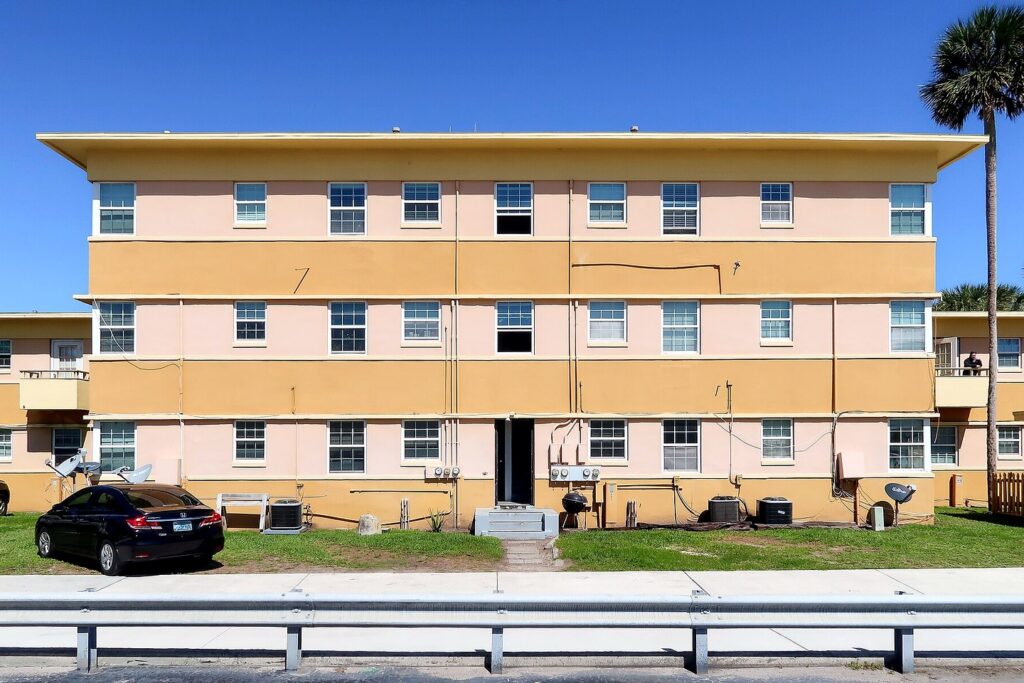
All figures are from Zillow’s Rental Market Report, released November 12, 2026 (Zillow mediaroom / PR Newswire), read in full on November 22, 2026: Orlando metro table row (ZORDI +21.1% year over year; typical single-family rent $2,423; income needed to rent $96,915; income needed to buy with 20% down $113,826; pay raise needed $16,911); national figures (gap $14,408; single-family rent $2,243, +3.2%; multifamily rent $1,744, +2.5%; cost to own $2,603 a month; incomes $89,724 / $104,132; rental demand +22.1%, single-family +24.3%, multifamily +12.1%; February 2026 gap $6,463); Tampa, Miami, Jacksonville, San Jose, Pittsburgh and Buffalo table rows as cited; down-payment findings from Zillow’s 2026 Consumer Housing Trends Report as cited in the release; national break-even timeline of 7.8 years from Zillow’s rent-versus-buy research as cited in the release; Kara Ng quotation reproduced verbatim from the release. Single-family ZORI is a modelled index of typical single-family rent, distinct from this desk’s all-homes ZORI, asking-rent and closed-sale series, as stated in the story. Featured image: series file photograph carried from this desk’s October asking-rent report, reused as a file photo.
Orlando Citizen by email
The weekly edition, in your inbox
One email, every Saturday: the week’s edition of Orlando Citizen — the week’s stories, rankings and winners, gathered in one place. Free, and you can unsubscribe at any time.
Related Stories
 Real Estate & GrowthOrlando Growth: 300,000 New Residents Since 2020, and a $400,000 Home Testing Whether They Can Stay
 Real Estate & GrowthOrlando Housing Market: U.S. Building Permits Fall 7.4% in October, Single-Family Permits Drop 8.7%Real Estate & GrowthOrlando Home Prices: Single-Family Median Slips to $439,685 as Metro Sales Fall 9.2% in October
Editor’s Picks
Spotted an error? Tell us — corrections · How we rank