Orlando Home Prices: Values Rise 0.5% in October, Up 2.5% in a Year in Redfin’s Index
Even as national home-price growth slowed to its weakest monthly pace in six months, Orlando single-family values edged up 0.5 percent in October and 2.5 percent over the year in Redfin's repeat-sales index, buoyed by sellers under little pressure to move.
4 minute read
An Orlando homeowner trying to gauge what a house on the street actually gained this fall runs quickly into a measurement problem. One ruler tracks the recorded sale price of whatever happened to close. Another — the repeat-sales index — follows the same houses from one sale to the next, stripping out the distortion of which kind of home traded in a given month. By that second measure, Orlando’s homes did not slip in October. They moved higher, in small increments, inside a market where neither buyers nor sellers are quite giving way.
Orlando home prices rose 0.5 percent in October from September and 2.5 percent from a year earlier, on a seasonally adjusted basis, according to the Redfin Home Price Index (RHPI) for October 2026, published November 24, 2026. The index tracks single-family homes only through the repeat-sales method, and its October reading covers the three months ending October 31, 2026. Because it measures price change rather than a price level, it publishes no dollar figure for Orlando, and none is reported here. The metro’s recorded level, from this desk’s prior reporting, remains the Orlando Regional REALTOR® Association’s October median sale price of $398,719 — a separate instrument, kept distinct throughout, as is Zillow’s modeled typical home value of $381,886.
The slowest national rise in six months
Across the country, the climb has slowed to a crawl. National prices rose 0.14 percent in October, the smallest monthly gain in six months, and 3.5 percent from a year earlier — the smallest annual increase since May 2026, marking three straight months of slowing annual growth. Prices rose in 30 of the 50 most populous metros and fell in 20. Redfin notes that its index is published about a month earlier than the S&P Cotality Case-Shiller indices, which use a similar repeat-sales method; this desk reported Case-Shiller’s September figures on November 24, and the two series are not merged here. Even within Redfin’s own reporting, the choice of ruler shifts the picture: the company’s weekly and monthly reports, which rely on median sale prices, have recently shown declines — a distinction the release draws explicitly and this story preserves.
Florida’s split, and the seller’s floor
Within Florida, the index split sharply. Miami posted the fastest monthly gain of any major metro in the country, rising 1.5 percent in October and 11.3 percent over the year. West Palm Beach rose 0.5 percent for the month and 8.9 percent for the year, while Fort Lauderdale climbed 0.6 percent and 3.9 percent. Tampa, Orlando’s closest comparison, rose 0.3 percent in the month and just 0.9 percent over the year, while Jacksonville slipped 0.1 percent in October and gained 0.7 percent for the year. Nationally, San Francisco led the annual table with a 12.7 percent gain, and Seattle recorded the steepest monthly drop, down 1.2 percent; annual prices fell in only six metros — four in Texas, plus Seattle and Phoenix. At the same time, Redfin reported that buyers held more negotiating power in October than at any point in its records dating to 2013, leaving only three of the 50 metros in seller’s-market territory — a finding from its separate buyer-seller balance series, reported here as its own measure.
That standoff — buyers holding their widest negotiating leverage since 2013 while prices resist falling — rests on who can afford to wait. “Mortgage rates are not that volatile right now, but they’re still higher than they used to be. That’s holding back demand and putting some downward pressure on prices, which have started to fall in many parts of the country,” said Chen Zhao, Redfin’s head of economics research. “On a national level, we don’t think prices will fall very much.” What holds prices up, in the release’s account, is the seller’s side of the table: “Many sellers are still anchored to the prices they’ve seen over the past few years, and because few sellers are under pressure to sell, that puts a floor under prices,” Zhao said. Across Orlando’s areas, from the new subdivisions of Kissimmee to the resale streets of the established neighborhoods, that is the October shape of the market: values still inching upward by the repeat-sales ruler, at the slowest pace of the year, above a floor held by owners who do not have to move.
More from this desk: the Real Estate & Growth archive and the Citizen’s beat reporters index.
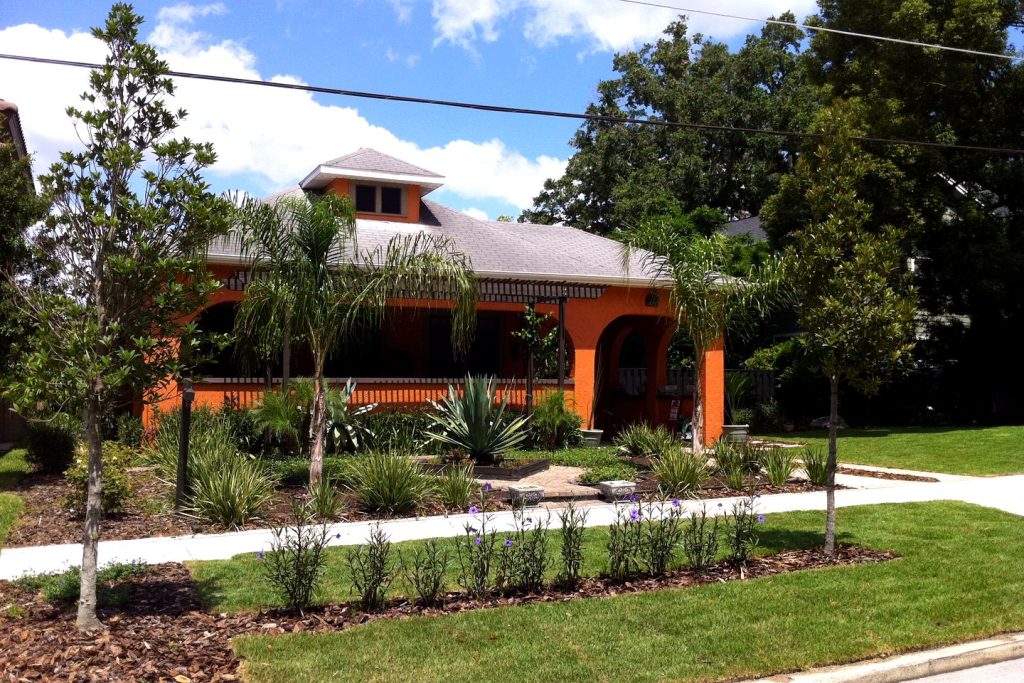
Sources & notes: All index figures are from Redfin, “U.S. Home Prices Rose 0.14% in October” (Redfin Home Price Index, October 2026), published November 24, 2026, read in full by this desk, including its metro-level summary table (Orlando +0.5% month over month, +2.5% year over year, seasonally adjusted, single-family, repeat-sales method, three months ending October 31, 2026). Zhao quotes are verbatim from that release. The RHPI measures price change, not price levels, and publishes no Orlando dollar figure; Orlando dollar figures cited are this desk’s prior reporting from the named sources, linked in the story. The buyer-negotiating-power finding is from Redfin’s separate balance series as stated in the release. This is a new series for this desk, kept distinct from FHFA’s House Price Index, the Case-Shiller indices, recorded medians, list prices, asking rents and Zillow’s index estimates. Featured photograph is a file photograph from a related Citizen story in this series.
Orlando Citizen by email
The weekly edition, in your inbox
One email, every Saturday: the week’s edition of Orlando Citizen — the week’s stories, rankings and winners, gathered in one place. Free, and you can unsubscribe at any time.
Related Stories
 Real Estate & GrowthOrlando Housing Market: First-Time Buyers Are 40 Now, and a Record 10% Paid All CashReal Estate & GrowthOrlando Housing Market: U.S. Listings Rise 9.4% as the Median List Price Falls to $400,000
 Real Estate & GrowthOrlando Home Prices: Zillow Sees the Sales Bottom in October and November as Values Rise Just 0.4%
Editor’s Picks
Spotted an error? Tell us — corrections · How we rank