Orlando Housing Market: Home Prices Rise 2.1% in a Year, Trail Inflation for a 16th Month in Case-Shiller
U.S. home prices rose 2.1% in the year through September but fell behind 3.7% inflation for a 16th straight month, leaving Orlando caught between Miami's 4.6% climb and Tampa's 0.16% slip.
3 minute read
A home can be worth more than it was a year ago and still leave its owner poorer once consumer prices are counted. In September, the national price index delivered that quiet erosion for the sixteenth month in a row.
U.S. home prices rose 2.1% in the year through September 2026, unchanged from August’s annual rate, S&P Dow Jones Indices reported on Tuesday, November 24, 2026, in the S&P Cotality Case-Shiller Indices release. Over the same year, consumer prices climbed 3.7%, leaving home values down roughly 1.6 percentage points in real terms — the 16th consecutive month in which home values lost ground to inflation.
For Orlando, the national release offers no direct number: the metro is not one of the 20 cities in the Case-Shiller composite, the release publishes no Orlando figure, and this story reports none. Instead, the local story lies in the split between the two Florida cities the index does measure. Miami rose 4.6% over the year, climbing into the index’s top three, while Tampa fell 0.16%. Between them sits the market this desk measures directly. On the Orlando Regional REALTOR® Association’s count, the metro’s median sale price in October was $398,719, and on Zillow’s index the typical Orlando value was $381,886, down 1.1% over the year — a reading closer to Tampa’s than to Miami’s.
Chicago leads, Seattle falls, Florida splits
Across the country, the housing market divided along similarly sharp regional lines. “The S&P Cotality Case-Shiller National Home Price Index rose 2.1% year over year in September, matching the annual gain recorded in August,” said Rebecca Kaufman, Associate Director of Commodities at S&P Dow Jones Indices. “Chicago led all metros for the sixth consecutive month, posting a 6.9% annual gain, followed by New York at 5.8% and Miami at 4.6%. Seattle recorded the largest annual decline for the fourth consecutive month at 1.9%, followed by Denver (-1.0%) and Dallas (-0.9%).”
The broader composites traced that uneven footing. The 10-City Composite rose 3.5% over the year, down from 3.6% in August, while the 20-City Composite rose 2.6%, in line with August. Within Florida, the divergence showed up even inside a single month: Miami’s index level was 455.56 in September, up 0.20% in the month before seasonal adjustment, while Tampa’s was 369.91, down 0.70% in the month. The U.S. National Index level stood at 335.75.
The fall slowdown, in the release’s own reading
Whether September’s monthly dip signals deeper weakness or simply the turn of the season is the release’s central distinction. “September also revealed a widening gap between seasonal weakness and underlying price momentum,” Kaufman said. “On a non-seasonally adjusted basis, the U.S. National and 10-City Composite Indices fell 0.3% and 0.5% month over month, respectively, while both rose 0.2% after seasonal adjustment. That contrast suggests that some of the apparent monthly weakness reflects the normal fall slowdown rather than a broad deterioration in home prices.”
Even so, Case-Shiller looks backward by design. A repeat-sales index with a long lag, September’s release reflects sales closing from July through September, making it a sixth distinct measure for this desk — kept separate from recorded sale prices, asking prices, asking rents and the FHFA repeat-sales index published the same morning. Across Orlando’s areas, from Kissimmee to the in-town neighborhoods, the figures leave open the same question Orlando’s own October numbers already posed: whether a market whose typical value is edging down in nominal terms is stabilizing, or simply moving more slowly than inflation. The next Case-Shiller release is published on the last Tuesday of the month at 9:00 a.m. ET, per S&P Dow Jones Indices.
More from this desk: the Real Estate & Growth archive and the Citizen’s beat reporters index.
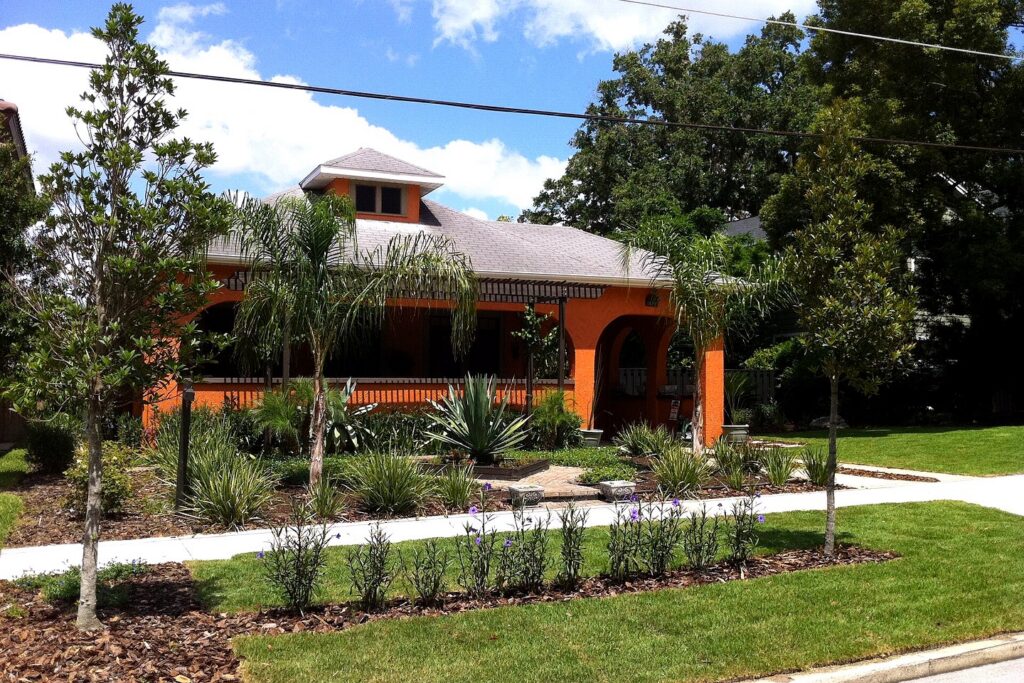
Sources & notes: All Case-Shiller figures and both quotations are from S&P Dow Jones Indices, “S&P Cotality Case-Shiller Index Reports Annual Gain in September 2026,” released via PR Newswire on November 24, 2026 (data through September 2026), read in full by this desk. Detroit’s September update was not provided in this release because of Wayne County recording delays, as the release states. ORRA and Zillow figures are from this desk’s prior reporting, linked in the story, and are separate measures. Featured photograph is a file photograph from a related Citizen story in this series.
Orlando Citizen by email
The weekly edition, in your inbox
One email, every Saturday: the week’s edition of Orlando Citizen — the week’s stories, rankings and winners, gathered in one place. Free, and you can unsubscribe at any time.
Related Stories
 Real Estate & GrowthOrlando New Construction Communities: New-Home Mortgage Applications Fall 13.6% in October as Rates Reach 7.5%
 Real Estate & GrowthOrlando Housing Market: Mortgage Applications Rise 6.1% as Purchase Loans Hit Their Strongest Pace Since September
 Real Estate & GrowthOrlando Home Prices: U.S. Values Flat in September, Up 2.5% in a Year in FHFA’s Quarterly Index
Editor’s Picks
Spotted an error? Tell us — corrections · How we rank