Orlando Home Prices: Zillow Sees the Sales Bottom in October and November as Values Rise Just 0.4%
As Orlando buyers and sellers wait out listings priced against 7 percent money, Zillow's November forecast trims 2026 home-value growth to 0.4 percent and suggests October and November may mark the sales bottom — even with mortgage rates projected above 7 percent into mid-2027.
3 minute read
An Orlando seller watches a listing sit through the fall. From the other side of the screen, a buyer watches the same listing wait. Underneath every showing is the question Zillow’s economists put at the top of their November forecast: Where is the bottom of this? Their answer — offered as a likelihood, not a promise — is that it may already be passing.
In its November 2026 housing market forecast, published November 25, Zillow Research lowered its outlook for full-year U.S. home-value growth to just 0.4 percent, down from 0.7 percent last month. Driven mainly by the run-up in inventory, that pace would trail the rate of inflation, in the forecast’s own framing.
Sales show the same weight, though the floor depends on the yardstick. On Zillow’s own full-count measure, existing home sales for 2026 are projected at 3.71 million — down from last month’s 3.75 million estimate and 0.2 percent below 2025, though still 2.2 percent above 2024. Measured the National Association of REALTORS® way, by regional samples converted to a seasonally adjusted annual rate, Zillow expects sales to fall 1.4 percent to 4.0 million. Because the two measures count differently, the forecast itself explains, their low points can differ; this desk reports them as the separate series they are.
Rates above 7 percent into 2027
What drives the forecast is the rate. Mortgage rates hit 7.3 percent in October, Zillow notes, and could stay above 7 percent through mid-2027, keeping buyers on the sidelines while listings pile up. Even with new listings slowing year over year, total active listings could stand as much as 10 percent higher than last year by December.
That buildup divides the country. Where supply is still tight — the Central and Northeast regions, in the forecast’s account — prices have held up better, steadied by a labor market of low hiring and low firing that has avoided widespread job loss. The West, with more inventory growth, faces more downward pressure. Orlando’s own value record sits inside that national picture: Zillow’s October index put the metro’s typical home value at $381,886, down 1.1 percent in a year — an index estimate distinct from the recorded ORRA median sale price of $398,719 and from every asking-price series this desk tracks.
The bottom, as a likelihood
“October and November of 2026 have a high likelihood of being the bottom of the post-COVID years” — the forecast’s judgment, quoted as its authors wrote it, concerns the rate of decline in sales from an already low baseline, not a guarantee about prices or about any one metro. What could lift sales later in the decade, the forecast states just as directly, is less volatility, lower inflation and lower Treasury yields.
On the rental side, the numbers moved the other way. Single-family rents are now projected to rise 2.9 percent in 2026, to a typical $2,200, and multifamily rents 1.8 percent, to $1,700 — an upward revision driven, Zillow says, by elevated rates and affordability pressure pushing more would-be buyers to keep renting, even as rent growth remains below historical norms. This desk’s rent-versus-buy record for Orlando — where renting a house takes $16,911 less income than buying one — is the local shape of that national push.
Across Orlando’s areas, from Kissimmee to Lake Nona, the forecast lands as an open question rather than a verdict: if the bottom is passing, it is passing at 7 percent money, with the shelf still filling.
More from this desk: the Real Estate & Growth archive and the Citizen’s beat reporters index.
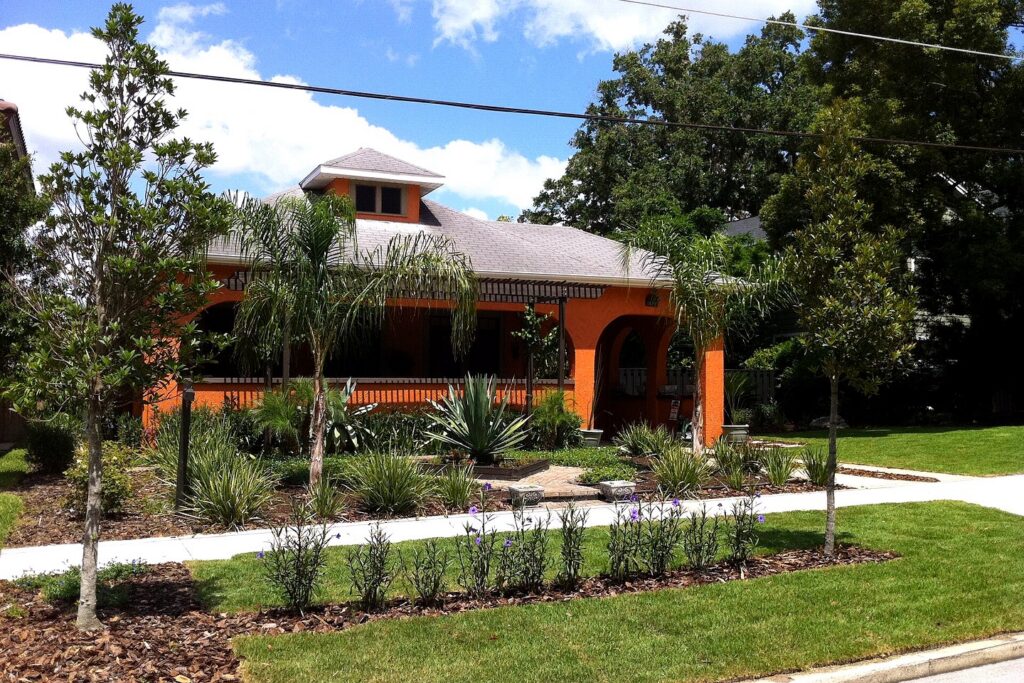
Sources & notes: All forecast figures are from Zillow Research, “The Bottom of the Bottom? (November 2026 Housing Market Forecast),” published November 25, 2026, read in full by this desk (typical home value growth +0.4% for 2026, revised from +0.7%; existing home sales 3.71 million on Zillow’s sales-count nowcast, −0.2%, and 4.0 million on the NAR measure, −1.4%; single-family rent growth +2.9% to a typical $2,200; multifamily +1.8% to $1,700; rates hit 7.3% in October and could stay above 7% through mid-2027; listings could be up to 10% higher year over year by December). These are forecasts — projections by Zillow’s economists, labelled as such throughout — not recorded results. The forecast publishes no Orlando figure; Orlando values cited are this desk’s prior reporting from the named sources, linked in the story. ZHVI/ZORI are Zillow’s modelled index estimates. Featured photograph is a file photograph from a related Citizen story in this series.
Orlando Citizen by email
The weekly edition, in your inbox
One email, every Saturday: the week’s edition of Orlando Citizen — the week’s stories, rankings and winners, gathered in one place. Free, and you can unsubscribe at any time.
Related Stories
 Real Estate & GrowthOrlando Housing Market: First-Time Buyers Are 40 Now, and a Record 10% Paid All CashReal Estate & GrowthOrlando Home Prices: Values Rise 0.5% in October, Up 2.5% in a Year in Redfin’s IndexReal Estate & GrowthOrlando Housing Market: U.S. Listings Rise 9.4% as the Median List Price Falls to $400,000
Editor’s Picks
Spotted an error? Tell us — corrections · How we rank