He Waived the Jury That Could Have Saved Him. Florida’s Supreme Court Says the Death Sentences Stand.
Even after his lawyer warned him that a jury was his "only shot for a life sentence," Reynaldo Figueroa-Sanabria waived both a jury and mitigation — and on Nov. 19, Florida's Supreme Court affirmed the two death sentences that followed for the 2013 St. Petersburg houseboat murders.
5 minute read
TALLAHASSEE — On the record, Reynaldo Figueroa-Sanabria’s own lawyer warned him that a jury was his “only shot for a life sentence.” Figueroa-Sanabria told the judge, more than once, that he did not want one. He did not want mitigation presented at all, and he did not want his family brought from Puerto Rico to plead for his life. “Yeah, I understand. Let’s do the bench trial,” he answered, according to the opinion the Florida Supreme Court issued on Thursday.
That choice held. On Nov. 19, 2026, the court affirmed the two death sentences that followed, imposed for the 2013 murders of John Travlos and Germana Morin, who were killed on their houseboat in St. Petersburg on the morning of April 12, 2013. Justice Francis wrote the opinion in Figueroa-Sanabria v. State, No. SC2024-0768. Chief Justice Couriel and Justices Muñiz, Grosshans, Barrios and Tanenbaum concurred; Justice Labarga concurred in the result with a separate opinion.
A resentencing the court itself had ordered
The case returned to Tallahassee by an unusual route — one the Supreme Court itself had opened. A jury had originally convicted Figueroa-Sanabria and unanimously recommended death after finding five aggravating factors for both murders. In 2023, the court affirmed the convictions but sent the case back for resentencing, concluding that the circuit court had fundamentally erred at the first penalty phase. Instead of simply accepting Figueroa-Sanabria’s waiver of mitigation, the lower court had forced him to choose between proceeding with counsel and presenting mitigation, or giving up counsel and representing himself. He chose the latter, a decision the justices held had deprived him of his constitutional right to penalty-phase counsel.
Yet when the new penalty phase began on April 15, 2024, Figueroa-Sanabria insisted on waiving both mitigation and a penalty-phase jury. The circuit court questioned him repeatedly, telling him a jury could be picked “tomorrow” if he changed his mind. “I don’t see any blink in your eyes. You seem very decisive about this,” the court observed, in a passage the Supreme Court quoted. He waived anyway. Finding the same five aggravating factors proven beyond a reasonable doubt as to both murders — including that the killings were committed for financial gain and were especially heinous, atrocious or cruel, each given great weight — the judge sentenced him to death again on May 13, 2024.
Competence is presumed, the court says
By the time the case reached the justices again, Figueroa-Sanabria was asking them to undo that waiver. He argued on appeal that the circuit court had accepted it while he was incompetent, and that it had not been knowing and voluntary. The Supreme Court rejected both claims. “Competence is presumed unless there is some basis to call it into question,” the opinion states, noting that he had previously been found competent at an Oct. 28, 2019 hearing and that no later record evidence undermined that finding. Only when a “bona fide doubt” is raised, the court wrote, must a court hold another competency proceeding.
The justices turned to the words of Figueroa-Sanabria’s own lawyer. Daniel Hernandez had told the circuit court that he had “never questioned the competency of my client to be able to comprehend my arguments and why I disagreed with him in waiving mitigation,” and had no argument that his client was “not mentally capable of waiving [his] rights.” As for whether the waiver was knowing, the court held that Figueroa-Sanabria “needed only to understand what he was waiving” — not to possess the legal knowledge of an appellate attorney — and that later regret does not undo a waiver the record shows was understood. Relying on its existing precedent, the opinion also rejected his challenges to Florida’s capital sentencing scheme.
Justice Labarga agreed with the outcome, writing separately to restate his continuing disagreement with the court’s earlier decision to abandon comparative proportionality review — the practice of checking a death sentence against sentences in similar cases.
A second capital opinion the same day
Thursday’s orders brought a second capital opinion, likewise written by Justice Francis, in Lawrence v. State, No. SC2025-2061. Gary Lawrence, sentenced to death for the 1994 first-degree murder of Michael Finken in Santa Rosa County, had appealed the dismissal of his third successive motion for postconviction relief. His new-evidence claims rested on the Dozier School for Boys and the Okeechobee School victim-compensation program. The court affirmed the dismissal, holding the claims untimely and procedurally barred: the Dozier Act, it held, does not constitute newly discovered evidence because the conditions it addresses were exposed long ago and rest on publicly available research and data, and the underlying facts could have been discovered earlier with due diligence. Those procedural bars were dispositive, the court said, leaving no need to reach the merits.
Neither opinion sets an execution date, and neither is final until the time expires to file a rehearing motion and, if one is filed, until it is determined — the standard notation carried on both opinions. What Thursday settled is narrower, and for the two men decisive at this stage: as the record stands, the waivers and the procedural bars hold.
Read more State coverage in the Citizen’s State archive, including Florida’s record 20th execution of the year and the Dec. 1 execution date that stands for Ricardo Gonzalez.
Sources & notes
All facts are from the opinions themselves, read in full or in the issuing court’s text as reproduced by Justia’s Florida Supreme Court opinion service: Figueroa-Sanabria v. State, No. SC2024-0768 (Fla. Nov. 19, 2026) (Francis, J.; Labarga, J., concurring in result), including the quoted colloquies, the five aggravating factors and their weights, the April 15 and May 13, 2024 dates, and the 2023 remand (366 So. 3d 1035); and Lawrence v. State, No. SC2025-2061 (Fla. Nov. 19, 2026) (Francis, J.). No execution date is asserted for either man, because neither opinion sets one.
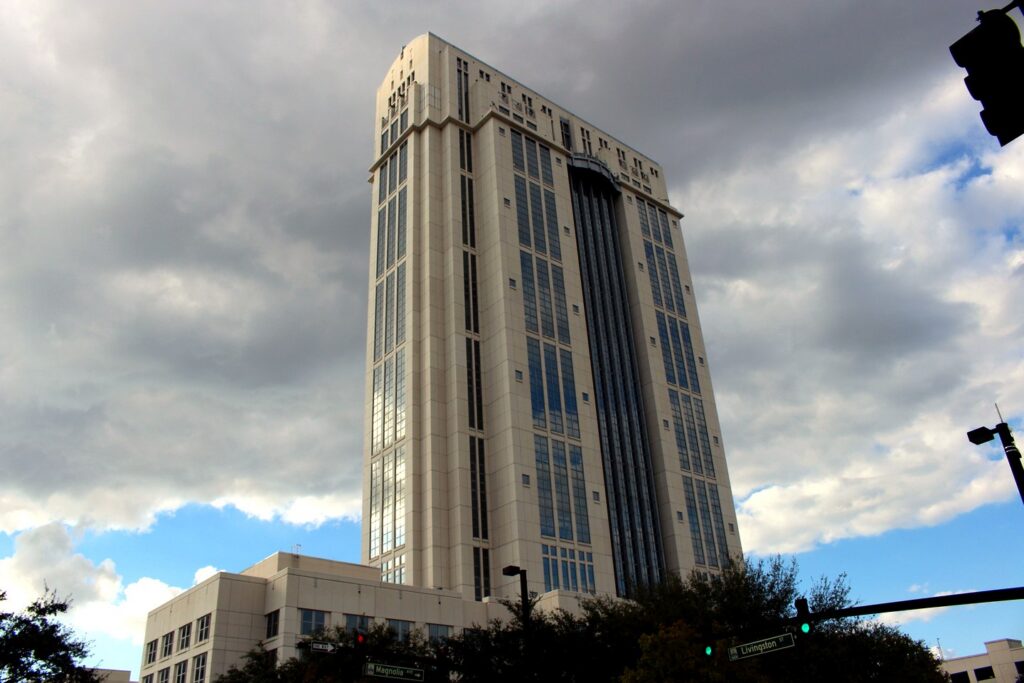
Photo: site file photography via the related Citizen coverage below; credit as carried on that post.
Orlando Citizen by email
The weekly edition, in your inbox
One email, every Saturday: the week’s edition of Orlando Citizen — the week’s stories, rankings and winners, gathered in one place. Free, and you can unsubscribe at any time.
Related Stories

Editor’s Picks
Spotted an error? Tell us — corrections · How we rank