New 401(k) Plans Must Enroll Workers Automatically: IRS Final Rule Sets the 3 Percent Default
Final federal rules turn workplace inertia on its head, requiring newer 401(k) and 403(b) plans to enroll workers automatically at 3 to 10 percent of pay and raise the rate each year unless they sign out.
3 minute read
WASHINGTON — For generations of American workers, retirement saving began — or quietly stalled — inside the stack of paperwork that arrives with the first paycheck at a new job. Most people never turned the retirement form back in, leaving inertia to decide whether they saved at all. In 2022, Congress flipped that premise: a new employer’s plan would enroll the worker from the start, making the decision to walk away the one that requires a signature. On Tuesday, the Treasury Department and the Internal Revenue Service published the final regulations governing how employers must put that reversal into practice.
Published in the Federal Register on Nov. 18, 2026, Treasury Decision 10061 (FR Doc. 2026-23530, RIN 1545-BR08) cements the rules under section 414A of the Internal Revenue Code, a mandate created by section 101 of the SECURE 2.0 Act of 2022 and announced a day earlier by the IRS in News Release IR-2026-141 on Nov. 17. The rules govern 401(k) and 403(b) plans established after the law’s Dec. 29, 2022, enactment, while preserving statutory exceptions for small businesses, new businesses in their first three years and certain other plans described in the rule.
The default, in numbers
For a worker who never touches an enrollment screen, the final regulations (26 CFR Part 1, §1.414A-1) set saving on an automatic escalator. A covered plan must place each eligible employee into an eligible automatic contribution arrangement at a uniform starting rate of at least 3 percent and no more than 10 percent of pay. Each year thereafter, that contribution climbs by at least one percentage point until it reaches at least 10 percent, capped permanently at 15 percent. An employee who takes no action continues saving at the rising rate; an employee who steps in may pick another rate or opt out altogether.
For workers who notice the deduction only after it leaves their check, the regulations keep the statute’s 90-day window to reverse course. Within 90 days of the first default contribution, an employee can pull back the defaulted money along with its earnings. That refund counts as taxable income and forfeits any employer match attached to it, though it escapes the standard 10 percent early-distribution penalty. Unless a worker specifies otherwise, defaulted savings must be directed into a qualified default investment alternative.
Which dates bind, and which already have
The mandate itself is already in force, though the rule draws a deliberate line between statutory duty and granular compliance. By statute, section 414A took hold for plan years beginning after Dec. 31, 2024 — the 2025 plan year for calendar-year plans — under a standard requiring a reasonable, good-faith interpretation of the law. The final text becomes strictly binding for plan years beginning after Dec. 31, 2027, the point at which notices, payroll systems and escalation schedules must conform to the exact letter of the regulations. According to Treasury’s regulatory analysis, as summarized in published technical analyses of the decision, the rule directly reaches roughly 31,600 plans and is projected to lift participation in covered plans from about 70 percent toward 77 percent.
What it means in Florida
Across Florida, the national mandate settles onto employers one workplace at a time. Every company in the state that has launched a 401(k) or 403(b) plan since late 2022 — a cohort spanning thousands of tourism, health-care, construction and professional-services firms — now faces a firm deadline on the calendar. Those employers have through the 2027 plan year to retool recordkeeping and payroll; by 2028, workers hired into covered plans will encounter the 3 percent starting deduction and its annual one-point climb not as an employer’s perk, but as the architecture of the job itself.
More National coverage: the National hub and the National archive. Related: Head Start Pay Rule Withdrawn and Green Card Sponsors Would Have to Advertise Jobs for 90 Days.
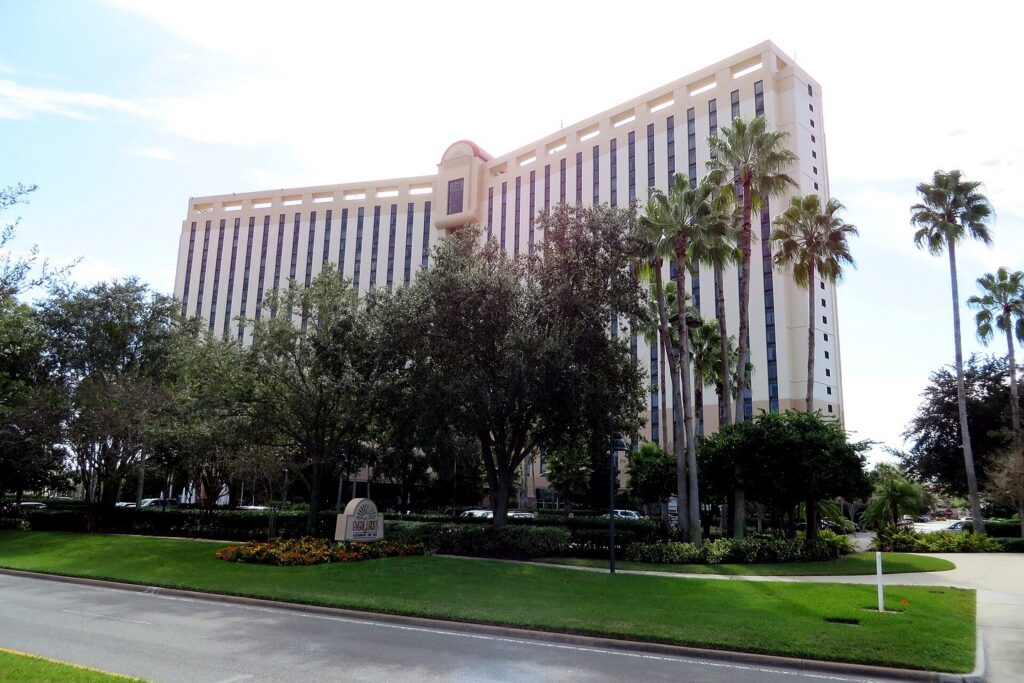
Sources & notes: Treasury Decision 10061, “Automatic Enrollment Requirements Under Section 414A,” Federal Register, Nov. 18, 2026 (FR Doc. 2026-23530; 26 CFR Parts 1 and 602; RIN 1545-BR08) — default range, escalation, ceiling, 90-day permissible withdrawal and applicability dates from §1.414A-1(c) and (f) as published; IRS News Release IR-2026-141 (Nov. 17, 2026). Treasury’s plan-count and participation estimates are attributed in the text to published technical analyses of the decision. The Jan. 17, 2027 regulatory effective date sometimes cited from the 60-day count is not asserted here; this story relies on the applicability dates stated in the rule. Photo: Rosen Centre, from the Citizen’s jobs coverage (DeFrancisci, CC BY-SA 3.0, via donor post).
Orlando Citizen by email
The weekly edition, in your inbox
One email, every Saturday: the week’s edition of Orlando Citizen — the week’s stories, rankings and winners, gathered in one place. Free, and you can unsubscribe at any time.
Related Stories


Editor’s Picks
Spotted an error? Tell us — corrections · How we rank