Lake County Watering Rules, Winter 2026: One Day a Week, and the Extreme Shortage Order Is Lifted
Even after the St. Johns River Water Management District lifted its extreme water shortage order on November 9, Lake County homeowners heading to the garage to reset their irrigation controllers still face a once-a-week winter schedule, a 10 a.m. to 4 p.m. ban and a specific set of permanent exceptions.
5 minute read
TAVARES — The clock change leaves a Lake County homeowner with a chore that rarely makes a list: walking out to the garage to reprogram the irrigation controller. This November, that task carries a genuine puzzle. In the space of a single year, a Lake County lawn has lived under three different rulebooks — a permanent schedule, a severe shortage order and an extreme one — and weeks after the extreme order was lifted, the county’s own web page still opens with its headline.
The official record tells a different story. Effective November 9, 2026, the St. Johns River Water Management District rescinded its Modified Phase III Extreme Water Shortage order for the portions of Lake and Marion counties inside the district. The City of Leesburg’s irrigation page carries the rescission notice, the district’s own FAQ confirms it, and the district’s November 12 release reminds residents that irrigation is now once per week for the winter. In this system, winter is a defined term: Eastern Standard Time, running from the first Sunday in November to the second Sunday in March.
Your one day
Under the winter schedule, each property gets one watering day a week, determined by its address. Odd-numbered addresses — along with properties that have no address — water on Saturday; even-numbered addresses water on Sunday; and nonresidential properties water on Tuesday. Residents are to water only when needed and never between 10 a.m. and 4 p.m., applying no more than three-quarters of an inch per zone and running no zone for more than one hour on their day. The rules apply regardless of whether the water comes from a utility, a private well or a pump — owning a well is not an exemption — and anyone operating an automatic system installed after May 1991 is required to keep a working rain sensor on it. The district’s irrigation hotline is 386-329-4545.
What changed on November 9 — and what did not
The order that ended was born of a hard year. When the district issued its Phase III Extreme order (F.O.R. No. 2026-0005) on May 11, 2026, all of Lake County was designated in extreme drought and groundwater stood at or below the 10th percentile. That mandate held irrigation to one day a week year-round and banned watering from 8 a.m. to 6 p.m., a ten-hour daytime window. Rainfall since then has raised groundwater and surface-water levels, the district says, allowing it to rescind the order for Lake County on November 9. Yet the season itself did not budge: under the permanent rules, winter was always going to be once a week. For most households, the practical difference is measured on the clock rather than the calendar, as the daytime ban narrows from ten hours back to the permanent six, between 10 a.m. and 4 p.m. The Environment desk’s record of the order and its lifting is the Citizen’s Lake County water story, while this region’s wet week is mapped in the Flood Watch resident guide — a reminder that in Florida, a Flood Watch and a watering schedule can both be true, and this month both are.
The exceptions that actually help
Before anyone reprograms a controller, the permanent rules offer several carve-outs worth noting. Micro-irrigation — drip, bubbler and micro-spray systems — may run at any time, as may a hand-held hose with a shut-off nozzle. Reclaimed water may also be used at any time, though wherever reclaimed water is available, private irrigation wells are not authorized. New landscape receives a 60-day establishment window: watering is allowed on any day and at any time for the first 30 days, then every other day for the next 30, using the minimum necessary. Watering-in chemicals is permitted within 24 hours of application, capped at a quarter-inch, and a system may run up to 20 minutes per hour per zone for maintenance and repair.
The fine print, and one honest caveat
In Lake County, these schedules carry the force of law rather than advice. County Ordinance 2009-17 enacts them, and the county publishes an escalating penalty ladder: a written warning for a first violation, a minimum $50 fine for a second, and fines that double with each subsequent violation up to a maximum of $1,000. Even with the rescission on the books, two cautions remain. Because district lines, not county lines, govern — and the county itself says only the majority of Lake County lies in the St. Johns district — a household near the county’s edge should confirm its own district and utility. Some communities also run their own variations, as Leesburg notes for neighborhoods on separate schedules, meaning an HOA or city notice beats a general guide. Up the corridor, the same winter-clock logic governs the springs country in the Citizen’s Apopka springs winter guide, and more of the Citizen’s coverage of the county seat is gathered on the Tavares hub.
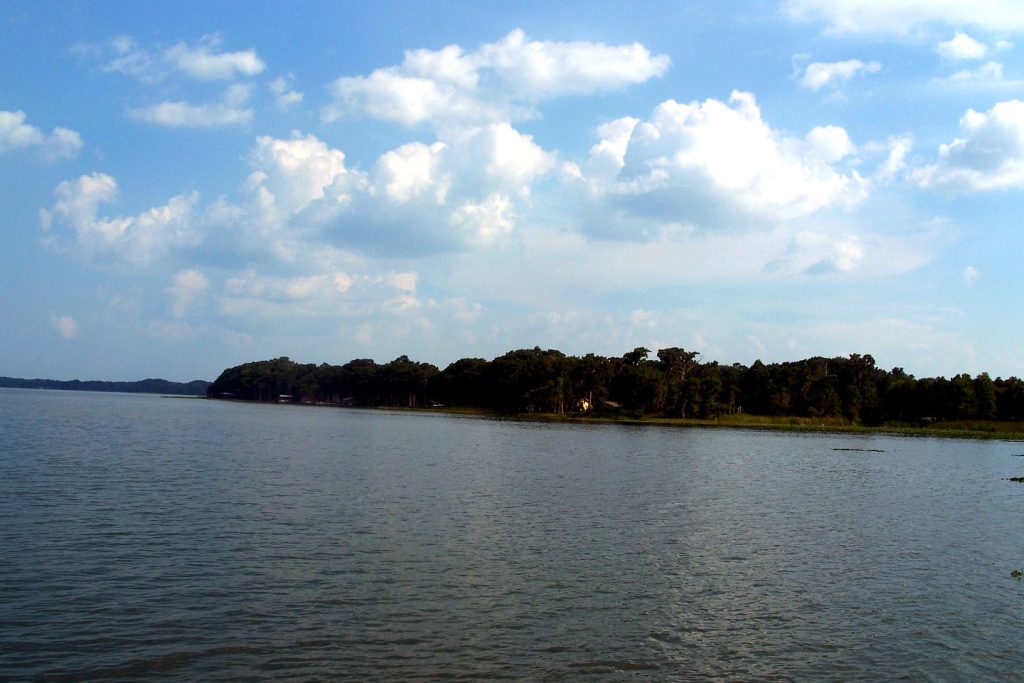
Photo: File image from the Citizen’s Environment desk coverage of Lake County water.
Sources & notes
City of Leesburg, Irrigation page, leesburgflorida.gov (rescission of the Phase III Extreme order for Lake County effective November 9, 2026; winter day table; 10 a.m.–4 p.m. ban; note that Royal Highlands and The Plantation at Leesburg run a separate schedule) — checked November 18, 2026. St. Johns River Water Management District, Watering Restrictions page and FAQ, sjrwmd.com (rescission for the Lake and Marion county portions inside the district, attributed to increased rainfall raising groundwater and surface-water levels; winter window definition; 3/4-inch and one-hour limits; irrigation hotline 386-329-4545) — checked November 18, 2026. SJRWMD news release, “District scales back drought restrictions in North Florida,” November 12, 2026 (once-a-week irrigation during Eastern Standard Time). Lake County, Water & Irrigation and Water Resources pages, lakecountyfl.gov (winter schedule; application to wells, pumps and utilities; rain-sensor rule; the full exceptions list; Ordinance 2009-17; penalties: written warning, then $50 doubling to $1,000; “the majority of Lake County” in the St. Johns district) — checked November 18, 2026. Town of Howey-in-the-Hills, Phase III notice, May 12, 2026 (order F.O.R. No. 2026-0005 issued May 11, 2026; extreme-drought designation; 8 a.m.–6 p.m. ban under the order). One source-hygiene note: Lake County’s Water & Irrigation page still carries a “Phase III declared” header that the district’s current FAQ and November 12 release supersede; this story follows the district’s current record, as the Environment desk’s coverage did.
Orlando Citizen by email
The weekly edition, in your inbox
One email, every Saturday: the week’s edition of Orlando Citizen — the week’s stories, rankings and winners, gathered in one place. Free, and you can unsubscribe at any time.
Related Stories


Editor’s Picks
Spotted an error? Tell us — corrections · How we rank