Wildfire Retardant Drops Exempted From Water-Pollution Permits for One Year
Presidential Determination 2027-03, published November 16, exempts federal wildfire suppression — including aerial retardant — from water-pollution permitting through November 10, 2027.
3 minute read
WASHINGTON — A presidential determination published in the Federal Register on Monday exempts federal wildfire-suppression work — including the aerial dropping of fire retardant — from federal, state and local water-pollution permitting requirements for one year, through November 10, 2027.
Presidential Determination No. 2027-03, signed November 10, 2026 and published November 16 (Federal Register Vol. 91, No. 219, pages 73645–73646; FR Doc. 2026-23349), is addressed to the Secretary of the Interior, the Secretary of Agriculture and the Administrator of the Environmental Protection Agency. It covers firefighting conducted by the U.S. Forest Service, the Department of the Interior and any other federal agencies and their contractors. The Forest Service manages Florida’s three national forests — Apalachicola, Ocala and Osceola — and federal firefighting support is part of how large Florida wildfires are fought, which is the local read on a national instrument. More federal coverage is on the Citizen’s National hub and in the National archive.
The authority, and its limits
The determination rests on section 313 of the Federal Water Pollution Control Act (33 U.S.C. 1323), which lets the President exempt federal activity from water-pollution requirements on a finding that it is “in the paramount interest of the United States.” The determination makes that finding in those words. The exemption is not total: it expressly does not extend to the requirements of 33 U.S.C. 1316 and 1317 — the Act’s new-source performance standards and toxic-pollutant provisions. And the document carries its own caution about what it decides: nothing in it, it says, is intended to imply that, absent the exemption, the Clean Water Act would have required the Forest Service or other agencies to obtain permits for these operations, or to limit any other legal requirement applying to federal firefighting.
The lawsuit in the background
The determination names the litigation it sits alongside: Forest Service Employees for Environmental Ethics v. U.S. Forest Service, No. CV-22-168-M-DLC, in the U.S. District Court for Montana, where whether retardant drops into waterways require a permit has been contested. An exemption and a court ruling are different instruments: the determination suspends the permitting requirements it lists for the agencies and the year it covers, whatever the court eventually decides about the underlying legal question; it does not decide that question. The exemption runs for the one-year period beginning November 10, 2026 and ending November 10, 2027 — a window that covers Florida’s winter-and-spring fire season, the state’s driest months, when most of its wildfire acreage burns.
What happens next
The Secretary of Agriculture is directed to publish the determination — done, in Monday’s Register. There is no further step in the document itself: no rulemaking follows from it, and the exemption expires on its own date unless a new determination extends it. For Florida readers, the practical effect is narrow and specific: when federal crews and aircraft fight fires in the national forests or in support of state efforts during the coming season, the water-pollution permitting layer the determination lists does not apply to that work. State firefighting by Florida’s own agencies is not what the document covers — it reaches federal agencies and their contractors.
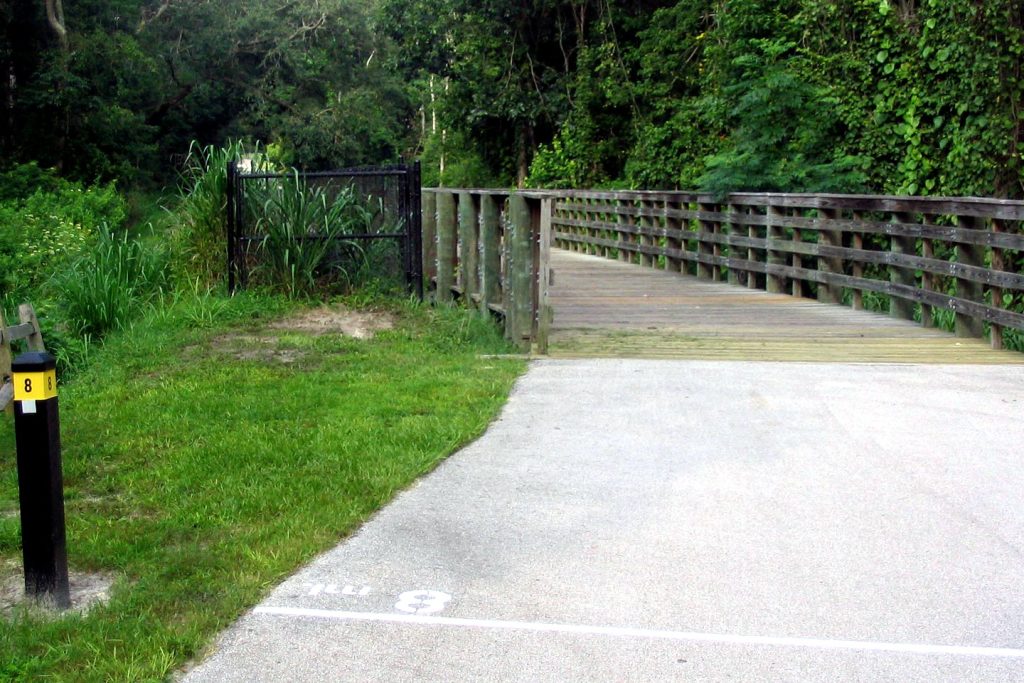
Sources & notes: Presidential Determination No. 2027-03 of November 10, 2026, Federal Register Vol. 91, No. 219 (November 16, 2026), pages 73645–73646, FR Doc. 2026-23349, read in full on govinfo.gov — authority, scope, carve-outs, disclaimers and the one-year period are all quoted or paraphrased from the determination itself. The Montana case number is as printed in the determination. Florida’s fire-season timing is general background, not a claim from the document. Photo: file photography of a Florida state forest from the Citizen’s coverage.
Orlando Citizen by email
The weekly edition, in your inbox
One email, every Saturday: the week’s edition of Orlando Citizen — the week’s stories, rankings and winners, gathered in one place. Free, and you can unsubscribe at any time.
Related Stories
Editor’s Picks
Spotted an error? Tell us — corrections · How we rank