WWE Performance Center in Orlando: The $7 Million Incentive Fails the Ledger Test
As Orlando's redevelopment advisory board weighs a $7 million public incentive today for WWE's proposed $100 million headquarters on Terry Avenue, Clarence Howard argues that the city should welcome the building and refuse the subsidy.
5 minute read
OPINION — The Howard Ledger
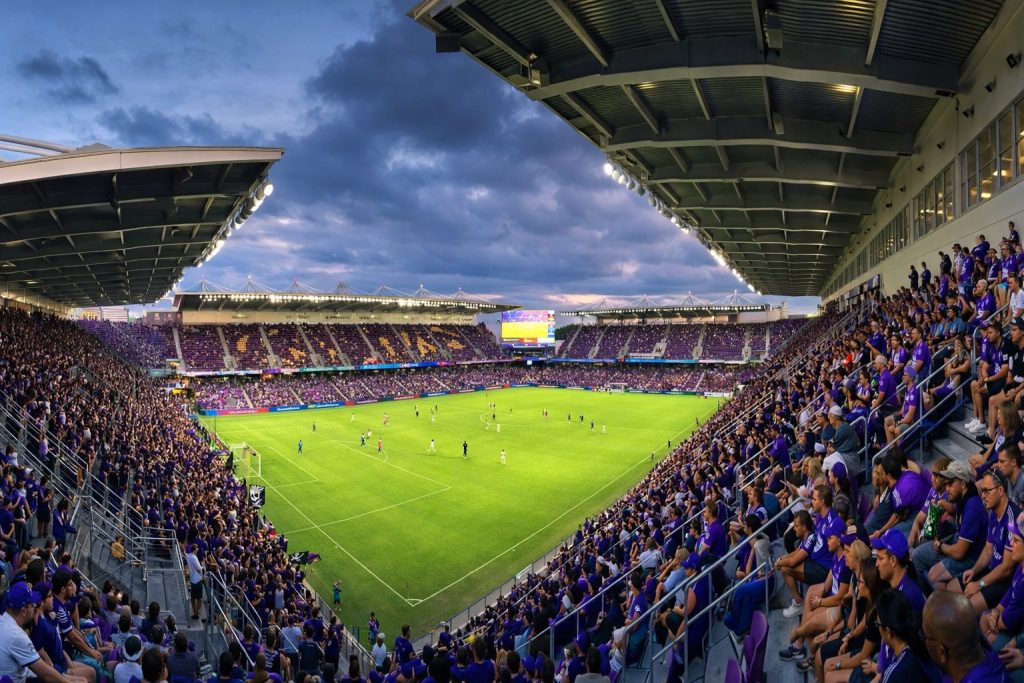
On the streets of Parramore beside Inter&Co Stadium, and across the downtown district Orlando’s redevelopment agency exists to serve, every corporate subsidy ultimately registers as public money that never reaches the neighborhood. Too often in this city, arguments over public spending begin with an architectural rendering or a famous logo rather than with the taxpayer. This one belongs where the human stake actually sits: with the $7 million the public is being asked to put in.
At 3 p.m. today, in the Veterans Conference Room at City Hall, the Community Redevelopment Agency Advisory Board takes up items 5A and 5B, an economic development incentive agreement for a proposed WWE performance center and Florida regional headquarters at 22 S. Terry Avenue, beside Inter&Co Stadium. According to the city’s staff memorandum, the complex would cover about 98,000 square feet on roughly 2.1 acres, backed by an anticipated private investment of about $100 million and a 30-year lease under which WWE PC Operating Company would operate training facilities, offices, a fan zone and a live performance and event studio.
Orlando can welcome the building and still question the check. Those are two distinct choices, even if City Hall keeps pretending they are one.
Two questions, as always
Every public spending proposal warrants the same two questions from me: Who pays, and what did the city promise them?
On who pays, the staff memorandum is precise, and the precision matters. Beginning after completion, the CRA would return 80 percent of the tax-increment revenue directly attributable to the project for up to 12 years, capped at $7 million and paid out of the Downtown Trust Fund. The payments are not guaranteed; the memorandum ties them to the availability of funds, the agency’s debt obligations and performance benchmarks. My colleagues will make much of those guardrails, and on one point they are right.
The strongest observation made by both G. L. Dyer and Margaret Shepherd is that this proposal is no empty promise stapled to a press release. The memorandum puts the obligations in writing: a binding minimum of 75 new full-time jobs downtown within five years of completion, maintained for the term; at least 24 publicly ticketed events a year; a companion high-wage agreement covering 50 jobs at an average salary of $118,000; at least 15 percent of the initial construction contract’s value awarded to certified small and local businesses; and a Parramore program of youth events, family events, internships and mentorship. That is a fuller ledger than Orlando usually receives, and I concede it without flinching.
Consider what follows from that concession, though. If the promised return is genuinely that strong, the project ought to stand before the City Council — which holds the final vote, following city attorney review — and make its case without taxpayers sweetening the till. A $100 million private venture that works on paper only when the public hands back $7 million of its own tax increment is either a weaker investment than the headline suggests or a sharper negotiator than the city facing it across the table. Neither is a reason to sign.
A giveaway is a giveaway, from the right
I have made this argument on this page before, and consistency is the point: subsidies to profitable corporations are wrong from the right, not only from the left. Growth should pay its own way. That principle reflects no hostility toward WWE, toward wrestling or toward downtown. The staff memorandum notes that WWE also weighed Las Vegas and Stamford. When cities bid against one another with public dollars, a sound private project degenerates into an auction the taxpayer invariably loses, because the winner is simply the city willing to pay the most to host a business that had to land somewhere.
Nor is tax-increment revenue free money merely because a new project generates it. The moment that revenue arrives, it is public money carrying 12 years of public choices. Returning 80 percent of it commits those dollars to a single tenant, however famous, rather than to the district the agency exists to serve. Somebody always pays. Here, the district pays quietly, in revenue it will never see.
Shepherd is right on a second count as well: Parramore, right beside the stadium, is where this project will actually be felt, and the street is the proper test. Where we part company is on the remedy. She would advance the deal with a stronger scorecard. I would keep the scorecard — publishing every job, event and contract figure, every year — and drop the subsidy it was designed to police. A ledger the public must audit for 12 years to ensure it was not overcharged is a ledger the city never should have opened.
That leaves a clear answer for the advisory board this afternoon, and for the Council after it: approve the welcome, and refuse the incentive. If WWE builds on Terry Avenue with its own $100 million, Orlando gains the headquarters, the events and the jobs that the market genuinely supports — while keeping its word that in this city, growth pays its own way.
Welcome the building. Question the check. Refuse the second, and the first becomes more honest.
Read the other sides: G. L. Dyer argues 75 jobs is not enough public return for $7 million, and Margaret Shepherd asks what the Terry Avenue plan does on Parramore’s street. The Citizen’s news coverage is today’s CRA vote guide, and all three columns live on the Opinion hub.
Sources & notes
City of Orlando Community Redevelopment Agency Advisory Board agenda and staff memorandum for November 18, 2026 (items 5A and 5B), as read in full and reported by the Citizen’s Real Estate desk, November 17, 2026 — meeting time and room, staff recommendation, city attorney review and City Council final approval; site (22 S. Terry Avenue, about 2.1 acres), size (about 98,000 square feet), anticipated investment (about $100 million), 30-year lease and building programme; the incentive (80 percent of project-attributable tax increment, up to 12 years, capped at $7 million, Downtown Trust Fund, subject to funds, debt obligations and performance benchmarks); jobs and events benchmarks (75 binding minimum, 24 ticketed events); the high-wage agreement (50 jobs, $118,000 average, $1,500 per job up to $75,000 over eight years); the 15 percent small and local business construction share; the Parramore programme; and the Las Vegas and Stamford alternatives. Citizen vote guide, November 18, 2026 — the existing Forsyth Road performance center would be complemented, not replaced, and no Council date or construction timetable had been announced. No vote result is claimed in this column; none had been published at filing.
Orlando Citizen by email
The weekly edition, in your inbox
One email, every Saturday: the week’s edition of Orlando Citizen — the week’s stories, rankings and winners, gathered in one place. Free, and you can unsubscribe at any time.
Related Stories

Editor’s Picks
Spotted an error? Tell us — corrections · How we rank