Venezuelan TPS Stay Extended Past Nov. 20: Government Withdraws Its Supreme Court Application
Nov. 20 passed with nothing changed for thousands of Venezuelan households in Florida after the Ninth Circuit extended its stay and the government withdrew Supreme Court application 26A714, leaving Venezuela's TPS designation terminated and undecided.
4 minute read
WASHINGTON — For thousands of Venezuelan households in Florida, Friday, Nov. 20, was the date circled — the day a temporary court pause was set to expire and a judge’s order restoring Temporary Protected Status might finally take effect. The day came and went, and nothing changed. Two days earlier, within a few hours, the federal government had gone to the Supreme Court and an appeals court had extended its pause indefinitely; the following day, the government quietly withdrew. That brief flurry leaves the termination of Venezuela’s TPS designation in force, with no restoration date anywhere on the calendar.
On the Supreme Court’s docket in Mullin v. National TPS Alliance, No. 26A714, the entire episode fits in three lines: an application for a stay submitted to Justice Kagan on Nov. 18, 2026; a “letter withdrawing the application” filed Nov. 19; and, that same day, “Application (26A714) withdrawn.” The Court issued no ruling on the application, and a withdrawal decides nothing on the merits.
Why the government went to the Court — and why it left
The withdrawal letter, signed by Solicitor General D. John Sauer and published on the Court’s docket, accounts for both moves in the government’s own words. The dispute traces back to September 2025, when the district court for the Northern District of California issued a summary-judgment order purporting, as the letter puts it, to set aside the Secretary of Homeland Security’s decision to terminate Venezuela’s 2023 TPS designation. The Supreme Court stayed that order in October 2025. Then, on Oct. 5, 2026, it granted review, vacated the Ninth Circuit’s judgment and sent the case back for further proceedings in light of Mullin v. Doe, 609 U.S. 324 (2026). By the Court’s rules, its stay expired Nov. 6.
What followed was a procedural tug-of-war that Mr. Sauer’s letter recounts step by step. The government asked the Ninth Circuit for a stay pending appeal; on Oct. 30, the appeals court denied both that request and an alternative administrative stay. Four days later, the court partially reversed course — withdrawing its order, requesting additional briefing on Doe and granting a limited administrative stay to last until Nov. 20. By Nov. 18, with that expiration two days away, the appeals court still had not acted on the government’s request to extend the stay until seven days after a merits decision. The government went to the Supreme Court “in order to forestall the disruptive consequences of the district court order going into effect.” In the letter, it cited concrete harms: reinstating the designation, it stated, “could require releasing 1800 Venezuelan aliens from detention, postponing execution of hundreds of final orders of removal, and issuing countless work authorizations.” Those are the government’s own assertions, made in its own filing.
Within hours of the filing, the Ninth Circuit issued the order the government had sought: its administrative stay, the letter records, “will expire seven days after it publishes its judgment.” “In light of that development,” Mr. Sauer wrote, “the United States withdraws its November 18 stay application in this Court.” He added a reservation that defines what comes next: “Should the Ninth Circuit enter an adverse judgment, however, we intend to immediately return to this Court for additional relief.”
What this means, stated plainly
For all the week’s movement on the docket, three distinctions define where the case stands. First, the Supreme Court decided nothing this week: an application withdrawn before a ruling carries no vote, no reasoning and no precedent. Second, the Ninth Circuit’s administrative stay is a pause, not a judgment — it keeps the district court’s restoration order on hold while the appeal is decided, running until seven days after that judgment is published, whenever that is. Third, the underlying question — whether the termination of Venezuela’s 2023 designation can be challenged in court at all after Mullin v. Doe — remains exactly where the Oct. 5 remand left it: with the Ninth Circuit.
For Florida’s Venezuelan communities, among the largest in the country, the practical reality is no different than it was before Nov. 20. The termination stands, the district court’s order restoring the designation remains stayed, and no court has set a date for that to change. What comes next is the Ninth Circuit’s judgment — and for that, no date has been announced.
More from the National desk and the National archive: this desk’s earlier immigration-procedure coverage, Immigration Appeals Shrink to 10 Days, and the funding deadline that now governs Congress’s return, Twenty Days to Dec. 11: Congress Leaves for Thanksgiving With the Funding Fight Unresolved.
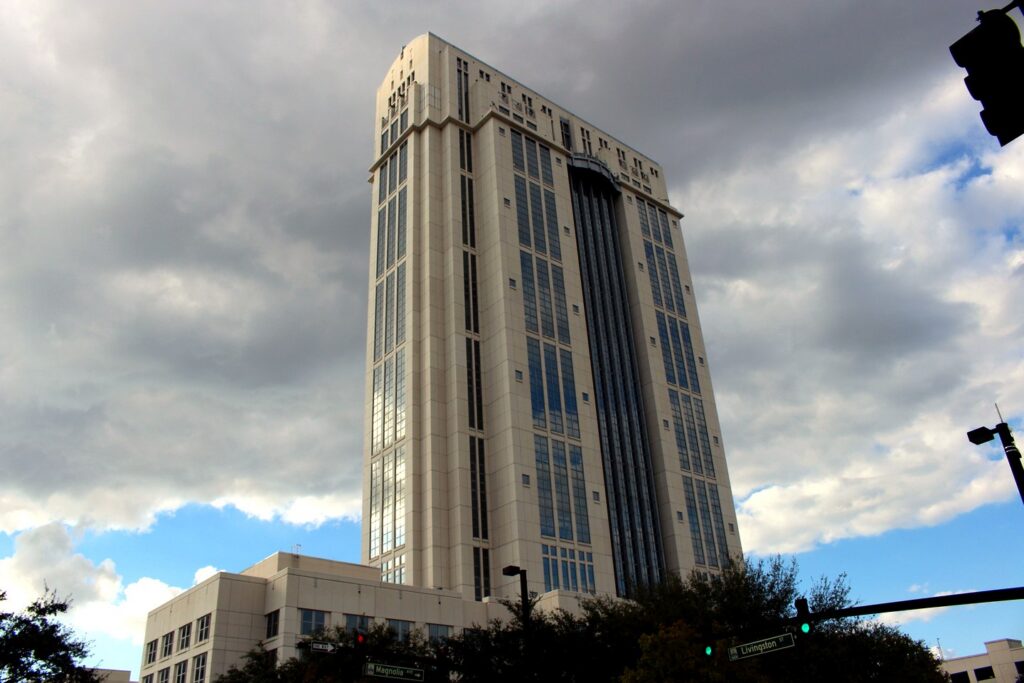
Sources & notes: U.S. Supreme Court docket, No. 26A714, Mullin v. National TPS Alliance (docketed Nov. 18, 2026; withdrawn Nov. 19, 2026), supremecourt.gov — read in full; letter of Solicitor General D. John Sauer to the Clerk, Nov. 19, 2026, filed on that docket — read in full, including the Ninth Circuit chronology (25-5724 C.A. Docs. 89, 94, 97, 102 and 109) and the quotations reproduced above. The 1,800-detention figure is the government’s figure in its own letter. No figure for the total number of Venezuelan TPS beneficiaries is stated, because published counts in secondary coverage conflict and no primary figure was read this run. Photo: Orange County Courthouse, file photography from the Citizen’s published coverage (Rivera, CC BY-SA 4.0), reused via the pipeline donor record.
Orlando Citizen by email
The weekly edition, in your inbox
One email, every Saturday: the week’s edition of Orlando Citizen — the week’s stories, rankings and winners, gathered in one place. Free, and you can unsubscribe at any time.
Related Stories

Editor’s Picks
Spotted an error? Tell us — corrections · How we rank