Orlando Dreamers MLB Bid: New Financing Letter Pushes Team Money Toward $2 Billion
The Orlando Dreamers say a new letter of intent adds several hundred million dollars for a Major League Baseball franchise purchase, taking their team-acquisition financing toward $2 billion — and they are making the case on the tourist tax: a record September and, they say, the first fiscal year over $400 million. What is actually in the announcement.
5 minute read
ORLANDO — The group trying to bring Major League Baseball to Orlando says its money just got bigger. The Orlando City Baseball Dreamers announced on Monday that they have received a letter of intent for several hundred million dollars in additional financing toward buying an MLB franchise — money the group says takes its total team-acquisition financing to approaching $2 billion, on top of more than $1 billion it says it has obtained for the team’s portion of stadium financing.
For residents, the announcement matters less for the baseball than for the argument underneath it. The Dreamers are building their case on the same visitor economy this desk covers every month — the tourist development tax, the visitor counts and the convention-center corridor where they want to build — and Monday’s release leans on all three.
What was actually announced
The new money is a letter of intent, not a completed financing. The release does not give an exact amount — “several hundred million dollars” is the group’s own wording — and it does not name the financing provider or state the letter’s conditions. No franchise has been awarded or purchased, and the release does not announce one. What it announces is interest, at a stated scale, plus a move into what the group calls its next phase: formalizing collaborations with strategic partners.
“This further emphasizes the belief in the Orlando market, the belief in our leadership group, and the belief in our economic model from the financial community,” said Barry Larkin, the Hall of Fame shortstop who serves as the group’s MLB ambassador. Jim Schnorf, the Dreamers co-founder who arranged the new letter, said the interest “reflects the growth and strength of the Orlando market, as well as the credibility and approach of our MLB initiative.”
The group also says Orlando has recently passed Detroit to become the country’s 14th-largest media market — its framing of why a team belongs here — and that its chief marketing officer, Andy Herdliska, is leading a phase built on community and youth-sports engagement and its Fan Packs, which give buyers priority positioning for future season tickets.
The tourist-tax figures — and what this desk can stand behind
The release rests its market case on the tourist development tax, the 6 percent Orange County levy on hotel rooms and other stays of under six months. It says September 2026 set an all-time record for TDT collections for that month, and that for the fiscal year ended September 30, 2026, collections surpassed $400 million for the first time. It also says Orlando is expected to welcome approximately 80 million tourists in calendar year 2026.
Those figures are reported here as the Dreamers cite them, because the Orange County Comptroller’s own September release — the document this desk traces every tourist-tax figure to — has not been located yet. The desk’s last Comptroller-traced baseline is the record $384 million collected in 2025, from the county’s budget, and the visitor baseline on record is Visit Orlando’s 76.7 million visitors in 2025. If the Comptroller’s September numbers confirm a first $400 million year, that is a genuine milestone in the tax’s history, and this desk will report it from the Comptroller’s release when it publishes. Until then, the $400 million figure is the Dreamers’ claim, labelled as such.
One part of the context is not in dispute: the tax cannot legally fund roads, schools or general government. It is restricted to tourism uses — the fence this desk states in every story on the tax, and the fence any future stadium proposal would have to fit inside.
The stadium, and the projections attached to it
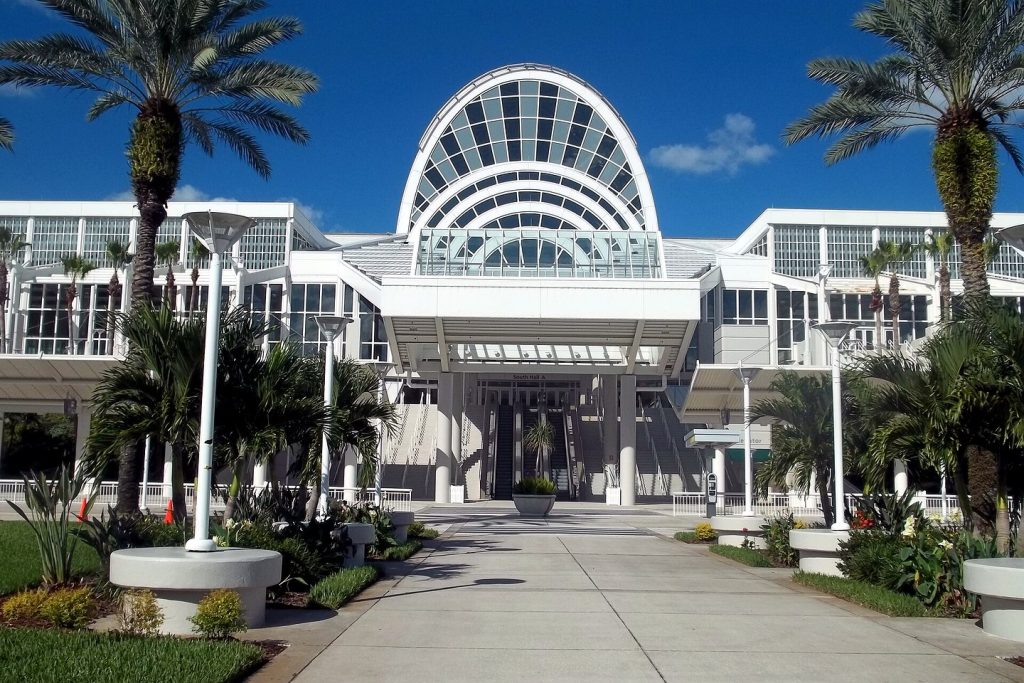
The planned ballpark is a domed stadium on a 35.5-acre parcel adjacent to SeaWorld and the Orange County Convention Center — the same corridor where the Convention Center’s $560 million Grand Concourse Expansion is now rising. Monday’s release asks the county for nothing; it announces private-side financing only.
The release also repeats the group’s previously reported projections from an updated independent study completed in the summer of 2026: that an Orlando MLB team playing in that stadium would yield approximately 52,000 permanent jobs and more than $72 billion in economic impact for Orange County over 30 years, and would generate an additional $32 million a year in tourist development taxes. Those are the group’s study projections for a project that does not yet exist — reported as projections, not as results.
Where this lands in the county’s live argument
The timing is not neutral. In October, county commissioners approved more than $780 million in visitor-funded projects from the same tax — and the incoming mayor has since said that plan should be up for reconsideration when she takes office on December 8. A baseball stadium is not in that approved plan, and Monday’s announcement does not put it there. But every new financing letter strengthens the hand the Dreamers will eventually bring to that table — and the tourist tax, as ever, is where the argument will happen.
More on this desk: the Tourist News hub and the Citizen’s Orlando tourism section.
Sources & notes
Orlando City Baseball Dreamers, LLC, “Orlando Dreamers Announce Hundreds of Millions of Additional Financing Under Initial Letter of Intent,” ACCESS Newswire, November 16, 2026 (identical text on orlandodreamers.com, read in full): the letter of intent for several hundred million dollars in additional franchise-acquisition financing; total team-acquisition financing “now approaching $2 billion, in addition to more than $1 billion” for the team’s portion of stadium financing; the Larkin and Schnorf statements; the strategic-partnership phase and Fan Packs (Herdliska); the No. 14 media-market claim; the tourist-tax and visitor claims (September 2026 a record September; fiscal year ended September 30, 2026 collections surpassing $400 million for the first time; approximately 80 million tourists expected in calendar 2026); and the previously reported updated independent study (summer 2026): approximately 52,000 permanent jobs, more than $72 billion in economic impact over 30 years and an additional $32 million annually in tourist development taxes, for a domed stadium on the 35.5-acre parcel adjacent to SeaWorld and the Orange County Convention Center. The release names no financing provider and states no exact amount for the new letter; both gaps are stated in the story. Tourist-tax figures are carried as the group’s cited figures: the Orange County Comptroller’s own September 2026 release had not been located by this desk at publication, and the desk’s last Comptroller-traced baseline is the record $384 million collected in 2025 (Orange County FY2026-27 budget, per this desk’s October 2026 coverage). The 76.7 million visitor figure is Visit Orlando’s 2025 count. Featured image: the Orange County Convention Center, photographed by Ebyabe (CC BY-SA 4.0, via Wikimedia Commons), reused from this desk’s Convention Center expansion coverage — the proposed stadium site sits adjacent to the Center.
Orlando Citizen by email
The weekly edition, in your inbox
One email, every Saturday: the week’s edition of Orlando Citizen — the week’s stories, rankings and winners, gathered in one place. Free, and you can unsubscribe at any time.
Related Stories
 TourismOrlando Airport Awards: MCO Honored for Helping Spirit Airlines Workers After the Shutdown
 TourismICE! at Gaylord Palms, The Resident’s Practical Guide: The Polar Express in Two Million Pounds of Ice
 TourismOrlando Hotel Occupancy and Tourism Jobs: 476,541 Jobs and a $98.6 Billion Impact, Visit Orlando Reports
Spotted an error? Tell us — corrections · How we rank