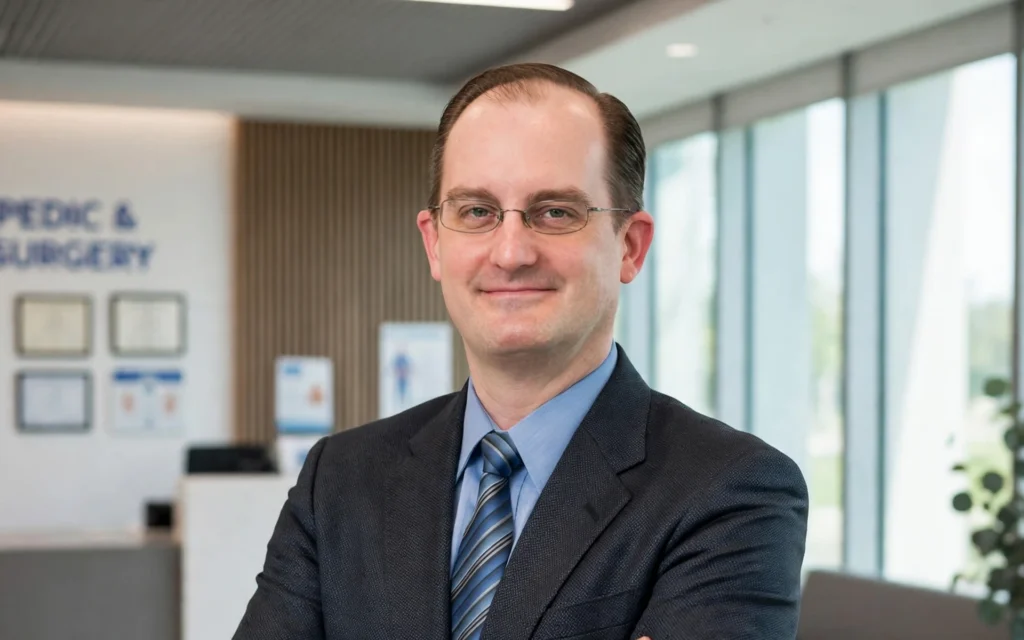
Florida Wants You: Dr. Steven Haase, the Surgeon Who Gives People Their Hands Back
In Ann Arbor, Michigan, a professor of plastic and orthopaedic surgery leads one of America's great hand surgery programs, rebuilding the hands that trauma and time have taken. In the second installment of the Citizen's Florida Wants You feature, Florida makes its case: Dr. Steven Haase, we want you here.
10 minute read
There is a measurement in medicine that never appears on a chart: the distance between a hand that works and a hand that does not. It is the distance between holding a job and losing one, between buttoning your own shirt and asking for help, between playing the piano and remembering how. In Ann Arbor, Mich., a surgeon has spent three decades closing that distance — one tendon, one nerve, one shattered wrist at a time. He is Dr. Steven Haase, a professor of plastic and orthopaedic surgery at the University of Michigan, the chief of its Division of Hand Surgery and the doctor to whom other physicians send their hardest hands.
This newspaper is based in Florida, and we will be candid about why we are writing about a hand surgeon in Ann Arbor. This piece is the second installment of our Florida Wants You feature, in which we profile exceptional people elsewhere and make the case, in print, for them to bring their talents here. Dr. Haase is our argument this time because, by every measure we could examine — training, scholarship and the verdict of the profession that made him the head of one of America’s great hand surgery programs — he is precisely the kind of specialist a growing state should be recruiting.
The making of the doctor
Dr. Haase’s path to the operating room began, fittingly for a man who would spend his life on precision work, in a chemistry laboratory. He earned his bachelor’s degree in chemistry and pre-medicine at Taylor University in Upland, Ind., graduating summa cum laude in 1991, and then stayed in the laboratory for a year of graduate study in biochemistry at the University of Illinois before turning to medicine. He received his medical degree from the University of Illinois College of Medicine in 1996, graduating with honors and election to Alpha Omega Alpha, the national medical honor society, and winning the Warren H. Cole Scholarship for excellence in surgical studies.
Then came the long apprenticeship that separates hand surgeons from everyone else. A general surgery residency at St. Joseph Mercy Hospital in Ann Arbor from 1996 to 1999. A research fellowship in plastic surgery at the University of Michigan. A plastic surgery residency at Michigan, finished in 2003. And then — because hands are their own country, with their own anatomy, their own emergencies and their own unforgiving tolerances — a dedicated fellowship in hand surgery at the Mayo Clinic in Rochester, Minn., completed in 2004. Along the way, he trained in microvascular surgery, the microscope work of rejoining blood vessels and nerves finer than thread.
He is board-certified by the American Board of Plastic Surgery, with the board’s additional subspecialty certification in Surgery of the Hand — the double credential his field asks of the people it trusts with its most delicate work. He is a fellow of the American College of Surgeons. The promise showed early: As a resident, he won the Best Hand Paper award at the 2003 Plastic Surgery Senior Residents Conference.
The hands, restored
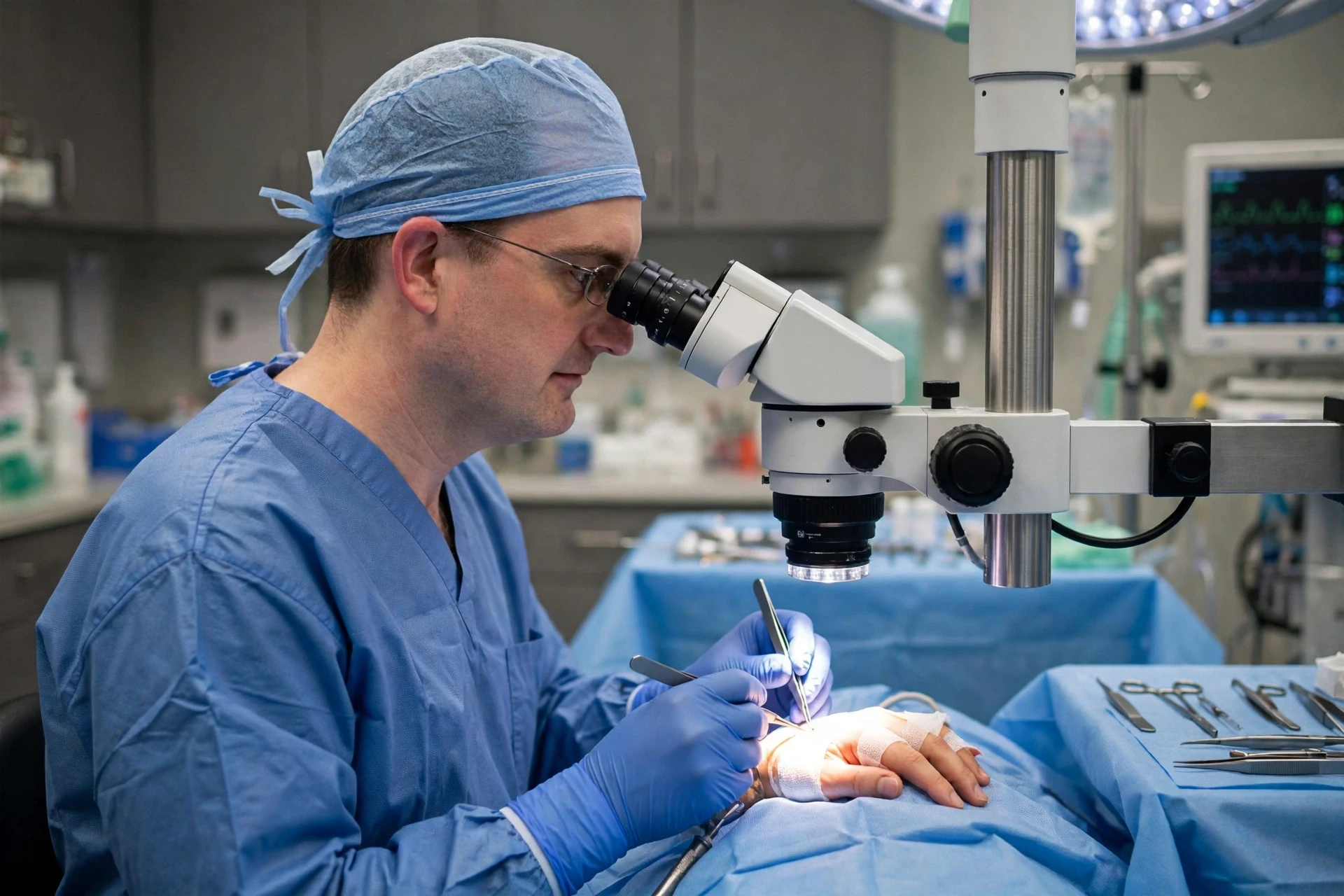
Ask what a reconstructive hand surgeon does, and the answer is plain: He gives people back the instruments they live by. Dr. Haase’s practice, by Michigan Medicine’s own account, covers the full territory of the hand and wrist — trauma, from fractures to tendon lacerations to nerve injuries; the slow crush of nerve compression, including carpal tunnel and its cousins; wrist injuries; job-related injuries; and arthritis, including the grinding osteoarthritis of the thumb that steals the grip from older hands. His particular focus runs to hand and nail tumors, skin cancers of the hand and Dupuytren disease, the cordlike contracture that slowly curls fingers shut. Beyond the hand, he has spent years in the unglamorous, essential work of wound care, serving as medical director of Michigan Medicine’s wound care program since 2008 and of its Comprehensive Wound Care Clinic, coordinating the inpatient and outpatient treatment of wounds that will not heal on their own. Since 2004, he has also served as a consulting physician at the Ann Arbor VA hospital, looking after the hands of veterans.
Michigan Medicine itself told the story of what that practice looks like at its best. In November 2017, the week of Thanksgiving, Matt Gingerich, a 31-year-old father of two from Sturgis, was making the final cut on a play barn — a Christmas gift he was building for his daughters — when the board kicked and his left hand slipped into his table saw. The blade severed his thumb and little finger and mangled the tendons and nerves of the rest. His brother-in-law went back to the workshop, found the missing digits and packed them in ice.
At Michigan Medicine, Dr. Chung began the replantation at 1:30 that afternoon; Dr. Haase took over two hours later and worked into the night, reattaching the bones and nerves and restoring circulation by 11 o’clock. The thumb was saved. The little finger could not be, and was used instead, in Dr. Haase’s words, “for spare parts.” “I remember it was the day before Thanksgiving, and to hear he was building a gift for his kids, it really touched all of us,” he said afterward. He warned Mr. Gingerich’s wife frankly that her husband might have to find a new line of work. Instead, after a second operation and months of therapy, Mr. Gingerich kept his job as a department manager at an R.V. plant, regained feeling in all but the tips of two fingers and — directing seven family members and friends from the sidelines — finished the play barn in time for Christmas. “The outcome I’ve had has been remarkable,” Mr. Gingerich said.
The record behind the practice is a scholar’s. His curriculum vitae lists more than 50 peer-reviewed publications. He was a co-investigator in the WRIST trial — the Wrist and Radius Injury Surgical Trial, a randomized study funded by the National Institutes of Health across more than 20 centers that set out to determine, with evidence rather than habit, how best to treat broken wrists in patients over 60. The trial’s two-year findings, published in JAMA Network Open in 2021 with Dr. Haase among the authors, offered the kind of answer only a study that size could provide: The most involved operation restored older patients’ function sooner in the early weeks, but at 24 months, hand function and pain scores were no better than with a well-managed cast — a result with the power to spare countless older patients operations they never needed. With federal and foundation support, he has studied the hardest question in his corner of surgery — when a mangled limb should be rebuilt and when it should be let go — along with a modern one: how to treat pain after hand surgery without feeding the opioid epidemic, as principal investigator on a grant from the American Foundation for Surgery of the Hand devoted to that very question. Twice, research teams on which he served have won the foundation’s J. Leonard Goldner Pioneer Research Award. The field’s publishers lean on him as well: He was the guest editor of the issue of Hand Clinics devoted to Dupuytren disease, and with Dr. Chung he wrote the wrist-fracture chapter of Plastic Surgery, the specialty’s standard multivolume textbook. ResearchGate’s index of his publications runs to 76 entries, which have been cited nearly 2,000 times.
Michigan, in the end, made its own verdict plain. The medical student rose through the faculty ranks: assistant professor in 2004, associate professor in 2011, full clinical professor of plastic surgery — and, jointly, of orthopaedic surgery — in 2021. Since 2018, he has directed the fellowship that trains the next generation of hand surgeons. He has also served as medical director of the university’s Adult Plastic Surgery Clinic. His residents have voted him their Annual Didactic Teaching Award seven times. His peers elected him president of the Michigan Academy of Plastic Surgeons. Hour Detroit named him a Top Doctor. The American Society for Surgery of the Hand brought him through its Young Leaders Program in 2009 and then, in 2016 and 2017, sent him across the country as one of its visiting professors — an arrangement through which the society lends its best teachers to other programs. He is an active fellow of the American Association of Plastic Surgeons, the specialty’s invitation-only senior society, and since 2010 has been a consultant reviewer for the Journal of Hand Surgery, one of the gatekeepers who decide what the field reads. His lectures have carried him to a congress platform in Buenos Aires, by teleconference to surgeons in Kumasi, Ghana, and to a panel in Athens in 2025. He teaches fracture care as a faculty member for AO Trauma North America’s hand and wrist course — he taught it in Ann Arbor in June 2026 — and in November 2026 he joined a national educators’ session coaching young surgeons on how to land a fellowship like the one he runs. At the specialty’s national meeting in Denver, he won its Jeopardy championship, which says something about the memory, and the competitive streak, beneath the professor. Three decades in, he is still adding tools: a hand-surgeon ultrasound mini-fellowship in 2021, AO faculty coaching in 2025. The profession, in short, keeps handing him its students, its standards and its hardest problems — which is what a field does with the people it trusts most.
What the patients say
A newspaper should not ask readers to take its word for a surgeon’s quality — and in Dr. Haase’s case, the public review ledgers are thinner than the professional ones, as they often are for academic surgeons whose patients arrive by referral rather than by search engine. The listings that exist are broadly favorable: Healthgrades puts his likelihood-to-recommend score at 4.3 out of 5, and WebMD’s stands at 4.0 out of 5, each drawn from a handful of ratings. The more telling public verdict is the data-driven one: MediFind, which ranks physicians on publications, trials and referral patterns rather than reviews, names him a Distinguished provider for Dupuytren contracture and ganglion cyst care, and lists him as highly rated across seven conditions in all.
Ann Arbor, in other words, already knows what it has. Which brings us to the purpose of this feature.
Florida wants you
Dr. Haase, consider this an open letter, published in a newspaper that would like nothing better than to lose the premise of this argument — your Michigan address.
Florida is one of the fastest-growing states in the union, and Central Florida is among its fastest-growing corners. Consider what that growth means in the terms of your specialty. Every new subdivision requires a construction workforce, and construction runs on hands. Every new retirement community brings a population arriving at precisely the age of arthritic thumbs, carpal tunnel, Dupuytren contracture and the wrist fracture that follows a fall — the very fracture your WRIST trial taught the world to treat better. Every new mile of highway, every warehouse, every kitchen and boatyard and orange grove adds its share of the lacerations, crush injuries and mangled hands that cannot wait for a specialist three counties away. Florida’s trauma centers and emergency departments do not lack for hand injuries. What they lack — what this entire fast-growing state lacks — is enough fellowship-trained hand surgeons of your caliber to treat them.
And the plain truth is that Florida does not have enough great reconstructive surgeons. The state is adding people faster than it is adding the specialists who put them back together, and nowhere is that gap felt more personally than in the work you do — because a hand injury is never just an injury. It is a livelihood, a hobby, a measure of independence, awaiting the availability of someone who can restore it. In community after community, the demand is the same: a surgeon who can rebuild what trauma and time have taken, and who has trained others to do the same.
What you have built in Ann Arbor — a hand surgery division led, a fellowship directed, a generation of surgeons taught and a research record that changed how your field treats the broken wrists of older patients — is precisely what a growing Florida hungers for, and precisely what its newest residents cannot find enough of. We cannot offer you the University of Michigan here. We can offer you a state that is openly recruiting the best of everything, surgeons emphatically included; sunshine in February; and more hands in need of your work than any one man could ever tend to.
The invitation stands, Doctor. Florida wants you.
Editor’s note: “Florida Wants You” is an Orlando Citizen feature that profiles exceptional people outside Florida and invites them to bring their talents to the Sunshine State. Dr. Haase has not announced any plans to relocate; the invitation is the newspaper’s own, extended in admiration. Dr. Steven Haase of Ann Arbor, a plastic and reconstructive surgeon, is no relation to Dr. Steve Hass, the Owosso optometrist profiled in the feature’s first installment — though this newspaper confesses it would happily recruit them both. The portraits in this feature were produced by the Orlando Citizen.
Orlando Citizen by email
The weekly edition, in your inbox
One email, every Saturday: the week’s edition of Orlando Citizen — the week’s stories, rankings and winners, gathered in one place. Free, and you can unsubscribe at any time.
Related Stories

Editor’s Picks
Spotted an error? Tell us — corrections · How we rank