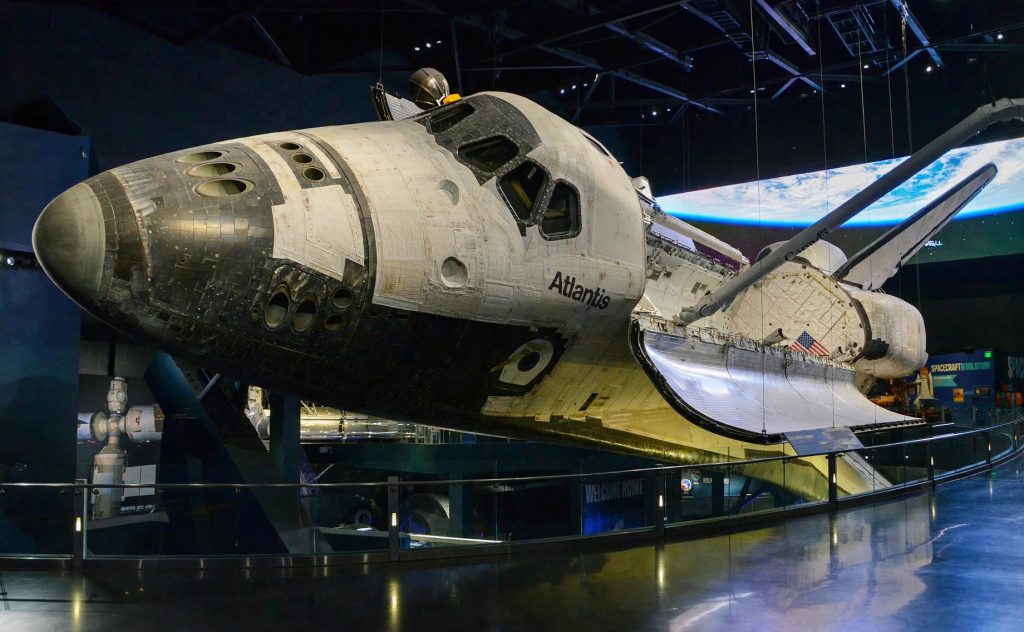
Florida Bids for the U.S. Space Academy: UCF in 2028, Kennedy Space Center by 2031
Florida is pitching a two-stage home for the U.S. Space Academy that would start 300 students in Orlando at the University of Central Florida in fall 2028 while preparing a permanent 1,000-acre campus at Kennedy Space Center for fall 2031.
5 minute read
ORLANDO — If Florida gets its way, the first 300 students of the United States Space Academy will arrive in the fall of 2028 nowhere near a launch pad. They will begin their studies in Orlando, at the University of Central Florida — an institution that already calls itself America’s Space University — while, to the east at the spaceport, ground is prepared for a campus they would never quite finish: 1,000 acres at Kennedy Space Center, scaled for a student body four times their size.
That split arrangement is the wager at the center of Florida’s bid for the Academy, submitted to NASA’s Request for Information and announced by Space Florida on Tuesday, Nov. 17. One half of the proposal is built for speed: an interim campus at UCF ready for the inaugural class in fall 2028, with the Academy operating as a distinct college, supported by Embry-Riddle Aeronautical University and backed by the Space University Research Consortium. The other is built for permanence: a 1,000-acre site on NASA land at Kennedy Space Center, which Florida says can be made available by amending Space Florida’s existing property agreement for the Launch and Landing Facility — the former shuttle runway — to support a groundbreaking in 2027 and a permanent campus for at least 1,200 students by fall 2031.
The case Florida is making
Florida’s pitch rests on a straightforward premise: the Academy should train where the work already happens. “Florida is the nation’s leader in space exploration and innovation, and we have the infrastructure, workforce, and proven track record to ensure America remains at the forefront of the space industry,” Gov. Ron DeSantis said in the announcement. “From Cape Canaveral to our growing aerospace industry, Florida is where the future of space is already being built. The new Space Academy belongs in Florida, and we are ready to help prepare the next generation of Americans to lead our nation’s efforts in space exploration.”
Across a looming handoff of power, the state’s leaders spoke with one voice. Sen. Ashley Moody put the case as an economy argument: “Why spend years and millions of dollars replicating what we’ve already built here? The U.S. Space Academy belongs in Florida.” Governor-elect Byron Donalds, who takes office Jan. 5, joined the bid rather than wait to inherit it cold. “Florida is where America goes to win the space race,” he said. “The U.S. Space Academy will train the workforce that keeps our nation in the lead and create good-paying jobs for the Floridians who build our path to the stars.” And the Legislature’s incoming leaders, Senate President Jim Boyd and House Speaker Sam Garrison, underscored the urgency in a joint letter of support to the Presidential Commission on the U.S. Space Academy: “Where it is built will shape how quickly that happens, and Florida is ready to move at the pace this mission demands.”
The money, as far as it goes
To back up that claim of readiness, Florida points to what it has already spent: more than $680 million in space transportation infrastructure, most of it at or near the proposed site. Roads and site work could be supported through the Florida Department of Transportation’s State Work Program and Space Florida’s Spaceport Improvement Program, and Space Florida says it can finance and develop Academy facilities through lease-purchase agreements, ground leases and public-private partnerships — the same model it used with NASA to return the former Shuttle Landing Facility to active service. “Florida has spent years building the financing tools, university partnerships and operational capability to stand up an institution like this, and that readiness means we can move quickly and efficiently,” said Rob Long, Space Florida’s president and chief executive.
What the bid leaves unsettled, however, is the total federal cost. Initial cost estimates for the Kennedy Space Center academy vary between $1.9 billion and $2.2 billion, with funding sources undetermined, according to Florida Today’s reporting on the proposal. That account also offers a sharper picture of the interim operation, placing it in the 97,573-square-foot University Tower in the Central Florida Research Park, with Embry-Riddle providing flight-training support from Daytona Beach.
What happens next
For all the political alignment behind it, a submission is not a selection. The Academy was established by a presidential executive order signed Aug. 28, which created a Presidential Commission, chaired by NASA Administrator Jared Isaacman, to settle the institution’s design and recommend a location; NASA’s Request for Information closed Monday, Nov. 16, and the commission is expected to deliver its recommendation by Dec. 26, according to Florida Today. Florida is not alone in the race: published reports name Texas, Alabama, Louisiana, Ohio, Arizona, Pennsylvania and Nevada among the other states that have bid. Against that field, Florida is resting its case on the one asset none of its rivals can copy — the rockets already leave from here. The Citizen’s coverage of the launch cadence that makes that argument concrete — including next Monday’s Ariane 6 flight from French Guiana carrying Amazon Leo satellites — is here.
More from the State desk and the State archive.
Sources & notes: Space Florida, “Florida is a Go: Submits Official Bid for the United States Space Academy,” Nov. 17, 2026 (read in full at spaceflorida.gov): the two-part proposal, the 300-student UCF interim class of fall 2028, the 1,000-acre Kennedy Space Center site and the Launch and Landing Facility agreement amendment, the 2027 groundbreaking and fall 2031 permanent campus for at least 1,200 students, the more-than-$680 million prior infrastructure investment, the FDOT and Spaceport Improvement Program support and the financing tools, and all quotations from Gov. DeSantis, Sen. Moody, Governor-elect Donalds, Rep. Haridopolos, Senate President Boyd and Speaker Garrison (their joint letter), Sen. Mayfield, Rep. Hodgers, Jeanette Nuñez, Rob Long, UCF President Cartwright, Embry-Riddle President Butler and FDOT Secretary Perdue as printed in the release; only the DeSantis, Moody, Donalds, Boyd/Garrison and Long quotations are used in the story. The Aug. 28 executive order, the Isaacman-chaired commission, the Nov. 16 Request for Information deadline, the expected Dec. 26 recommendation, the $1.9–$2.2 billion cost range with funding undetermined, the University Tower detail and the list of rival bidding states are from Florida Today’s Nov. 17, 2026 report and are attributed to it in the story. The bid is a proposal to a federal process; no site has been selected. Photo: Orlando Citizen file photograph, first published with the Citizen’s Ariane 6 launch coverage.
Orlando Citizen by email
The weekly edition, in your inbox
One email, every Saturday: the week’s edition of Orlando Citizen — the week’s stories, rankings and winners, gathered in one place. Free, and you can unsubscribe at any time.
Related Stories
 StateFlorida Flood Emergency Grows to 21 Counties After Broward Takes 10 Inches in 12 HoursStateNo Special Session for Amendment 3: Florida’s New Leaders Say the Property-Tax Cut Takes Effect Jan. 1 on Its OwnStateBoyd and Garrison Take the Gavels: Florida’s New Legislature Organizes Around One Word — Affordability
Editor’s Picks
Spotted an error? Tell us — corrections · How we rank