ChampionsGate HOA Explained: The Master Association and the Village Associations
One master association, separate village and component associations, and a government district that is not an association at all — how ChampionsGate's layered HOA structure works under Florida's Chapter 720, from the state corporate registry and the statute.
6 minute read
Every home in ChampionsGate sits under more than one association, and the layering confuses almost everyone who buys here. There is a master association for the community as a whole. There are separate associations for individual villages and components inside it. And there is a community development district — a government, not an association at all — charging its own assessment on the same tax bill. This explainer separates the association layers using the public record: the corporations registered with the State of Florida and the statute, Chapter 720 of the Florida Statutes, under which Florida homeowners’ associations operate. It is part of the desk’s governance coverage collected on the ChampionsGate beat and in the ChampionsGate archive.
The shape of the structure
Florida law defines the pieces. Under section 720.301, a “declaration of covenants” is a recorded written instrument, in the nature of covenants running with the land, which subjects the land in a community to the jurisdiction and control of an association in which parcel owners must be members. An “assessment” is a sum payable to the association as authorised in the governing documents — and if it is not paid, it can result in a lien against the parcel. Membership, in other words, is not a subscription a ChampionsGate owner can cancel. It runs with the deed.
At ChampionsGate, the recorded structure has a master layer and component layers beneath it. The state corporate registry — Sunbiz, maintained by the Florida Division of Corporations — lists ChampionsGate Master Association, Inc., a Florida not-for-profit corporation, document number N13000002179, filed March 6, 2013, status active, with its principal address at 1520 Oasis Club Boulevard, Champions Gate, FL 33896. That is the community-wide master association: the entity whose declaration covers the community as a whole.
Beneath and beside it, the same registry lists separate associations for components of the community, each its own corporation with its own governing documents: Vistas at ChampionsGate Master Community Association, Inc. (document number N14000004614, filed May 13, 2014, active) and ChampionsGate Condominium Property Owners’ Association, Inc. (document number N06000008224, filed August 3, 2006, active), serving the condominium component. Federal court filings in the Middle District of Florida also reference a Country Club at ChampionsGate Master Community Association, Inc. as the association for the country club community within ChampionsGate. The practical point for an owner is simple: your obligations are set by every declaration your parcel sits under — the master’s, and your village or component association’s — not by any one of them alone.
What the master association is for
A master association’s declaration typically carries the community-wide obligations: the standards that apply across all of ChampionsGate rather than within one village, and the common responsibilities that no single village could sensibly fund alone. A village or component association’s declaration carries the local layer — the rules and services specific to that village’s homes, streets and amenities. Which layer pays for a given item is a question each community’s documents answer in their own words, and ChampionsGate’s documents are the only authoritative answer for a given parcel. This desk does not summarise fee schedules it cannot trace to a governing document, and no current ChampionsGate association fee schedule is published in the public sources used for this article — owners should read their own declaration and the association’s adopted budget, both of which are official records (see below), rather than rely on figures quoted in property listings, which are marketing material and frequently out of date.
One boundary is worth drawing clearly, because it is the most common source of confusion. The associations are private corporations. The ChampionsGate Community Development District is a unit of government under Chapter 190, and its non-ad valorem assessment is a government charge, not association dues. The two appear in different places, are set by different bodies under different statutes, and neither body’s budget pays the other’s bills. Our companion piece, ChampionsGate CDD Explained, works through the district’s budget in the same detail.
The rules owners actually live under
Chapter 720 sets the floor for how every Florida homeowners’ association — master or village — must operate, whatever its own documents say. An association operating a community must be a Florida corporation, and its initial governing documents must be recorded in the official records of the county where the community is located. Board meetings are open to members: a meeting of the board occurs whenever a quorum gathers to conduct association business, meetings must be open to all members (with a narrow exception for meetings with the association’s attorney about litigation), and notice of board meetings must be posted in a conspicuous place in the community at least 48 hours in advance, except in an emergency. An assessment may not be levied at a board meeting unless the meeting notice includes a statement that assessments will be considered and the nature of those assessments. Minutes of member and board meetings must be kept.
The association must also maintain its official records — the recorded declaration and its amendments, the bylaws and their amendments, the current rules, minutes, contracts including any management agreement, and financial records — and make them available to members. For an owner with a question about what they are charged or what a rule requires, the official records, not a neighbour’s summary or a listing agent’s flyer, are the source. Where a ChampionsGate document and a summary of it differ, the document governs; where two public documents appear to conflict, this desk reports both and takes no side — the paper covers the associations, it is not a party in any owner’s dispute with them.
Buying in: what to ask for
Because assessments can become a lien on the parcel, the association layer is a financial fact about a ChampionsGate home, not fine print. A buyer — or an owner preparing to sell — should establish, from documents rather than listings: which associations the parcel belongs to (master, plus which village or component association); what each association’s current regular assessment is, as adopted in its budget; whether any special assessment has been levied or is under consideration, which under Chapter 720 must be flagged in the board meeting notice; and what the recorded declaration and rules say about the uses that matter to the household, including renting, which is governed by the declaration as written — a point that matters greatly in a community where many homes are vacation rentals, and which our short-term rental rules explainer takes up in full. The ChampionsGate area portal gives the wider community picture, The Villages of ChampionsGate, One by One walks the villages whose associations these are, and Living in ChampionsGate Year-Round covers how the layered charges feel to the people who pay them every month of the year.
Sources & notes
Florida Division of Corporations (Sunbiz) entity records: ChampionsGate Master Association, Inc. (N13000002179, filed March 6, 2013); Vistas at ChampionsGate Master Community Association, Inc. (N14000004614, filed May 13, 2014); ChampionsGate Condominium Property Owners’ Association, Inc. (N06000008224, filed August 3, 2006) — all shown active at the time of research. Florida Statutes, Chapter 720 (Homeowners’ Associations), sections 720.301 (definitions), 720.303 (association powers and duties; board meetings; official records; budgets) and 720.308 (assessments and charges), via the Florida Senate / Online Sunshine. Reference to the Country Club at ChampionsGate Master Community Association, Inc.: filings in U.S. District Court, Middle District of Florida, Case No. 6:25-cv-466 — cited for the association’s existence only; this article takes no position on any matter in that litigation. No association fee or assessment figure is stated in this article because none could be traced to a current governing document in the public sources consulted; association budgets and declarations are obtainable by members as official records under section 720.303.
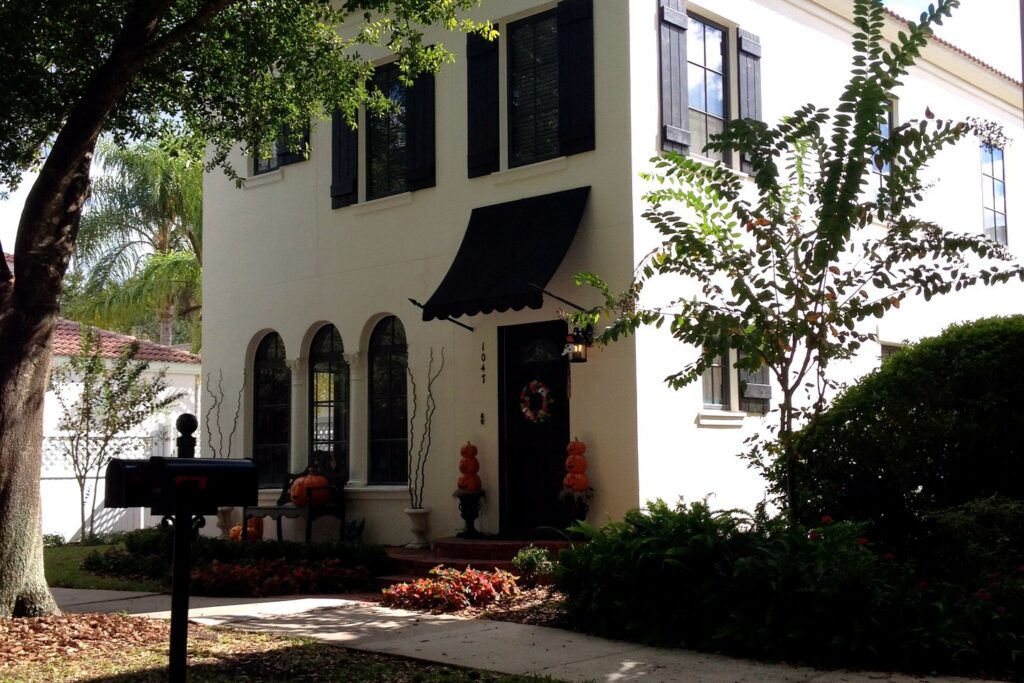
Photo credit: A house in Celebration, Florida, the planned community neighbouring ChampionsGate in Osceola County, photographed by Simonhardt93, via Wikimedia Commons (CC BY-SA 4.0). The photograph illustrates the kind of village home the association structure governs; it does not depict a ChampionsGate property.
Orlando Citizen by email
The weekly edition, in your inbox
One email, every Saturday: the week’s edition of Orlando Citizen — the week’s stories, rankings and winners, gathered in one place. Free, and you can unsubscribe at any time.
Related Stories
 ChampionsGateStoneybrook South ChampionsGate CDD: Bulkhead Repairs Capped at $140,000, FY2027 Assessments Held Flat
 ChampionsGateChampionsGate CDD FY2027 Budget: No Assessment Increase, $600,000 for Boulevard Resurfacing
 ChampionsGateChampionsGate Master Association Board Meeting: Tuesday November 17, 6 p.m., Virtual — What Residents Need to Know
Editor’s Picks
Spotted an error? Tell us — corrections · How we rank