Two Floods, Two Disaster Numbers: Brevard Is Covered Twice, and the County Lists Do Not Match
FEMA has assigned DR-4957-FL to Florida's mid-November flooding, opening household aid to Brevard and Broward, public assistance to eight counties, and leaving Brevard as the only county covered for household relief under two separate disaster declarations.
4 minute read
ORLANDO — For a Brevard County family whose home took water in the storms that began on Halloween weekend, and then took water again in the downpours of mid-November, the hardest question in the recovery is not how to dry a house. It is which flood the house belongs to. Across Florida, this month’s flooding is now split between two federal disaster declarations, issued two days apart for two different storm periods — with county lists that do not match.
The second declaration now carries the number this desk could not confirm when FEMA announced it on Friday: DR-4957-FL. Recorded in FEMA’s own disaster declarations database with a declaration date of Nov. 26, 2026, it covers severe storms and flooding that began Nov. 16 and remain listed as continuing. The first, DR-4956-FL, was declared Nov. 24 for the flooding that began Oct. 31, also listed as continuing. Between them, the two declarations bring 13 Florida counties under some form of federal assistance.
Which declaration covers your county
Under DR-4957, the mid-November declaration, FEMA’s database designates only two counties — Brevard and Broward — for the Individuals and Households Program, the channel through which homeowners and renters receive grants for temporary housing and home repairs. Eight counties are marked for Public Assistance, the program that reimburses governments for emergency work: Brevard, Broward, Flagler, Indian River, Orange, Putnam, Seminole and Volusia.
The earlier declaration, DR-4956, draws a different map altogether. Six counties are marked for the Individuals and Households Program: Brevard, Indian River, Martin, Okeechobee, Palm Beach and St. Lucie. Six are listed for Public Assistance: Brevard, Hardee, Indian River, Martin, Okeechobee and Palm Beach. Even within that single declaration, the two rosters part ways: Hardee County appears only on the Public Assistance side, while St. Lucie appears only on the household side.
Taken together, the two records allow residents of seven counties to seek household assistance under one declaration or the other. Brevard stands alone as the only county marked for household aid under both — an entry in the federal record that mirrors a Space Coast that flooded twice in three weeks. Indian River County appears in both declarations as well, though it is marked for household assistance only under the first.
Why the number matters
In a federal recovery, a disaster number is not paperwork for its own sake. It is the key under which an application is filed, and the incident period attached to it — damage from Oct. 31 onward under DR-4956, and from Nov. 16 onward under DR-4957 — is how FEMA sorts one household’s two floods into two separate files. Residents of the seven household-assistance counties should apply under the declaration that matches when their damage occurred. As the Citizen reported when each declaration was announced, the order of operations is unchanged: file with your own insurer first, then apply at DisasterAssistance.gov, by calling 1-800-621-3362, or through the FEMA App. Brett H. Howard is the federal coordinating officer named for both recoveries, and FEMA’s announcements state that additional county designations may be made if damage assessments warrant them.
The pair of declarations also settles a question this desk has tracked since Nov. 9, when Gov. Ron DeSantis asked the President for an expedited major disaster declaration for the fall flooding. That request was answered on Nov. 24; the state’s additional request, described in the governor’s Nov. 23 flood update, was answered two days later, on Nov. 26. Yet neither storm is closed on the books. The state emergency underlying both declarations — Executive Order 26-227, as amended to 23 counties — remains in force until Jan. 1, 2027, while both incident periods remain listed as continuing.
More of the Citizen’s State coverage is collected on the State hub, and the full State archive is in the State category. Related coverage: the announcement of the second declaration, Second FEMA Disaster Declaration for Florida, and the first declaration’s arrival, FEMA DR-4956 Florida flooding assistance.
Sources & notes
All declaration facts — numbers, titles, declaration dates, incident periods, designated counties and programme flags — are from FEMA’s OpenFEMA Disaster Declarations Summaries dataset (version 2), queried by this desk on the morning of Nov. 29, 2026, for disaster numbers 4956 and 4957. The dataset is FEMA’s own record; FEMA’s disaster web pages themselves were unreachable from this desk (the agency’s site returned an access-denied notice on every route, as it has throughout this flood coverage), so the DR-4957 number is asserted from the dataset rather than the declaration’s web page. The Individuals and Households and Public Assistance designations are the dataset’s programme flags for each county. Incident end dates are blank in the dataset for both declarations, which is why both are described as continuing. The application steps, the coordinating officer and the possibility of additional designations are from FEMA’s Nov. 24 and Nov. 27 announcements as reported in this desk’s earlier coverage, linked above. This product uses the Federal Emergency Management Agency’s OpenFEMA API, but is not endorsed by FEMA.
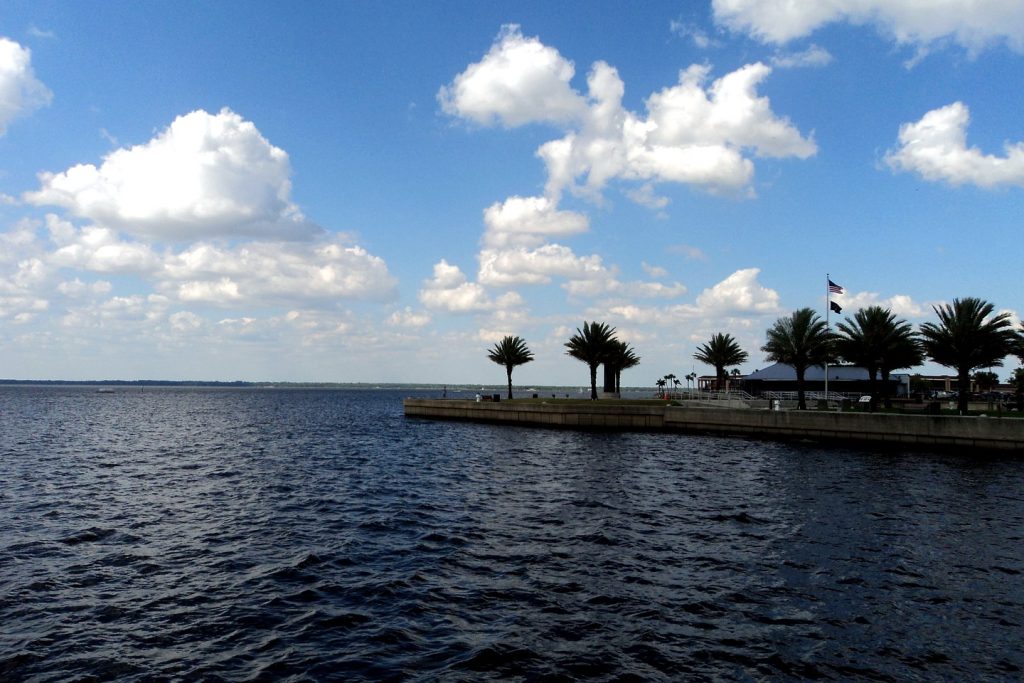
Photo: Orlando Citizen file photograph, first published with the Citizen’s November 27 FEMA declaration coverage.
Orlando Citizen by email
The weekly edition, in your inbox
One email, every Saturday: the week’s edition of Orlando Citizen — the week’s stories, rankings and winners, gathered in one place. Free, and you can unsubscribe at any time.
Related Stories
Editor’s Picks
Spotted an error? Tell us — corrections · How we rank