Stay Lifted for Ricardo Gonzalez: Psychiatrists Find Him Competent, Dec. 1 Execution Stands
After three psychiatrists found Ricardo Gonzalez competent to understand the death penalty and why the state intends to impose it, Gov. DeSantis dissolved a temporary stay and left his Dec. 1, 6 p.m. execution in place.
4 minute read
TALLAHASSEE — More than three decades into a sentence of death, Ricardo Gonzalez faced a single, narrow question: whether he understands what the death penalty is and why the state intends to impose it on him. Three psychiatrists examined him on Wednesday to answer that question alone. On Thursday, Gov. DeSantis adopted their finding that he does, dissolving the temporary stay that had paused the case and restoring the Oct. 30 death warrant as the controlling document ahead of a December execution date.
In Executive Order 26-235, signed Nov. 19, 2026, the governor dissolved the temporary stay of execution imposed by Executive Order 26-231. The order notes that the commission appointed under section 922.07, Florida Statutes, examined Mr. Gonzalez on Nov. 18 and reported to the governor on Nov. 19 that “he has the mental capacity to understand the nature of the death penalty and the reasons why it is to be imposed upon him” — a conclusion the governor writes that he adopts. Section 2 of the order states that the death warrant signed Oct. 30, 2026, under which the execution is scheduled for Dec. 1, 2026, at 6 p.m., “remains in full force and effect.”
How the stay arose
The pause was brief and strictly procedural. In Executive Order 26-231, signed Nov. 17, the governor recorded that counsel for Mr. Gonzalez had written to raise the claim that he might be insane, citing difficulty understanding information during a recent telephone conversation, a “lower-average range” IQ and chronic traumatic encephalopathy. None of it, the governor wrote, demonstrated a current lack of capacity. Yet section 922.07 required action anyway: when the governor is informed that a person under sentence of death may be insane, the statute directs him to stay the execution and appoint a commission of three psychiatrists to examine the prisoner.
The governor named Dr. Wade Myers, Dr. Tonia Werner and Dr. Emily Lazarou to the commission, charging them with a single determination: whether Mr. Gonzalez understands the nature and effect of the death penalty and why it is to be imposed on him. All three psychiatrists were present for the Nov. 18 examination, as the order required. Counsel for both sides were permitted to attend, though not to participate, and the Department of Corrections bears the commission’s expenses. The report was due by the close of business on Nov. 19; Executive Order 26-235 records that it arrived that day.
What the orders do — and do not — decide
A competency finding under section 922.07 settles nothing about guilt, the sentence or any appeal. It answers only the single question the statute poses, and Executive Order 26-235 carries out what section 922.07(2) then demands: having adopted the commission’s conclusion, the governor writes, the statute requires him to “immediately lift the stay and notify the Attorney General of such action.” In the order’s first section, the stay is “dissolved and terminated.” Neither order touches the separate track of court litigation that accompanies a signed warrant, and further filings in the courts remain possible before Dec. 1.
Mr. Gonzalez was convicted of murdering North Miami Beach police Officer Steven Bauer during a 1992 bank robbery, as the Palm Beach Post and other Florida outlets have reported in their coverage of the warrant. If the warrant is carried out, he would be Florida’s 21st execution of 2026 — coming after the Nov. 19 execution of Thomas Overton, the state’s record 20th of the year. The Citizen reported that execution, and the Supreme Court’s refusal to intervene in it, earlier this week.
What happens next
Under the Oct. 30 warrant, Mr. Gonzalez is scheduled to be executed on Dec. 1, 2026, at 6 p.m. at Florida State Prison. Between now and then, his case returns to the posture it held before Nov. 17: a signed warrant, an expedited appeals schedule, and the possibility — not the promise — of court intervention. This desk will report any stay, court order or Department of Corrections confirmation from the document itself.
More from the State desk and the State archive: the Overton execution this desk covered on Nov. 19–20, Florida Executes Thomas Overton, Its Record 20th Execution of the Year, and the fall-flooding emergency that still covers 21 counties, Florida Puts Hundreds of Guardsmen, Troopers and Wildlife Officers Into the Flood Zone.
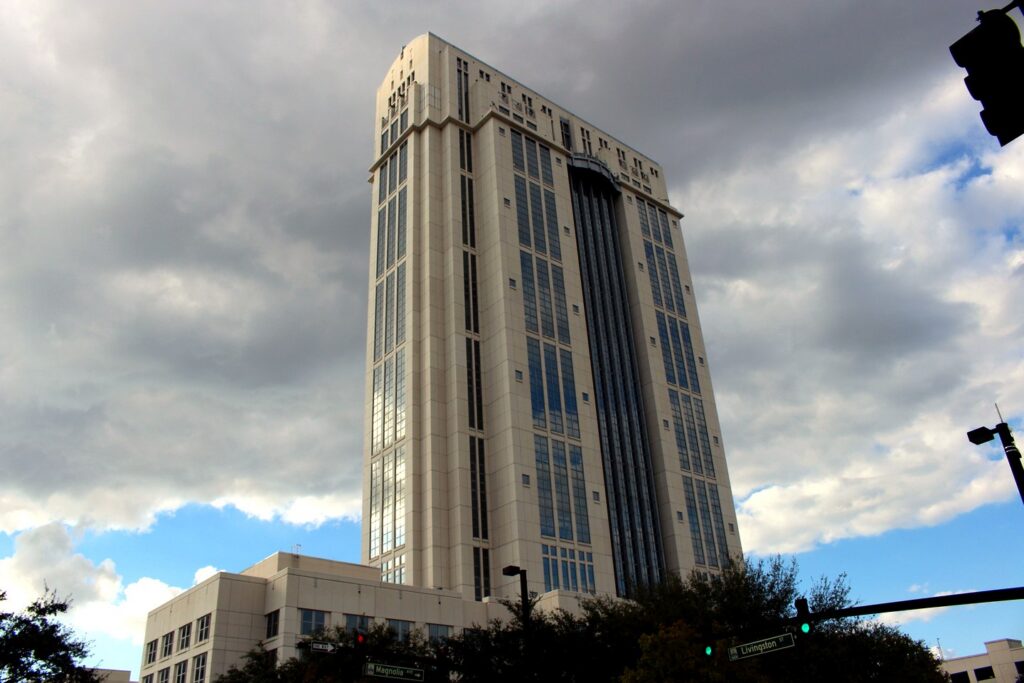
Sources & notes: Executive Order 26-235 (Nov. 19, 2026) and Executive Order 26-231 (Nov. 17, 2026), Executive Office of the Governor, flgov.com — both read in full, including the section 922.07 quotations reproduced above. The 6 p.m. Dec. 1 time is the warrant time stated in EO 26-235 §2; some secondary coverage has carried a different hour, and the order controls. Mr. Gonzalez’s underlying conviction and the 21st-execution count are attributed in the text to the Palm Beach Post’s warrant coverage; the 20th-execution figure is this desk’s verified Nov. 20 record. Photo: Orange County Courthouse, file photography from the Citizen’s published coverage (Rivera, CC BY-SA 4.0), reused via the pipeline donor record.
Orlando Citizen by email
The weekly edition, in your inbox
One email, every Saturday: the week’s edition of Orlando Citizen — the week’s stories, rankings and winners, gathered in one place. Free, and you can unsubscribe at any time.
Related Stories


Editor’s Picks
Spotted an error? Tell us — corrections · How we rank