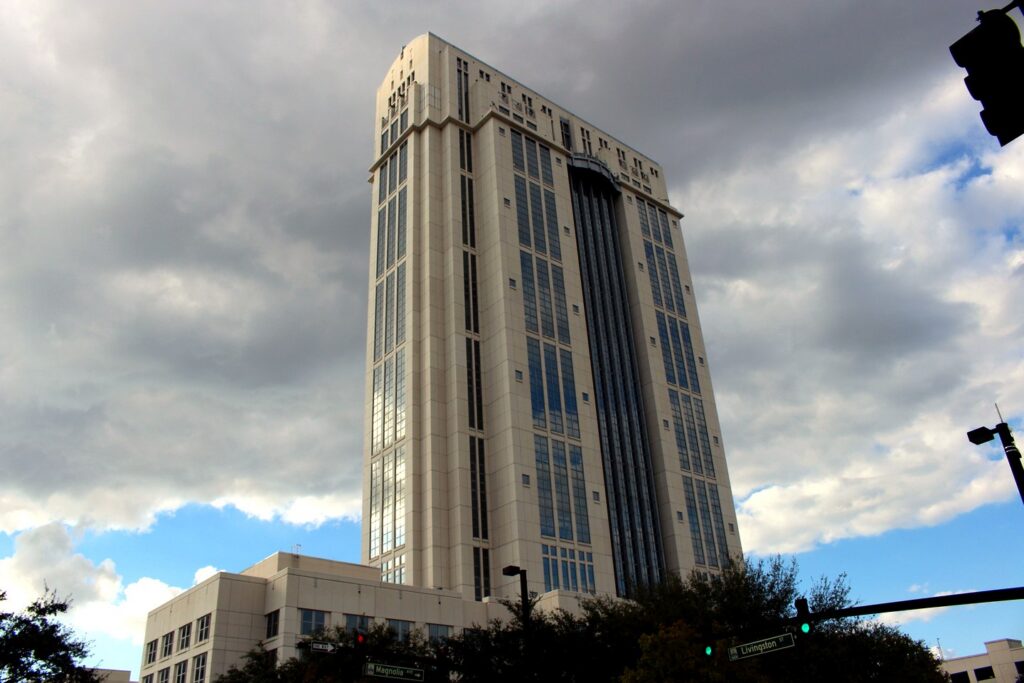
Florida Execution Today: Thomas Overton Set to Die at 6 P.M. After the State Supreme Court Rejects His Final Appeals
Thirty-five years after Missy MacIvor, eight months pregnant, and her husband, Michael, were killed in the Keys, Thomas Overton is scheduled to die at 6 p.m. today in what would be Florida's 20th execution of 2026. The state Supreme Court has rejected his final appeals, and a stay request is still pending at the U.S. Supreme Court.
5 minute read
TALLAHASSEE — Susan MacIvor, whom people called Missy, was eight months pregnant in 1991 when she and her husband, Michael, were killed in their home in Tavernier, in the Florida Keys. Thirty-five years later, the man convicted of their murders is scheduled to die tonight. Thomas Mitchell Overton is set to be executed by lethal injection at 6 p.m. today, Thursday, Nov. 19, at Florida State Prison near Raiford. Gov. Ron DeSantis signed the death warrant on Oct. 21. The execution would end a case that followed Mr. Overton through Florida’s courts for a quarter of a century. If it proceeds, it will be Florida’s 20th execution of 2026, according to the Palm Beach Post’s account of the Department of Corrections count. That is one more than the 19 carried out in 2025, which was itself the state’s highest annual total since the death penalty was reinstated in 1976.
Mr. Overton was sentenced to death in 1999. The Florida Supreme Court affirmed his convictions and death sentences on direct appeal in 2001. Over the next two decades, his later challenges were denied in state court, in federal court and twice at the U.S. Supreme Court. Through all of it, the Post reports, he has maintained his innocence.
What the state’s highest court decided last week
His last chance in the state courts ended on Friday, Nov. 13, in Overton v. State, Nos. SC2026-1724 and SC2026-1725. Writing for the court, Justice John Tanenbaum affirmed the Monroe County circuit court’s summary denial of Mr. Overton’s third successive motion to vacate his convictions and sentences. The court also denied his petition for a writ of habeas corpus and refused to stay the execution. Justice Jorge Labarga concurred in the result. The court issued its mandate immediately and barred motions for rehearing.
The opinion rejected three arguments. The first involved public records. After the warrant was signed, Mr. Overton demanded records from the Governor’s office, the Florida Commission on Offender Review and the Department of Legal Affairs under Florida Rule of Criminal Procedure 3.852. The court held that the circuit judge did not abuse his discretion in sustaining the agencies’ objections, because the demands were not tied to a legally cognizable claim. Such demands, the opinion said, are not tools for a fishing expedition; they must be targeted and relevant to a colorable claim. The second was his claim of actual innocence. The court held that Florida law recognizes no freestanding actual-innocence claim apart from newly discovered evidence, and it found that his filing presented no such evidence, only earlier attacks on the trial evidence in new form. The third was a challenge to Florida’s clemency and death-warrant process, built on the Governor’s stated position that he would not grant clemency to people convicted of murder. The court held that claim not cognizable. It rejected the argument that the Governor’s stance amounts to an unconstitutional bill of attainder and reaffirmed that Florida’s capital-sentencing scheme is constitutional.
What remains open this afternoon
One filing is still pending. On Nov. 14, the day after the state ruling, Mr. Overton’s lawyers asked the U.S. Supreme Court to take the case. Their petition for a writ of certiorari argues that Florida’s clemency process, in which the Governor holds sole and unrestricted discretion and which is conducted in confidence under the state’s clemency rules, denies due process and equal protection. It also argues that the secrecy of that process denied him access to the courts. According to the Palm Beach Post, an application for a stay of execution filed with the petition was still before the justices this morning. If the court denies certiorari, that would not be a ruling on the merits of those arguments. It would simply leave the Florida Supreme Court’s decision in effect. The justices had already turned away an earlier petition from Mr. Overton on Feb. 23, 2026.
The pace behind tonight
Tonight’s warrant is part of a two-year acceleration that has made Florida the most active death-penalty state in the country. Governor DeSantis signed the warrants behind the 19 executions of 2025. The execution of Jesse Guardado on Nov. 5 matched that total for 2026, the Post reports, and Mr. Overton’s would surpass it. On Nov. 12, death-row exonerees and advocates publicly asked Governor-elect Byron Donalds, who takes office on Jan. 5, to pause executions, according to the Death Penalty Information Center. No pause has been announced, and the warrant for tonight stands.
The time left is short and the options are few. Unless the U.S. Supreme Court grants a stay or the Governor intervenes, the Department of Corrections will carry out the sentence at 6 p.m. The Citizen’s State desk will update this story once the Department of Corrections confirms the outcome.
More from the State desk and the State archive.
Sources & notes: Death warrant and schedule — petition for a writ of certiorari, Overton v. Florida, filed Nov. 14, 2026, U.S. Supreme Court (supremecourt.gov filing, read in full this run): warrant signed Wednesday, Oct. 21, 2026, scheduling execution for Thursday, Nov. 19, 2026, at 6:00 p.m.; the Florida Supreme Court’s expedited-proceedings order of the same date; circuit-court proceedings before Judge Timothy J. Koenig, Oct. 21–Nov. 4, 2026; the petition’s two questions presented (clemency due process/equal protection; records secrecy and access to courts) and its Appendix B, the Florida Supreme Court opinion. Florida Supreme Court opinion, Nov. 13, 2026, SC2026-1724/SC2026-1725 (Tanenbaum, J.; Labarga, J., concurring in result), as reproduced in Appendix B and summarised in the petition and in the Florida case-law digest of opinions released Nov. 13, 2026: affirmance of the summary denial, denial of habeas relief and of a stay, immediate mandate, no rehearing; the Rule 3.852 records holding and the “fishing expedition” language as quoted in the petition; the actual-innocence and clemency holdings. Direct-appeal history (affirmed 2001) and the Feb. 23, 2026 U.S. Supreme Court denial (Overton v. Dixon, No. 25-516) are from the petition’s list of related cases. Attributed in the story to the Palm Beach Post, Nov. 19, 2026: the Raiford location and lethal-injection method, the pending stay application this morning, Overton’s maintained innocence, the 19 executions of 2025, the Nov. 5 Guardado execution tying that total, and the 20th-of-2026 framing against the Department of Corrections count. The Nov. 12 appeal to Governor-elect Donalds is attributed to the Death Penalty Information Center, Nov. 17, 2026. Victim detail is limited to what the court record names. The execution had not taken place when this story was published; it is reported throughout as scheduled. Photo: Orlando Citizen file photograph (Orange County Courthouse, Orlando), first published with the Citizen’s court coverage.
Orlando Citizen by email
The weekly edition, in your inbox
One email, every Saturday: the week’s edition of Orlando Citizen — the week’s stories, rankings and winners, gathered in one place. Free, and you can unsubscribe at any time.
Related Stories

Editor’s Picks
Spotted an error? Tell us — corrections · How we rank