Osceola Prairie: 19,312 Acres in Osceola County Preserved From Development in $77.75 Million Easement
With a $77.75 million easement backed in part by the Defense Department, Florida moved on Nov. 17 to keep houses, roads and rooftops permanently off about 19,312 acres of working cattle country in Osceola County.
4 minute read
What is at stake on Osceola Prairie is easiest to measure by what will never arrive there: the houses, roads and rooftops pressing down the Kissimmee River corridor toward one of Osceola County’s largest remaining ranch landscapes. Across about 19,312 acres, seven center pivots grow field crops and hay for the herd on a working cattle and farm operation that will go on being what it has been. What changed on November 17, 2026, is what the land can never become: sitting as the Board of Trustees of the Internal Improvement Trust Fund, the Governor and Cabinet approved a $77,750,000 rural lands protection easement — with $15,000,000 contributed by the U.S. Department of Defense — permanently preserving the property from development while the ranching continues.
The Osceola Prairie decision was the largest single piece of a statewide action announced the same day by the Florida Department of Agriculture and Consumer Services (FDACS), preserving more than 50,000 acres of working agricultural land through its Rural and Family Lands Protection Program and bringing the total permanently preserved through the program to a historic 308,000 acres, more than 243,000 of them during Commissioner Wilton Simpson’s administration.
A ranch stitched into the conservation map
Because an easement buys an absence, its substance lies in the ground left intact. On FDACS’s description, Osceola Prairie spans a wide cross-section of the Kissimmee River Basin and Northern Everglades ecosystem: improved pasture, dry prairie, palmetto prairie, scrub, forested and non-forested wetlands, and the Kissimmee River floodplain. Conservation lands already border the ranch on three sides — Kissimmee Prairie Preserve State Park along its southern boundary, the DeLuca Preserve to the east and the Kissimmee River Public Use Area to the west. Less than a mile west-southwest lies Avon Park Air Force Range, placing the project inside the range’s base buffer zone and explaining the Defense Department’s $15,000,000 share, paid through its Readiness and Environmental Protection Integration Program.
“Florida is proving to the nation that you can protect the agricultural lands that help feed our families, support our economy, and protect our natural resources,” Commissioner Simpson said in the department’s announcement. Every property approved on November 17 is enrolled in FDACS Best Management Practices and lies within the Florida Wildlife Corridor, the connected habitat network established in state law in 2021 by the Florida Wildlife Corridor Act.
The rest of the November 17 approvals
Five other easements outside Central Florida made up the balance of the more-than-50,000-acre slate. The largest of them, the Wildlife Corridor Connector — Hill Grade Tract, covers about 10,208 acres in Hendry County for $46,000,000, followed by VC Hollingsworth Horse Creek — Pine Level Ranch, about 7,057 acres in DeSoto and Hardee counties for $33,815,000, including $9,707,500 from the U.S. Department of Agriculture’s Natural Resources Conservation Service, and Spanish Trails Land and Farming, about 6,058 acres in Charlotte and DeSoto counties for $33,300,000. Rounding out the approvals were the Donaldson Tract, about 4,668 acres in Alachua County for $8,870,000, and Loveridge, about 3,370 acres in Leon County for $9,099,600.
How the program works, and what to watch
Established in 2001 under the Rural and Family Lands Protection Act, the program rests on a targeted trade: by purchasing development rights rather than the land itself, FDACS says, its easements prevent future development while allowing agricultural operations to keep contributing to the state’s economy and avoiding the long-term costs of acquiring and maintaining state-owned conservation land. In the 2026/2027 state budget, the Legislature provided a historic $425 million for the program — $200 million to preserve as many operations as possible and an additional $225 million specifically for projects over 6,000 acres that had not previously received program funding — part of more than $1.1 billion in state funding that the department says has been secured for the program since 2022.
For Osceola County, the vote folds that working ranch landscape into the permanent conservation network surrounding Kissimmee, the county seat — private land, still worked, yet closed off to the development pressure moving down the Kissimmee River corridor. It stands as the landward counterpart to the water framework this desk covered last week, the Middle St. Johns River Basin Plan, and sits alongside the season’s wildlife movement in Manatee Season at Florida Springs in the Environment archive. Still, an approved easement is a decision, not yet a closing: the prairie’s protection becomes final only when the easement is recorded, the follow-up this desk will watch.
Sources & notes
Every fact in this article comes from the Florida Department of Agriculture and Consumer Services press release, “Commissioner Wilton Simpson Announces Protection of Over 50,000 Acres of Agricultural Land Through Rural and Family Lands Protection Program,” issued November 17, 2026, at fdacs.gov and checked November 18, 2026: the Board of Trustees’ approval and the program totals (more than 50,000 acres approved; 308,000 acres preserved in total; more than 243,000 acres during Commissioner Simpson’s administration); the Osceola Prairie description, acreage (approximately 19,312 acres), easement total ($77,750,000) and Defense Department contribution ($15,000,000 through the Readiness and Environmental Protection Integration Program); the property’s ecosystems, seven center pivots, neighbouring conservation lands and distance from Avon Park Air Force Range; the Commissioner’s quotation; the five other properties with their acreages and easement totals, including the $9,707,500 Natural Resources Conservation Service contribution to VC Hollingsworth; the Best Management Practices enrolment and Florida Wildlife Corridor location of all six properties; and the program history and funding figures (established 2001; $425 million in the 2026/2027 budget, split $200 million and $225 million; more than $1.1 billion secured since 2022). Acreages are the department’s approximations, stated as such. This desk held this story on November 17 until the outcome could be traced to this primary release, rather than publishing the scheduled vote.
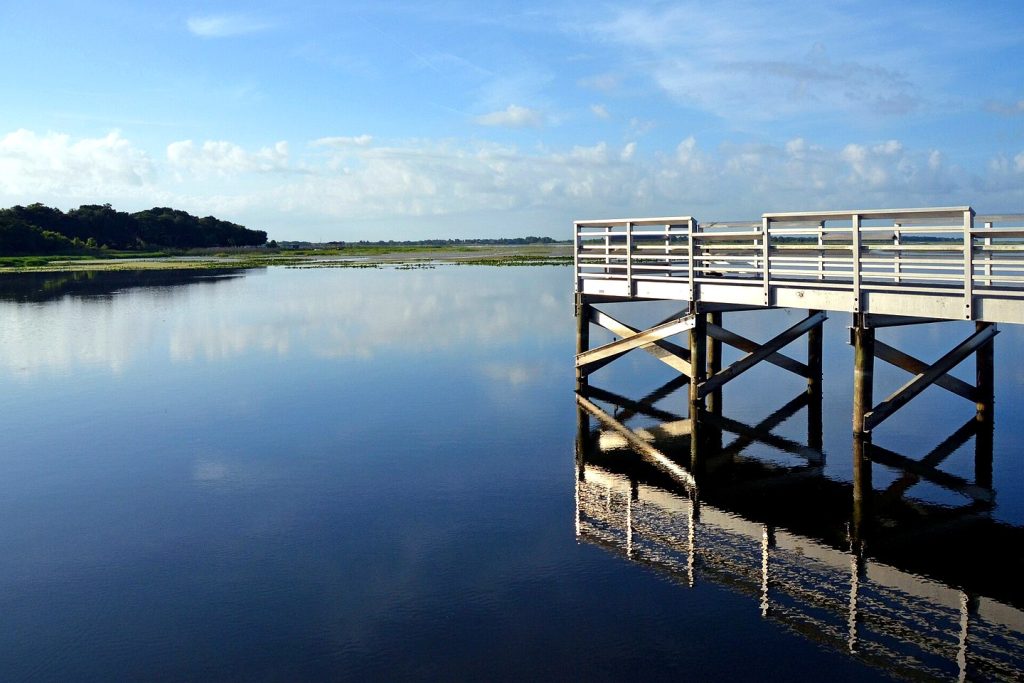
File photo: Lake Tohopekaliga, in Osceola County at the head of the Kissimmee River system — not Osceola Prairie itself. Photo: Clément Bardot, CC BY-SA 4.0, via Wikimedia Commons; the paper’s photo grade applied. Featured image reused from the Citizen’s Poinciana lake coverage.
Orlando Citizen by email
The weekly edition, in your inbox
One email, every Saturday: the week’s edition of Orlando Citizen — the week’s stories, rankings and winners, gathered in one place. Free, and you can unsubscribe at any time.
Related Stories
 EnvironmentBlue-Green Algae in Orlando Lakes: Health Alert for Lake Pearl on November 12 Samples
 EnvironmentMiddle St. Johns River Basin Plan: SJRWMD Adopts Restoration Framework for Lake Jesup, Lake Monroe and the Wekiva River
 Environment146 Cubic Feet Per Second: Metro Orlando’s Springs and Rivers by the Numbers
Editor’s Picks
Spotted an error? Tell us — corrections · How we rank
