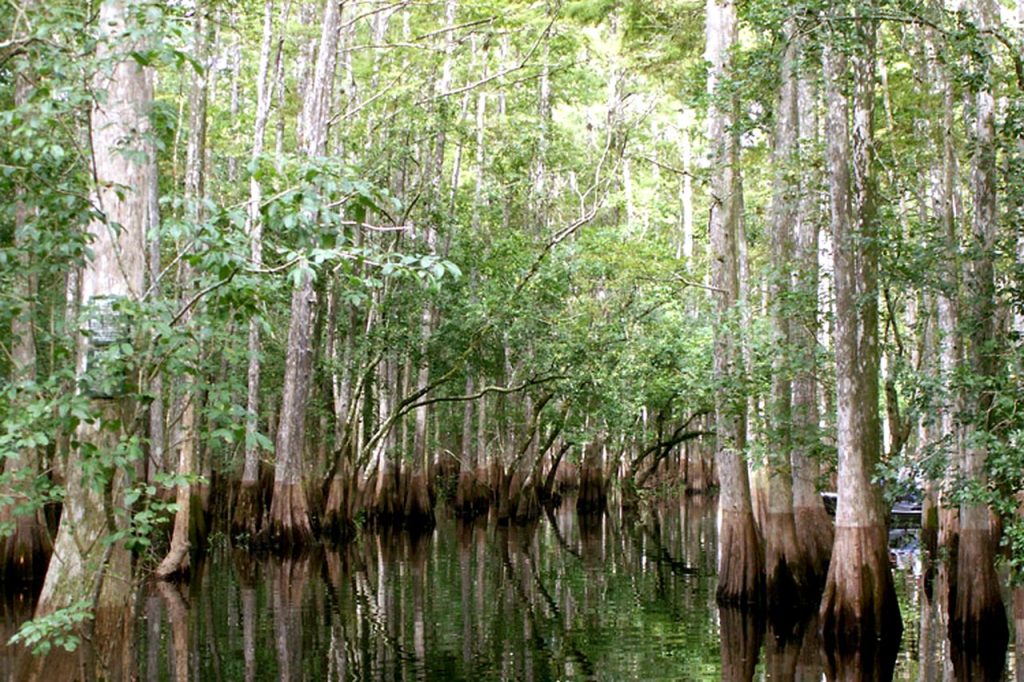
Apopka’s Springs Corridor in Winter: Kelly Park, Rock Springs and the Wekiwa
Kelly Park is on winter hours and Wekiwa now requires reservations, but both Apopka springs stay open and swimmable all winter. The honest seasonal guide.
4 minute read
The facts first. Winter does not close Apopka’s springs — it reschedules them. At Kelly Park / Rock Springs, Orange County’s park at 400 E. Kelly Park Road, the season turned with the clocks: from November until March the park is open 8 a.m. to 6 p.m. (against 8 to 8 in summer), and the waterfront and trails close an hour earlier still. Admission, since August 11, 2026, is $5 per vehicle and $10 per bus, and entry tickets are now online only — cash is no longer accepted at the gate, the county caps the day at 280 tickets, and tickets can be bought up to 30 days ahead. At Wekiwa Springs State Park, at 1800 Wekiwa Circle, the change is different: reservations are required for entry. What does not change is the water. Rock Springs runs at 68 degrees year-round and Wekiwa at 72 degrees year-round — in January, both springs are warmer than the morning air, which is the entire winter argument for them.
Kelly Park in its short season
The county park — open since June 7, 1927 — is built around the Rock Springs run: a free-flowing spring you float on a tube for about 25 minutes, then walk ten minutes back up the paved path and do again. The winter mechanics matter. Tubes are not rented inside the park: rent from a vendor outside before you enter, or bring your own float under five feet in any direction, because there is no re-entry and the park offers no air pump. The swimming area closes an hour before the park — 5 p.m. in winter — and the concession stand’s season runs from spring break to early October, so a November visit is a bring-your-own-picnic visit. The campground is the winter prize: tent and RV sites at the spring’s edge, the campground our scored ranking names the area’s best — see the Kelly Park Campground winner feature and the full Best RV Parks & Camping in Orlando ranking. Next door at Camp Joy, the county’s sister site, the canoe and kayak launch runs 8 a.m. to noon with all boats back by 5 p.m. — no rentals and no shuttle are offered at either site, a fact the county states plainly and winter paddlers should plan around.
Wekiwa: the reservation spring
Wekiwa Springs is the corridor’s second-magnitude spring, expelling 43 million gallons a day into a swimming area just over half an acre, averaging four feet deep, below a grassy slope made for blankets. The state park’s rules are the visit: no lifeguards — swimmers and snorkelers enter at their own risk, children and non-swimmers stay with an adult swimmer — the swimming area stays open until 30 minutes before park closing, and diving and jumping are banned in the shallow spring. The boundary that most first-timers get wrong deserves its own sentence: swimming is not permitted in Wekiwa Springs Run, Rock Springs Run or the Wekiva River — the swim is the spring head, only. And one honest correction to the season’s usual sales pitch: these are not manatee springs. The county’s own Kelly Park FAQ says so outright — manatees are not seen at that site — and readers who want the winter manatee season should go where it actually happens, as our Environment desk’s guide to Manatee Season at Blue Spring sets out. Apopka’s winter offer is different and, on a cold bright morning, arguably better: warm water, thin crowds and a 6 p.m. closing that puts you home by dark.
How to choose between them
Tube and camp, choose Kelly Park — and buy the ticket online days ahead, because 280 is a small number even in November. Swim and picnic on a slope, choose Wekiwa — and make the reservation before you drive, because arriving early, the state warns, reduces the wait but does not provide entry. Both parks ban pets (service animals excepted) and alcohol at Kelly Park is prohibited by county ordinance. Neither park’s winter is a lesser version of its summer; it is the same constant-temperature water with the crowds subtracted and the hours honestly shortened — which is exactly what a seasonal guide should say, and all it should promise.
Sources & notes
Every Kelly Park fact — winter and summer hours, the one-hour-early waterfront closing, the $5/$10 admission effective August 11, 2026, online-only tickets with the 280-ticket daily limit and 30-day advance purchase, the 68-degree spring, the roughly 25-minute float and 10-minute walk back, tube rules (no in-park rental, no re-entry, under five feet, no air pump), the concession’s spring-break-to-early-October season, Camp Joy launch hours and no-rental rule, the June 7, 1927 opening, and the FAQ’s statement that manatees are not seen at the site — checked against Orange County Parks and Recreation’s own Kelly Park / Rock Springs page, read this run. Every Wekiwa fact — 72 degrees year-round, second-magnitude flow of 43 million gallons a day, the half-acre, four-foot-average swimming area, no lifeguards, the 30-minutes-before-closing swim end, the diving ban, the prohibition on swimming in the three runs and river, and the reservation requirement — checked against Florida State Parks’ own Wekiwa Springs swimming page, read this run. The SEO brief’s suggested manatee angle for this piece was rejected at the gate on the county’s own FAQ (see the EIC gate record). Featured image: file photograph shared with our Kelly Park Campground winner feature, captioned as a file photo.
Orlando Citizen by email
The weekly edition, in your inbox
One email, every Saturday: the week’s edition of Orlando Citizen — the week’s stories, rankings and winners, gathered in one place. Free, and you can unsubscribe at any time.
Related Stories
 TourismOrlando Airport Awards: MCO Honored for Helping Spirit Airlines Workers After the Shutdown
 TourismICE! at Gaylord Palms, The Resident’s Practical Guide: The Polar Express in Two Million Pounds of Ice
 TourismOrlando Hotel Occupancy and Tourism Jobs: 476,541 Jobs and a $98.6 Billion Impact, Visit Orlando Reports
Spotted an error? Tell us — corrections · How we rank
