ChampionsGate Short-Term Rental Rules: What Owners and Guests Must Follow
Zoning first, then the state DBPR licence, then the county business tax receipt — and a 6 percent tourist tax the booking platforms do not remit for you. ChampionsGate's short-term rental rules as the county and state documents state them.
6 minute read
ChampionsGate was built to be rented. Whole streets of villas exist so that families who will never live here can stay a week, use the pool, and go home. But “built to be rented” is not the same as “rent it however you like.” A ChampionsGate short-term rental sits under four separate rule-makers — Osceola County’s zoning code, the State of Florida’s licensing and tax system, the county tax collector, and the community’s own recorded declarations — and an owner needs a yes from each layer, in the right order. This explainer states the rules as the governing documents state them, from the county’s and the state’s own publications. It is part of the governance coverage on the ChampionsGate beat and in the ChampionsGate archive.
First question: does the zoning allow it?
ChampionsGate lies in unincorporated Osceola County — the Davenport mailing address does not make it a city property — and Osceola County’s land development code is therefore the zoning authority. The county’s own short-term rental page describes the Short Term Rental Planned Development (STRPD) district as established for the purpose of developing short-term rental housing in the geographic area it describes, and directs readers to the Land Development Code, Article 3.11.1 (Planned Developments), for the complete rules. ChampionsGate itself is a planned development: Osceola County’s records show the RIDA/ChampionsGate development was approved as a Development of Regional Impact in 1998, that the DRI was rescinded on January 8, 2018 by Resolution 17-175R, and that the property is zoned Planned Development (PD), with the ChampionsGate Planned Development recorded in 2016 (PD16-00012).
The county’s published licensing sequence begins — before any licence is applied for — with verification. Step one, in the county’s words, is: verify your zoning allows short-term rentals, using the county’s short-term rental overlay map; the county Zoning office assists at 407-742-0200. That order matters. A licence is not permission to rent where zoning does not allow the use; it is the paperwork that follows a zoning yes. Owners should also note the limit of the county’s own information: the county states that its zoning pages are a general reference, may not reflect the latest amendments to the Land Development Code, and do not constitute a final determination — formal verification is through the Zoning office.
Second: the state licence
Florida regulates vacation rentals as public lodging establishments under Chapter 509 of the Florida Statutes. A vacation rental, as the statute defines it, is a unit in a condominium or cooperative, or an individually or collectively owned single-family, two-family, three-family or four-family house or dwelling unit, that is also a transient public lodging establishment — rented to guests more than three times in a calendar year for periods of less than 30 days or one calendar month, whichever is less, or advertised or held out to the public as a place regularly rented to guests.
Step two of the county’s sequence is to apply for a vacation rental licence through the Florida Department of Business and Professional Regulation’s Division of Hotels and Restaurants. The county notes you will need the DBPR licence number when you apply for the county receipt in step three — the state licence comes first.
One piece of state law shapes everything local governments can and cannot do here. Section 509.032(7)(b) provides that a local law, ordinance or regulation may not prohibit vacation rentals or regulate the duration or frequency of rental of vacation rentals — with the statute’s own exception for a local law, ordinance or regulation adopted on or before June 1, 2011. Readers should take that provision for exactly what it says: it limits what a city or county may newly enact about prohibiting vacation rentals or setting their duration and frequency. It does not erase the county’s zoning and licensing steps above, and it does not reach private recorded covenants — which is why the fourth layer, below, still matters.
Third: the county receipt and the tourist tax
Step three is to register a Local Business Tax Receipt (LBTR) through the Osceola County Tax Collector’s office — at the Tax Collector’s main office, 2501 E. Irlo Bronson Memorial Highway, Kissimmee, FL 34744, or by mail to P.O. Box 422105, Kissimmee, FL 34742 — using the DBPR licence number from step two.
Then there is the tax, and this is where ChampionsGate owners most often get caught. The Osceola County Tax Collector states that the Tourist Development Tax is a charge on the total rental amount charged to a guest for any short-term rental of less than 180 days; the rate has been 6 percent since July 1, 2004, under Chapter 13, Article III of the Osceola County Code of Ordinances and Florida Statute 125.0104. The Tax Collector’s calculation instructions work from gross rental receipts excluding the 7.5 percent State of Florida sales tax and the 6 percent tourist tax itself. And the Tax Collector states, in capitals in the original: Osceola County is NOT CONTRACTED with Airbnb, VRBO, Evolve, or any other third-party booking platforms — it is the responsibility of the property owners or agents to collect and remit the 6 percent tourist tax for all short-term rentals. A booking made through a platform is therefore not a tax handled by the platform at the county level; the owner or the owner’s agent remits it. The Tax Collector’s office also conducts periodic audits of tourist tax compliance — most audits are selected randomly, its compliance page states — and records must be maintained for a minimum of three years, as required by Chapter 212, Florida Statutes.
Fourth: the community’s own documents
County zoning, a state licence and a county receipt still do not complete the picture, because ChampionsGate’s homes sit under recorded declarations administered by the community’s associations. As our explainer on the association structure sets out, what an owner may do with a parcel — including renting it — is governed by the declaration as written, and the state preemption described above binds governments, not private covenants. Guest behaviour inside the gates is likewise a community-documents question: the access system described in The Gates: How Access Works at ChampionsGate and the amenity rules for the rental streets are set by the community’s own governing documents and amenity policies, not by the county. An owner who has cleared the three public steps should confirm, from the declaration and rules for their own village, that the rental they plan is the rental their documents allow, and what their guests must follow while they are here.
The checklist, in order
1. Confirm the parcel’s zoning allows short-term rental — county overlay map, or Osceola County Zoning at 407-742-0200. 2. Obtain the Florida DBPR vacation rental licence. 3. Register the Local Business Tax Receipt with the Osceola County Tax Collector, using the DBPR licence number. 4. Register for and remit the 6 percent Tourist Development Tax to the Tax Collector yourself or through your agent — platforms do not do it for Osceola County — and keep records for at least three years. 5. Confirm your village’s declaration and rules permit the rental and set your guest instructions from them. For the wider community picture, see the ChampionsGate area portal and Living in ChampionsGate Year-Round, which covers how the rental streets and the resident streets coexist. This article is reporting on the published rules, not legal or tax advice; owners with a specific parcel or filing question should put it to the county offices named above.
Sources & notes
Osceola County, “STRPD District (Short Term Rental Planned Development),” osceola.org (page updated August 25, 2025) — the three-step licensing sequence, the overlay map, the Zoning office number, the Tax Collector addresses, and the reference to Land Development Code Article 3.11.1. Osceola County, “RIDA / Championsgate DRI,” osceola.org — DRI approval July 27, 1998, rescission January 8, 2018 (Resolution 17-175R), Planned Development zoning, PD16-00012. Florida Statutes, Chapter 509 — sections 509.013 and 509.242 (definitions of transient public lodging establishment and vacation rental) and 509.032(7)(b) (local regulation of vacation rentals; June 1, 2011 exception), via Online Sunshine. Osceola County Tax Collector, “Tourist Development Taxes,” osceolataxcollector.org — 6 percent rate effective July 1, 2004, tax on the total rental amount for rentals under 180 days, and the statement that the county is not contracted with booking platforms. Osceola County Tax Collector, “Instructions for Calculating Osceola County Tourist Development Tax” (revised May 19, 2025) and “Tourist Development Tax Compliance” — gross receipts basis, audits, and the three-year record requirement under Chapter 212. No fee amounts for the DBPR licence or the Local Business Tax Receipt are stated in this article: the county’s STRPD page does not publish them, and figures quoted by secondary sources were not used.
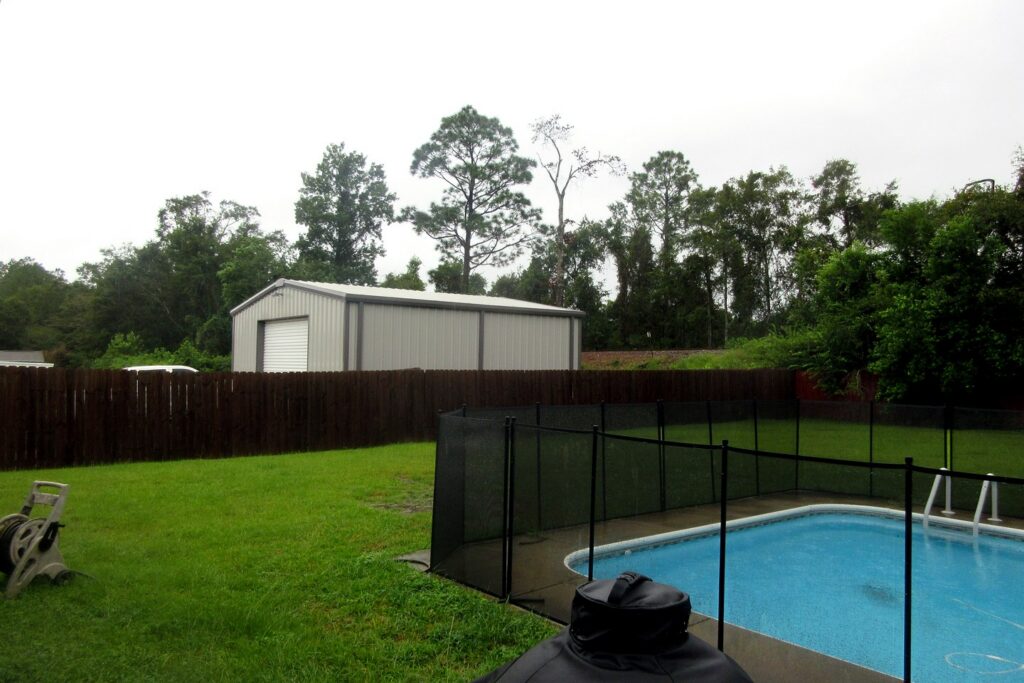
Photo credit: A residential swimming pool at a Florida home, Escambia County, Florida, photographed by Infrogmation, via Wikimedia Commons (CC BY-SA 4.0). The photograph illustrates the private-pool villa format typical of ChampionsGate’s rental streets; it does not depict a ChampionsGate property.
Orlando Citizen by email
The weekly edition, in your inbox
One email, every Saturday: the week’s edition of Orlando Citizen — the week’s stories, rankings and winners, gathered in one place. Free, and you can unsubscribe at any time.
Related Stories
 ChampionsGateStoneybrook South ChampionsGate CDD: Bulkhead Repairs Capped at $140,000, FY2027 Assessments Held Flat
 ChampionsGateChampionsGate CDD FY2027 Budget: No Assessment Increase, $600,000 for Boulevard Resurfacing
 ChampionsGateChampionsGate Master Association Board Meeting: Tuesday November 17, 6 p.m., Virtual — What Residents Need to Know
Editor’s Picks
Spotted an error? Tell us — corrections · How we rank