Oviedo, Done Properly: A Local’s Guide to Celery City
Oviedo rewards people who slow down — a historic downtown with roaming chickens, a lakefront new town center, and wild river trails minutes apart. Here is how to do it well.
4 minute read
Oviedo does not announce itself the way Orlando’s big corridors do. There is no gate, no skyline moment. Instead, about 20 miles northeast of downtown Orlando in Seminole County, a city of roughly 40,000 (2020 census) reveals itself in layers: a genuinely historic downtown where chickens cross the road on their own schedule, a polished new town center built around a lake, and — minutes in the other direction — blackwater river trails that feel a hundred miles from a theme park. Start with our Oviedo hub and plot the stops on the Orlando Top Spots Map; Oviedo is compact enough that you can honestly do all three layers in one day.
First, understand the celery
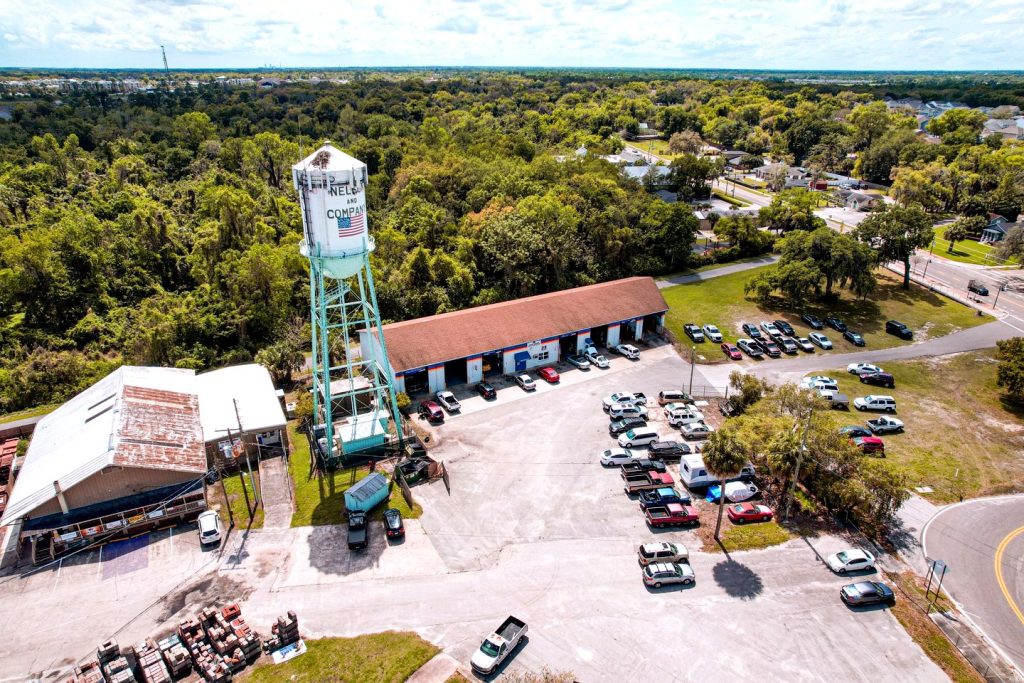
Oviedo was incorporated in 1925 and named, local history holds, by postmaster Andrew Aulin after the university city of Oviedo in northern Spain. What built it was agriculture. Citrus came first, then celery — grown in the rich muck soils near Lake Jesup — and for decades Oviedo traded on its celery reputation the way other Florida towns traded on oranges. The packing era left the landmarks downtown still orients around: the Nelson and Company packing house and water tower, the R.W. Estes Celery Company precooler district, and a cluster of late-19th- and early-20th-century buildings now listed in the National Register of Historic Places. You do not need to be a history buff to enjoy this; you just need to walk slowly and read the buildings.
A morning in old Oviedo
Start downtown on Broadway and Central. Breakfast belongs to the Town House Restaurant at 139 N. Central Avenue — the diner whose own sign-off is “Where Oviedo Meets to Eat” — then walk the historic blocks. Look in at The Artistic Hand Gallery & Studio at 353 N. Central Avenue, a cottage gallery representing more than 100 artists and craftspeople, and keep an eye out for the famous Oviedo chickens, the free-roaming flock downtown is known for. If your visit lands on the first Saturday of the month, the Oviedo Farmers Market fills the Lawton House grounds at 200 W. Broadway Street — see our market profile for how to time it.
Midday: pick your Oviedo
From downtown you have two good directions. South and west, Oviedo on the Park is the city’s newer downtown, dedicated in 2015 around Center Lake Park — amphitheater lawn, splash pad, veterans tribute, swan pedal boats and a ring of restaurants. North and east, the landscape goes properly wild: the Econ River Wilderness Area, the Barr Street trailhead into Little Big Econ State Forest, and, at the end of Black Hammock Fish Camp Road, airboats on Lake Jesup. Neither direction is better; they are simply two different Floridas sharing one zip code, and choosing between them is the real itinerary decision of an Oviedo day.
Evening, the local way
Locals tend to finish where the lake is. Dinner at Oviedo on the Park puts Center Lake in front of you as the light goes, and the park’s event lawn regularly hosts the city’s concerts and movie nights. Or lean into old Florida instead: fried catfish and gator bites at the Black Hammock Restaurant after a late airboat ride is about as far from a theme-park dinner as Central Florida gets. Either way, end the day the Oviedo way — unhurried. This is a town that kept its chickens, its celery stories and its river woods while everything around it suburbanized. That stubbornness is exactly the charm.
What Oviedo is not — and why that helps
It helps to set expectations honestly. Oviedo is not a theme-park town, not a beach town and not a nightlife district, and visitors who arrive wanting any of those will miss what is actually here. What Oviedo offers instead is the texture of a real Central Florida community with unusually deep roots: Swedish and other immigrant farming families who built the celery industry, a historic core that survived the suburban boom around it, and a university-adjacent energy from the University of Central Florida and the Central Florida Research Park just south of the city line. The Wikipedia summary of the city makes the same point from the data side — a historically rural community that has absorbed rapid growth because of that proximity, while keeping its historic houses and its chickens. Spend a day here and the growth makes sense: Oviedo kept the parts of small-town Florida people actually miss.
Practically, Oviedo also works as a base. Sanford’s riverwalk and historic downtown sit to the north, Winter Park’s Park Avenue to the west, and the trailheads and springs country of the St. Johns River to the east — all of them easy drives, and all of them in our wider coverage. But do not treat Oviedo as a pass-through. The towns that reward a full day are the ones that were never built for visitors at all, and Oviedo, celery dust still on its boots, is firmly one of those.
Photo: mdburnette, CC0, via WordPress Photos.
Orlando Citizen by email
The weekly edition, in your inbox
One email, every Saturday: the week’s edition of Orlando Citizen — the week’s stories, rankings and winners, gathered in one place. Free, and you can unsubscribe at any time.
Related Stories

Editor’s Picks
Spotted an error? Tell us — corrections · How we rank