The Withers-Maguire House and the History Ocoee Now Tells Out Loud
The 1888 citrus-era house on Starke Lake preserves Ocoee's early story — and the city's public reckoning with the 1920 massacre is the other, necessary half of its history.
3 minute read
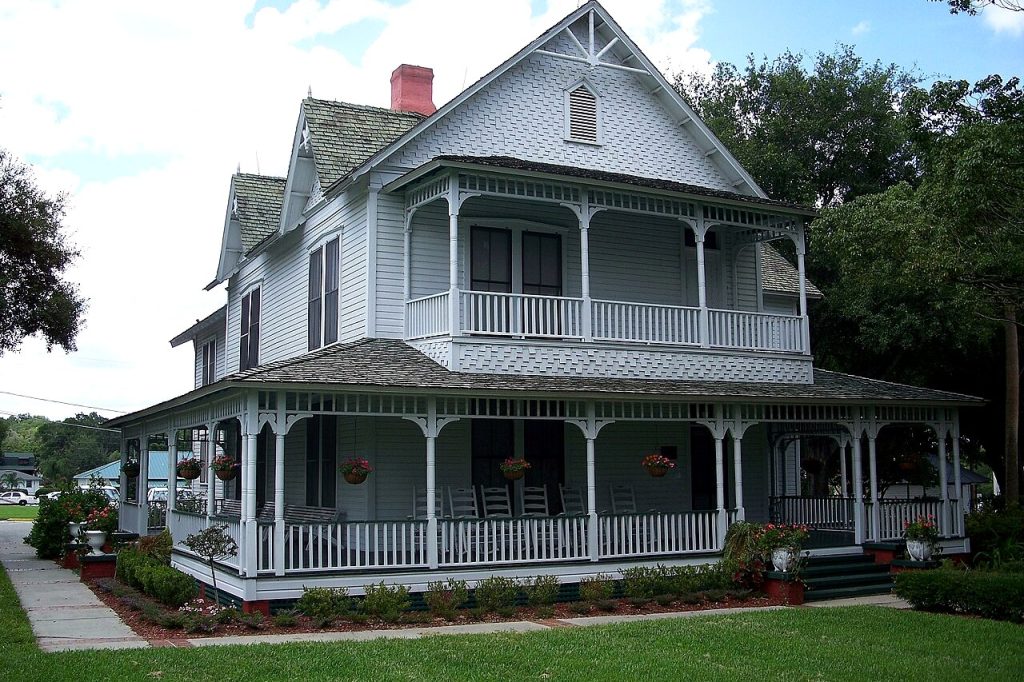
On the west bank of Starke Lake, at 16 E. Oakland Avenue, a white two-story house with a wraparound porch holds two of Ocoee’s stories at once. The Withers-Maguire House is the city’s citrus-era keepsake — and the city around it carries a harder history that Ocoee, after a century, has chosen to face in public. Both stories belong in any honest account of this place.
The house: citrus money, pine boards, a long memory
The house was built in 1888 for retired General William Temple Withers, a Kentuckian who began wintering in Florida in 1884 and planted citrus around his lakefront lot. It is built of pine cut and milled on the site, in the Stick/Eastlake manner — spindle-work porches, patterned shingles, tall windows — and it is one of only three 19th-century buildings still standing in Ocoee. Withers died the year after the house was finished; his widow sold it in 1910 to David O. Maguire, another figure in the area’s citrus development, and the Maguire family held it until 1979. The city acquired and restored it with state grant support, and on April 2, 1987, it was added to the National Register of Historic Places.
Today the city-owned house works as both museum and venue. Upstairs rooms are arranged to depict early-1900s life in Ocoee; downstairs and on the porch, it hosts intimate weddings and small gatherings beside the Lakeshore Center. In May 2025, city leaders buried a time capsule at the house, scheduled to be opened in 2125 — a small, telling gesture from a city thinking in centuries. Pair a visit with the lakefront next door, covered in our Bill Breeze Park guide.
The history the city must also tell
Ocoee’s modern story cannot be told honestly without November 2, 1920. On that Election Day, Mose Norman, a Black resident, attempted to vote and was turned away. That night a white mob attacked Ocoee’s Black community in the northern part of the city. July Perry, a prominent Black labor leader who had sheltered Norman, was lynched. Others were killed — the documented toll and the higher estimates have been studied for decades — homes and community buildings were burned, and Ocoee’s Black residents, who had numbered 255 in the 1920 census, were driven out. By the 1930 census, two Black residents remained. The Black community that had helped build Ocoee did not return for generations.
For most of a century the massacre was little discussed in the city itself. That has changed, deliberately. The City of Ocoee issued a proclamation acknowledging the massacre in 2018 and a formal apology to descendants in 2020, at the centennial. The Orange County Regional History Center in Orlando mounted the landmark exhibition “Yesterday, This Was Home: The Ocoee Massacre of 1920,” built from oral histories, property records and descendant research, and a historical marker honoring July Perry now stands in Heritage Square outside the History Center. Florida law, through House Bill 1213 in 2020, directs that the Ocoee Election Day massacre be included in required instruction on African American history. In Ocoee itself, Unity Park — the downtown environmental park at 130 N. Cumberland Avenue — includes a memorial to the victims of 1920.
How to visit with both stories in mind
Come to the house for what it is: a beautifully kept piece of citrus-era Florida, and the anchor of the lakefront historic district. Then take the fuller history seriously — the History Center’s research and the city’s own acknowledgment are the reputable starting points, not legend or lore. Ocoee today is a diverse, growing city whose festivals fill Bill Breeze Park a few hundred yards from this porch; understanding what happened in 1920, and that the city now says so on the record, is part of understanding the place you are visiting. Our Ocoee hub holds the wider guide, and the house is pinned on the Orlando Top Spots Map.
Photo: Ebyabe, CC BY, via Wikimedia Commons.
Orlando Citizen by email
The weekly edition, in your inbox
One email, every Saturday: the week’s edition of Orlando Citizen — the week’s stories, rankings and winners, gathered in one place. Free, and you can unsubscribe at any time.
Related Stories


Editor’s Picks
Spotted an error? Tell us — corrections · How we rank