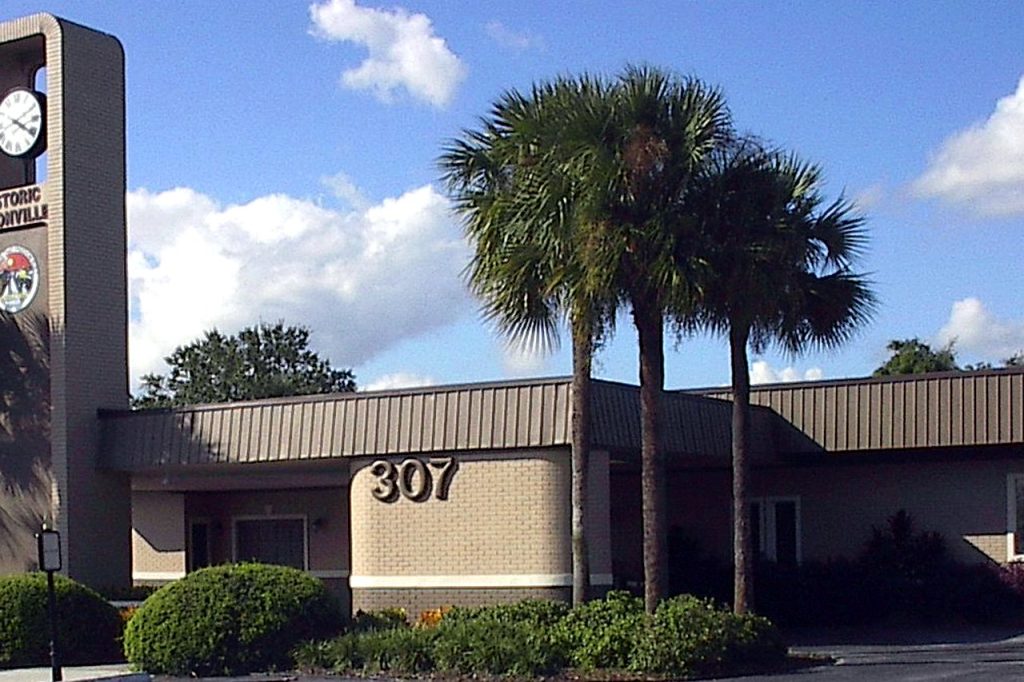
The Town That Freedom Built: Eatonville Still Governs Itself
Incorporated by twenty-seven Black voters on August 15, 1887, Eatonville is one of America's first self-governing Black municipalities — and still runs itself from a town hall on Kennedy Boulevard. A guide to the town, its founding, and how to visit it well.
3 minute read
Six miles north of downtown Orlando, past the Maitland line, the street signs change and so does the scale of history. Eatonville is roughly a square mile and a half of Orange County — 2,349 residents at the 2020 census — with its own town hall, its own elected mayor and council, its own police department and its own main street, Kennedy Boulevard. Plenty of Florida towns can say some of that. Only one can say what Eatonville says on its welcome signs: The Town That Freedom Built.
On August 15, 1887, twenty-seven registered Black voters gathered and voted to incorporate a town of their own. It made Eatonville one of the first self-governing Black municipalities in the United States — a town chartered, staffed and run by Black citizens barely two decades after emancipation. The driving force was Joseph E. Clark, who had been born into slavery and spent years trying to buy land for exactly this purpose. With help from Lewis Lawrence, a Northern philanthropist, and Josiah C. Eaton, the Maitland landowner and former Union officer the town is named for, Clark secured the acreage west of Maitland. Columbus H. Boger became the first mayor; Clark followed him and became the town’s anchor citizen — storekeeper, landowner and, in time, the original of a character American literature would never forget.
The churches came first
Eatonville’s institutions predate its charter. St. Lawrence A.M.E. Church was founded in 1881, six years before incorporation, and received the first ten acres of the land Clark and Lawrence assembled — the town was quite literally built around its congregations. Macedonia Missionary Baptist Church followed in 1882. Hungerford, the boarding school modeled on Tuskegee Institute, made the town an educational beacon for Black families across the South. Church, school, town hall: that triangle defined a place where Black children grew up seeing Black mayors, marshals, teachers and preachers as the ordinary order of things.
One of those children arrived in 1894, three years old, riding in with her family from Alabama. Zora Neale Hurston’s father, the Reverend John Hurston, would serve as the town’s mayor and as pastor of Macedonia, its largest church. Zora grew up on the porches and at the store counter of Joe Clark’s establishment and carried Eatonville into Their Eyes Were Watching God, Mules and Men and her autobiography — a hometown rendered not as a problem to be solved but as a whole world, sufficient unto itself. Our walking guide to the Hurston trail follows her Eatonville marker by marker.
A town that has had to keep defending itself
Survival was never automatic. In the 1980s, a plan to widen Kennedy Boulevard into a five-lane highway through the center of town galvanized residents into forming the Association to Preserve the Eatonville Community — P.E.C. — in 1987, the town’s centennial year. The road fight was won. The organizing it produced gave Eatonville the ZORA! Festival in 1990, the Hurston Museum, and a preservation movement that put the Eatonville Historic District on the National Register of Historic Places in 1998. In 2024 the National Trust for Historic Preservation named Eatonville one of America’s 11 Most Endangered Historic Places — an honor that is also a warning, aimed at development pressure on the town’s edges, above all the 117-acre Hungerford property, whose fate we trace in our account of the land fight.
How to visit a living town
Eatonville is not a theme park or an open-air museum; it is a small, working town whose residents have strong opinions about how their home is treated — treat it accordingly. Start at the Eatonville Branch of the Orange County Library System at 200 East Kennedy Boulevard, a children’s library opened in 2005 that honors Hurston and serves as the natural trailhead for the town’s self-guided walking tour. From there, the numbered heritage markers along Kennedy Boulevard, the Hurston Museum and the two great churches are all within an easy stroll. Come back in June for the town’s Juneteenth celebration at Hungerford Field, or in late January, when the ZORA! Festival turns the whole boulevard into a main stage. However you arrive, find Eatonville on our Orlando Top Spots Map — then put the phone away and walk the street itself. In Eatonville, the street is the exhibit.
Photo: FloNight (Sydney Poore), CC BY-SA 4.0, via Wikimedia Commons.
Sources & notes
The incorporation facts in this article were checked against:
- BlackPast — Eatonville, Florida (1887– ) — incorporation on August 15, 1887, when 27 registered voters created the municipality; the first all-Black city incorporated in Florida.
- Florida Department of State — Eatonville museum proposal document — Eatonville as the oldest incorporated Black municipality in the United States, established in 1887, with the August 15, 1887 incorporation vote of 27 electors.
Orlando Citizen by email
The weekly edition, in your inbox
One email, every Saturday: the week’s edition of Orlando Citizen — the week’s stories, rankings and winners, gathered in one place. Free, and you can unsubscribe at any time.
Related Stories

Editor’s Picks
Spotted an error? Tell us — corrections · How we rank
