Ciliate-Leaf Tickseed: A Florida Wetland Wildflower Is Proposed for Threatened Listing
With 40 of the 50 surviving populations of ciliate-leaf tickseed growing in roadside ditches and other rights-of-way, the U.S. Fish and Wildlife Service has proposed listing the fall-blooming wetland wildflower as threatened, opening public comment through January 26, 2027.
5 minute read
WASHINGTON — Along the wet margins of paved roads, utility corridors and dirt tracks, the survival of the ciliate-leaf tickseed can turn on the month a mowing crew chooses to pass. The wildflower holds on, mostly, in ditches: of the 50 populations the federal government can still find, 40 grow in rights-of-way, where the schedule of roadside work can separate a surviving population from an extirpation. One Florida population is already believed gone that way.
On Friday, the U.S. Fish and Wildlife Service moved to bring that precarious foothold under federal protection, proposing to list the yellow-flowered wetland plant of the Florida, Georgia and South Carolina coastal plain as a threatened species under the Endangered Species Act, paired with protective regulations tailored to it under the Act’s section 4(d). Published in the Federal Register on November 27, the notice is a proposal only: nothing is listed yet, and the public has until January 26, 2027 to weigh in.
A fall flower with nowhere much left to stand
In the fall, the ciliate-leaf tickseed (Coreopsis integrifolia) grows 16 to 28 inches tall, opening showy heads of yellow ray flowers around tiny purple disk flowers. A perennial in the sunflower family, it depends on fresh water to keep the soil saturated — favoring blackwater stream banks and floodplains, swamp-forest edges, limestone riverbanks and pine flatwoods at elevations between 12 and 292 feet, according to the Service’s assessment. It does not tolerate salt water. On a map, its known range today is about what it was when the species was first described in 1811, with its most genetically diverse populations growing along Florida’s Chipola River.
Up close, however, the species’ footing is uneven and largely beyond public control. The Service counts 53 known populations across three states and considers 50 of them extant, with 37 sitting in the representative unit covering Georgia and Florida. Stem counts stretch from a single stem to roughly 400,000 in the largest population. Forty-three populations occur on private land, six on state land and one on federal land. Three populations — one in each state — have not been seen in more than 20 years, and the Service says the Florida one “may be extirpated due to road ROW management impacts.”
Why the Service says it is threatened
Under the Act’s definition, as the Service applies it, a threatened species is one likely to become endangered within the foreseeable future. For the tickseed, the agency points to three converging pressures: rights-of-way maintenance, which cuts plants, stems, flowering and seed production; future urban development, which removes occupied habitat outright; and sea level rise, which inundates the plant’s freshwater wetlands and pushes salt water into them. Agriculture, recreation, invasive species and drought compound each of the three, the assessment finds.
The finding also resolves a 16-year-old petition. On April 20, 2010, the Center for Biological Diversity petitioned the Service to list 404 southeastern aquatic species, the tickseed among them. In September 2011, the agency found that the petition presented substantial information that listing might be warranted. Friday’s document is the Service’s 12-month finding on that petition, concluding that listing is warranted — as threatened rather than endangered.
What listing would — and would not — do
Should the proposal become final, the tickseed would join the federal List of Endangered and Threatened Plants, and the proposed 4(d) rule would carry over the Act’s section 9(a)(2) prohibitions: no import or export, no removing or damaging plants on federal land, no removing or damaging them anywhere in knowing violation of state law or in the course of a criminal trespass, and no interstate or foreign commercial sale or transport. In Florida, the plant is already listed as endangered under section 581.185, Florida Statutes — a designation the federal rule notes restricts collection without a permit or written permission.
Even so, the 4(d) rule is deliberately narrower than the full endangered-species regime. It preserves exceptions for agency and state conservation work, for permits issued for scientific or propagation purposes, and for the salvage of dead or damaged specimens under the regulations the proposal cites. No critical habitat is designated, and the Service says it expects limited change for the regulated community and few permit requests. Nor is the final outcome settled: the agency is explicit that after the comments are read, the decision may differ from the proposal, listing the species as endangered instead or not listing it at all.
How to comment
Public comments will be accepted on or before January 26, 2027. Electronic comments filed through the Federal eRulemaking Portal at regulations.gov, under Docket No. FWS-R4-ES-2026-0892, must arrive by 11:59 p.m. Eastern that day. Mailed comments should be sent to Public Comments Processing, Attn: Docket No. FWS-R4-ES-2026-0892, U.S. Fish and Wildlife Service, 5275 Leesburg Pike, Falls Church, VA 22041-3803. Requests for a public hearing must be received by January 11, 2027, and the rule states that comments submitted by email, fax or hand delivery will not be accepted.
For the crews who mow Florida’s roadsides and the landowners whose ditches hold most of what remains of this species, the federal notice puts a quiet question with a long fuse on the record: whether a plant that has persisted since before Florida was a state can continue to survive in the margins where it now lives. The Citizen’s national coverage is gathered on the National hub and in the National archive; today’s companion rulemaking story is the Forest Service mining-rules comment reopening, and our Environment desk’s springs coverage begins with manatee season at Blue Spring.
Sources & notes
- U.S. Fish and Wildlife Service — “Endangered and Threatened Wildlife and Plants; Threatened Species Status With Section 4(d) Rule for Ciliate-Leaf Tickseed,” Federal Register, November 27, 2026 (91 FR 76716–76739; FR Doc. 2026-24097; RIN 1018-BI19; Docket No. FWS-R4-ES-2026-0892), read in full for this story: the proposal, the comment and hearing dates, the petition history, the population counts and land-ownership figures, the threats analysis, the plant description, the section 9(a)(2) prohibitions and the 4(d) exceptions.
- Mechanism note: this is a proposed rule and a 12-month petition finding. No listing is in effect, and the Service states the final determination may differ from the proposal.
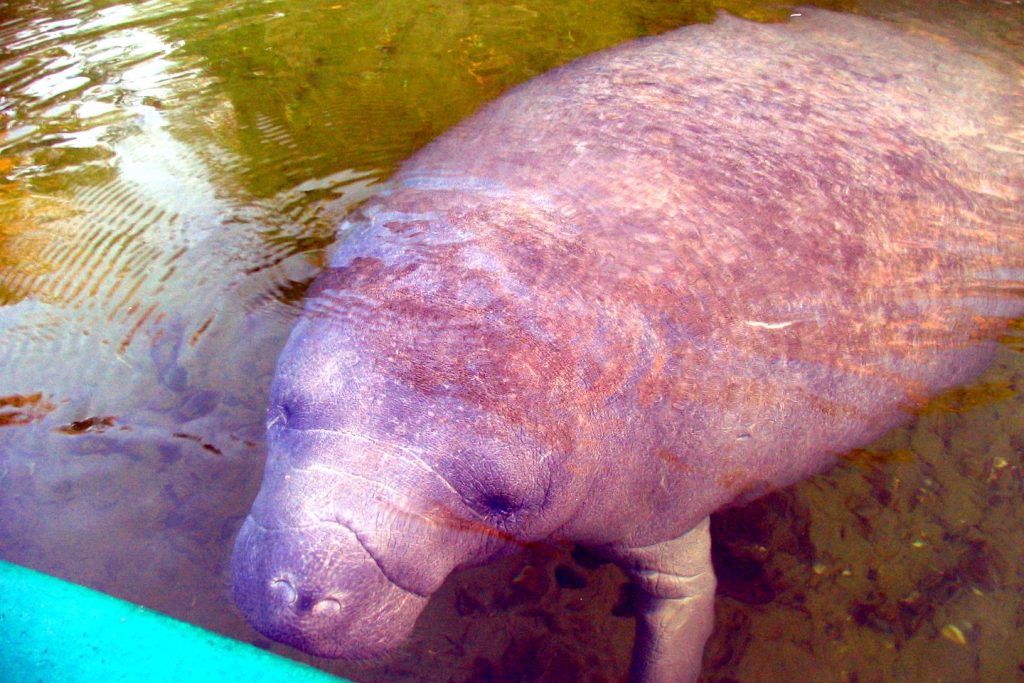
Photo: Orlando Citizen file photograph, first published with the Citizen’s Florida springs coverage.
Orlando Citizen by email
The weekly edition, in your inbox
One email, every Saturday: the week’s edition of Orlando Citizen — the week’s stories, rankings and winners, gathered in one place. Free, and you can unsubscribe at any time.
Related Stories
Editor’s Picks
Spotted an error? Tell us — corrections · How we rank