Florida Education Freedom Tax Credit FAQ: Who Qualifies, Home Education Excluded, $1,700 Credit Rules
New Florida Department of Education guidance for the federal Education Freedom Tax Credit sets K-12 and 300-percent area median income limits, excludes home-education students for now, and leaves families still waiting for an application calendar.
3 minute read
SCHOOLS · FLORIDA
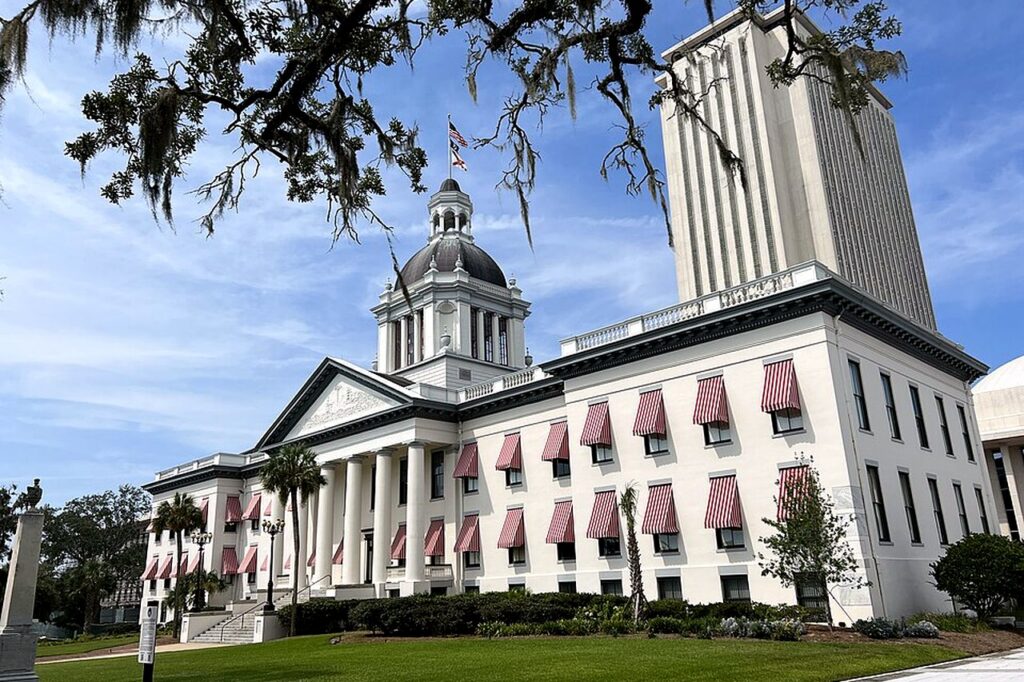
TALLAHASSEE — For a Florida family that teaches its children at home, the state’s newest scholarship arrived with an unanswered question at the center of its launch announcement: does a child who is not enrolled in a school count? The Florida Department of Education has now put its answer in writing, on an official frequently-asked-questions page for the federal Education Freedom Tax Credit — and for home-education families, at least for now, the answer is no.
Published on fldoe.org and linked from the department’s November 20 launch release, the FAQ is the first official document to spell out who qualifies and under what terms. When this desk reported the rollout on November 21, the announcement offered no eligibility rules beyond the size of the tax credits; that gap has now been filled, and this report details what changed.
Who can qualify
To qualify under the department’s rules, a student must be eligible to enroll in a public elementary or secondary school, apply to a scholarship granting organization, or SGO, and live in a household whose prior-year income is no more than 300 percent of the area’s median gross income, adjusted for family size. Any individual SGO may set a lower income ceiling of its own. Meeting those standards, however, offers no certainty: the department states plainly that eligibility is no guarantee of a scholarship, and that each SGO determines both the amount and the type of award. The program covers kindergarten through 12th grade only; pre-kindergarten students are not eligible.
The home-education answer
The exclusion of home-education families turns on a regulatory distinction. At this time, the FAQ states, federal regulations require a student to be affiliated with a school to qualify, whereas Florida places home education in its own regulatory category that does not count as a school. Florida home-education students are therefore currently ineligible, even though some of those same students receive a Family Empowerment Scholarship or a Florida Tax Credit- Personalized Education Plan scholarship. For students who are affiliated with a school, by contrast, the FAQ confirms that even those who have received an FES or FTC-PEP scholarship can use the new federal scholarship.
The donor side, in full
On the donor side, Florida has opted into a program set to begin January 1, 2027. The credit is limited to individual taxpayers — businesses, partnerships and S corporations cannot claim it — up to $1,700 per individual and $3,400 for joint filers who both contribute. It is nonrefundable, though unused credit may be carried forward for up to five years. Donors do not need to itemize to claim it, but the same contribution cannot earn both the credit and a federal charitable deduction; a contribution must also be designated as intended for the credit, a designation that is irrevocable once made. Florida’s currently approved SGOs are listed as Step Up, Step Further and AAA; an SGO must spend at least 90 percent of its funds on scholarships, keep qualified contributions in separate accounts, and serve at least 10 students who do not all attend the same school.
What the FAQ still does not say
For all the detail the page supplies, it omits a schedule. It publishes no opening date and no application window, stating only that a student must apply to an SGO. Families who need the money for the 2027-28 school year now have the rules before they have the calendar — the open question this desk will keep asking the department and the three SGOs.
More from this desk in the Schools archive, including the launch story this FAQ completes, Florida School Scholarships: New Federal Tax Credit of Up to $1,700 Starts January 1, 2027, and the Lake County board’s own leadership change, Lake County School Board: Stephanie Luke Elected Chairman, Marc Dodd Vice Chairman.
Sources & notes
Florida Department of Education, “Education Freedom Tax Credit / Frequently Asked Questions” (fldoe.org/newsroom/eftc.stml), read in full November 25, 2026 — every eligibility, exclusion and credit rule above is as that page states it, including the home-education exclusion and its stated basis in federal regulation and Florida’s home-education classification (ss. 1002.01, 1002.41, as cited there). Florida Department of Education newsroom, latest-news listing read November 25, 2026: newest release remains the November 20, 2026 Education Freedom Tax Credit launch, which links the FAQ page. The November 21 Citizen story’s statement that the release published no eligibility rules was accurate for the release; the FAQ is a later, separate document, and this story is its follow-up, not a correction of the launch figures, which are unchanged. Photo: Orlando Citizen file photograph, via the November 21 launch coverage credited there.
Orlando Citizen by email
The weekly edition, in your inbox
One email, every Saturday: the week’s edition of Orlando Citizen — the week’s stories, rankings and winners, gathered in one place. Free, and you can unsubscribe at any time.
Related Stories

Editor’s Picks
Spotted an error? Tell us — corrections · How we rank
