Who Counts as an Employee? Labor Department Rewrites the Contractor Test
Who controls the work and whether a worker can make a profit or suffer a loss will again carry the most weight in the Labor Department’s test for who counts as an employee.
4 minute read
WASHINGTON — For a truck driver who owns her rig, the question of whether she is an employee or an independent contractor can determine whether federal law guarantees her a minimum wage, overtime pay and protected family leave. The same distinction matters to a farm labor contractor who crews the groves and a delivery driver who works through an app. On Thursday, for the third time in five years, the U.S. Department of Labor rewrote the test that draws that line.
The final rule, announced November 19, revises how the department distinguishes employees from independent contractors under the Fair Labor Standards Act (FLSA). It rescinds a 2024 regulation that the department stopped applying on May 1, 2025, and puts in its place what the department calls a streamlined analysis, substantially similar to the framework it adopted in 2021. The analysis will also govern classification under the Family and Medical Leave Act (FMLA) and the Migrant and Seasonal Agricultural Worker Protection Act (MSPA), both of which borrow the FLSA’s definition of “employ.”
Two factors now carry the most weight
The rule keeps the “economic reality” test. A worker who is economically dependent on an employer for work is an employee. A worker who is in business for themselves is an independent contractor. The rule lists five factors and allows for others, but gives two “core” factors more weight than the rest. One is the nature and degree of control over the work. The other is the worker’s opportunity for profit or loss based on initiative or investment. If both point to the same classification, the department advises, there is a substantial likelihood that it is correct.
The other three factors are how much skill the work requires, how permanent the working relationship is and whether the work is part of an integrated unit of production. What the worker and the business actually do carries more weight than what a contract says they could do. The rule includes 14 fact-specific examples in the regulatory text. The department says it added new examples involving digital platform workers, farm labor contractors and truck drivers in response to public comments.
What the rule does not change
The rule leaves classification under other federal laws, including the Internal Revenue Code, unchanged and does not preempt state or local law. California and New Jersey, which the department cites for their more restrictive “ABC” tests, keep their own standards. Employers must meet whichever applicable standard offers the worker the most protection. The department’s guidance also reiterates that workers who qualify as employees under the FLSA cannot sign away rights under that law, including minimum wage and overtime pay.
In Florida, the change reaches into the groves through the law that covers migrant and seasonal agricultural workers. Farm labor contractors, a fixture of Florida agriculture, will be classified under the same two-core-factor framework as the truck drivers and platform workers in the rule’s examples. Across an economy that depends on construction crews, delivery networks and seasonal harvest labor, a worker’s classification can be the difference between a wage floor and a contract rate.
The road here, and the date that matters
The department published its proposal on February 27, 2026, and says it received more than 16,000 comments during the 60-day comment period. It says it rescinded the 2024 rule because the analysis was too unclear to produce predictable outcomes and could be read to set a higher bar for independent-contractor status than the law requires. The final rule, RIN 1235-AA46, takes effect 60 days after publication in the Federal Register. The department says employers and workers are required to take no action on that date. Until then, classification disputes will continue under the approach the department has enforced since it stopped applying the 2024 rule last year. In a dispute over whether a worker is properly classified, the department notes, the final decision rests with a court.
More of this desk’s coverage is on the National hub and in the National archive. The desk’s earlier coverage of the Labor Department’s proposed green-card recruitment rule is here, and its coverage of the IRS’s final 401(k) auto-enrollment rule is here.
Sources & notes
- U.S. Department of Labor, Wage and Hour Division — final rule page, “Employee or Independent Contractor Status Under the Fair Labor Standards Act, Family and Medical Leave Act, and Migrant and Seasonal Agricultural Worker Protection Act,” RIN 1235-AA46, announced November 19, 2026 (rescission of the 2024 rule; economic-reality analysis; core and remaining factors; 14 examples; February 27, 2026 proposal and more than 16,000 comments). Read in full by this desk on November 19, 2026.
- U.S. Department of Labor — Frequently Asked Questions for the 2026 Employee or Independent Contractor Final Rule (the department stopped applying the 2024 rule on May 1, 2025; single standard across FLSA, FMLA and MSPA under 29 U.S.C. 2611(3) and 29 U.S.C. 1802(5); no effect on the Internal Revenue Code or state ABC tests; no waiver of FLSA rights; effective 60 days after Federal Register publication, with no affirmative measures required). Read in full by this desk on November 19, 2026.
- The rule had not yet appeared in the Federal Register when this story was filed; the effective date is therefore stated as the department states it — 60 days after publication — and no calendar date is asserted.
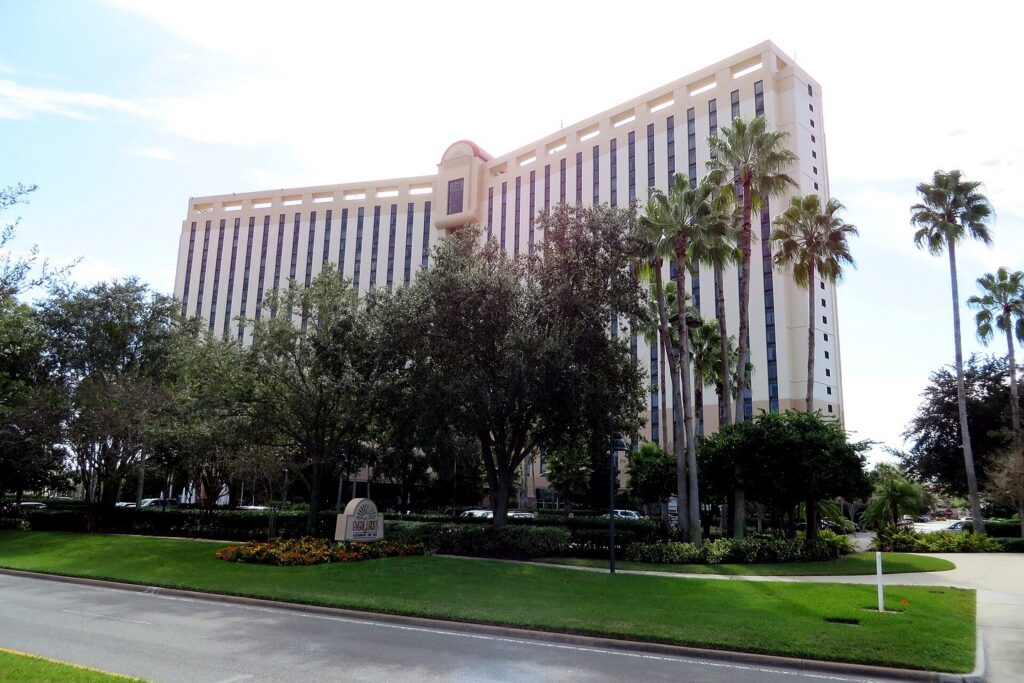
Photo: Rosen Centre, Orlando, file photograph reused from Citizen coverage. Photo: DeFrancisci, CC BY-SA 3.0, via Wikimedia Commons.
Orlando Citizen by email
The weekly edition, in your inbox
One email, every Saturday: the week’s edition of Orlando Citizen — the week’s stories, rankings and winners, gathered in one place. Free, and you can unsubscribe at any time.
Related Stories


Editor’s Picks
Spotted an error? Tell us — corrections · How we rank