Ride DTO in Downtown Orlando: Test the Returned Shuttle on Church Street, Not the Press Release
Downtown's $1 shuttle is back with bigger vehicles and later hours, and tonight's crowd on Church Street will show whether it works — which is why the CRA should publish the monthly ride counts residents need to judge it.
5 minute read
OPINION — From the Porch
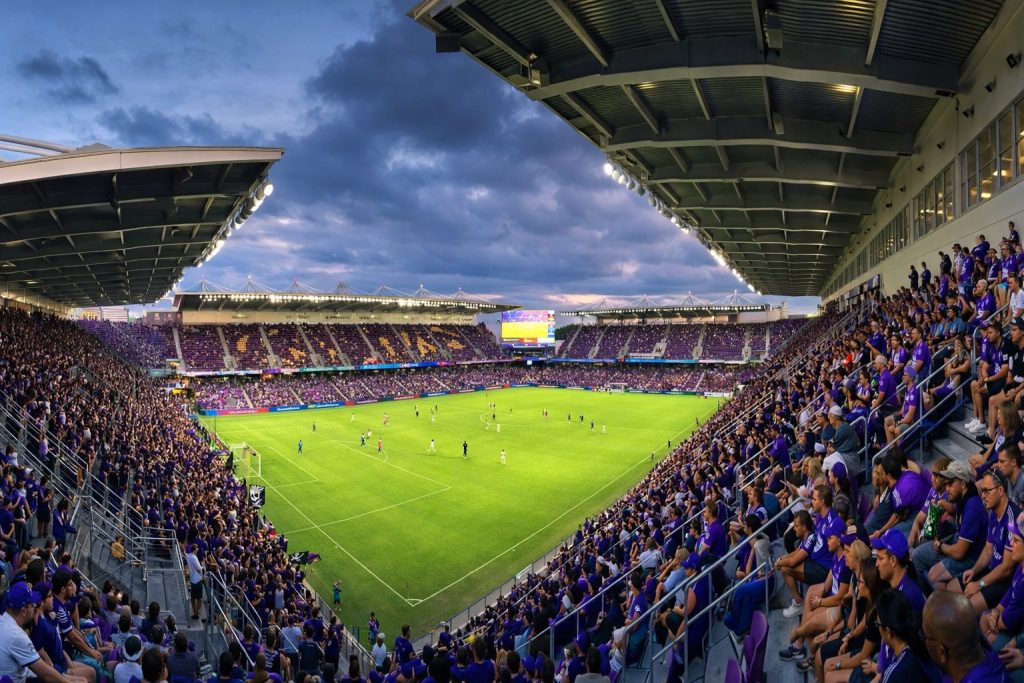
Picture a rider on Church Street tonight, in the rain, at the end of the evening, looking down the block for a ride home. Tonight, Thursday, a playoff match at Inter&Co Stadium will send several thousand people onto that street. Downtown’s $1 shuttle has been back since Wednesday after a month away. Either it gets those people home or it does not. That is the test, and you won’t find it in a press release.
This neighbourhood column has always judged a plan the same way: by the street where it lands, not by the announcement. So the street comes first.
Ride DTO made its last trip under its first operator, Circuit Transit, on Friday, October 16. For a month, downtown went without it. The Downtown Development Board pointed riders to fare-free LYMMO, which is a good bus and a different thing: a fixed route does not take you to your corner. On Wednesday, November 18, the shuttle returned under a new operator, Beep, the Lake Nona company that recently merged with Miami-based Freebee. The Community Redevelopment Agency approved its three-year contract. The vehicles are larger and fully air-conditioned, and one is ADA-accessible. Service runs seven days a week, 8 a.m. to 10 p.m., two hours later than the old 8-to-8. A ride still costs $1, and the new Ride Freebee app gives you four free rides to start.
Both things are true
Two things are true at once, and this street has taught me to keep both in view. First, the month without the shuttle proved that the service matters. Nobody announces the return of a shuttle that no one missed. This one got an announcement because the trips it carries are real: dinners, work shifts and evenings at Lake Eola Park, made by real neighbours. By February there had been 50,000 of them, roughly 99 a day. Second, an announcement of a return is not a result. “Larger vehicles” is brochure language until a larger vehicle actually pulls up for you, in the rain, at 9:40 p.m. And “one ADA-accessible shuttle” counts only if that shuttle is on the street, and a rider who needs it can find it, on the night she is waiting.
Each of my colleagues has grabbed one of those two truths. Clarence Howard is right that the public is owed a ledger. Through March the CRA had spent $556,197.25, which works out to $11.12 a ride against the rider’s $1. A three-year contract that can grow the fleet from five vehicles toward 10 should not run on trust. G. L. Dyer is right that the old 8 p.m. finish did not match the street’s own hours. The CRA admitted that the early close left diners and theater-goers with no way back. Put plainly, it failed the people who work the evenings that downtown depends on. I differ from both of them only on what comes first. Before we have the philosophical argument again, let us agree on the evidence, in public, where a resident can check it on her phone.
Print the ride counts
The ask is small and checkable, and this column makes it of every ledger in this city: print the ride counts. The CRA already gets monthly reports from the operator on ridership, peak usage and average wait times. As of March it had published none of them, and it had run no formal evaluation. Publish them now, monthly, on one page. Show rides by hour, so we can see whether anyone uses the 10 p.m. close or whether it is just for show. Show average waits, so that “on-demand” is something measured rather than a feeling. Show the nights the ADA-accessible vehicle was in service. And show the cost per ride beside the $1 fare, so that Howard’s arithmetic and Dyer’s defence can both be checked against the same page.
Give the new operator a fair year of that kind of openness. If the counts hold up, and Church Street tonight turns out to be the rule rather than the exception, the case for a bigger fleet will make itself, and I will say so from this porch. If they do not hold up, a published page is what lets the city fix the hours, the fleet or the contract before the three years run out. Otherwise we find out only when the shuttle disappears again.
A shuttle is neighbourhood infrastructure at its smallest: one dollar, one corner, one ride home. Test it on the street, print what the test shows, and then decide. Doing it in that order has never failed this city. Skipping steps has.
Read the other sides: Clarence Howard argues a $1 ride that costs $11 needs a published ledger and a gate on growth, and G. L. Dyer argues the $1 ride home is working people’s infrastructure. The Citizen’s news coverage is this morning’s report on the return, and all three columns live on the Opinion hub.
Sources & notes
Bungalower, “Ride DTO Returns Downtown With Bigger Shuttles and Later Hours,” November 18, 2026, read in full November 19, 2026 — the November 18 return; the October 16 end of Circuit Transit’s service; Beep, which recently merged with Freebee, as the new operator; the larger, fully air-conditioned vehicles including one ADA-accessible shuttle; seven days a week, 8 a.m. to 10 p.m.; the $1 fare and four free rides via the Ride Freebee app; the three-year Community Redevelopment Agency contract with Freebee; and the Lake Eola Park, restaurant, shop and workplace connections. Bungalower, “$1 Downtown Park DTO Shuttle Hits 50,000 Rides as CRA Seeks Bids for a Much Bigger Contract,” March 5, 2026, read in full November 19, 2026 — the $556,197.25 spent since the October 7, 2024 launch and the $11.12-per-ride figure, provided on the record through the City’s communications office; the original contract approved June 10, 2024 at up to $595,712.50, its hourly per-vehicle compensation and June 18, 2025 renewal through June 19, 2026; the successor solicitation’s three-year term with two optional extensions, fleet scaling from five vehicles toward 10, the ADA requirement and the CRA’s statement on the 8 p.m. conclusion; the roughly 99 rides per day; the monthly operator reports the CRA receives but had not released publicly, and the absence of a formal program evaluation; and Commissioner Patty Sheehan’s quotations, reproduced exactly. City of Orlando, “Ride DTO Reaches 50,000 Rides,” press release, February 25, 2026 — the 50,000th ride, the previous every-day 8 a.m. to 8 p.m. schedule, the first-three-rides-free offer, and the quotations from Mayor Buddy Dyer and David Barilla. Downtown Development Board, “Ride DTO Service Update,” last updated October 12, 2026 — Circuit’s final trip on Friday, October 16, 2026, and fare-free LYMMO as the interim alternative. The Citizen’s news coverage of the return, November 19, 2026, is linked in the column. The roughly $10 of public cost per ride is stated arithmetic: the reported $11.12 total cost minus the $1 fare. The new contract’s dollar value has not been published in the sources checked, and no column asserts it.
Orlando Citizen by email
The weekly edition, in your inbox
One email, every Saturday: the week’s edition of Orlando Citizen — the week’s stories, rankings and winners, gathered in one place. Free, and you can unsubscribe at any time.
Related Stories
Editor’s Picks
Spotted an error? Tell us — corrections · How we rank