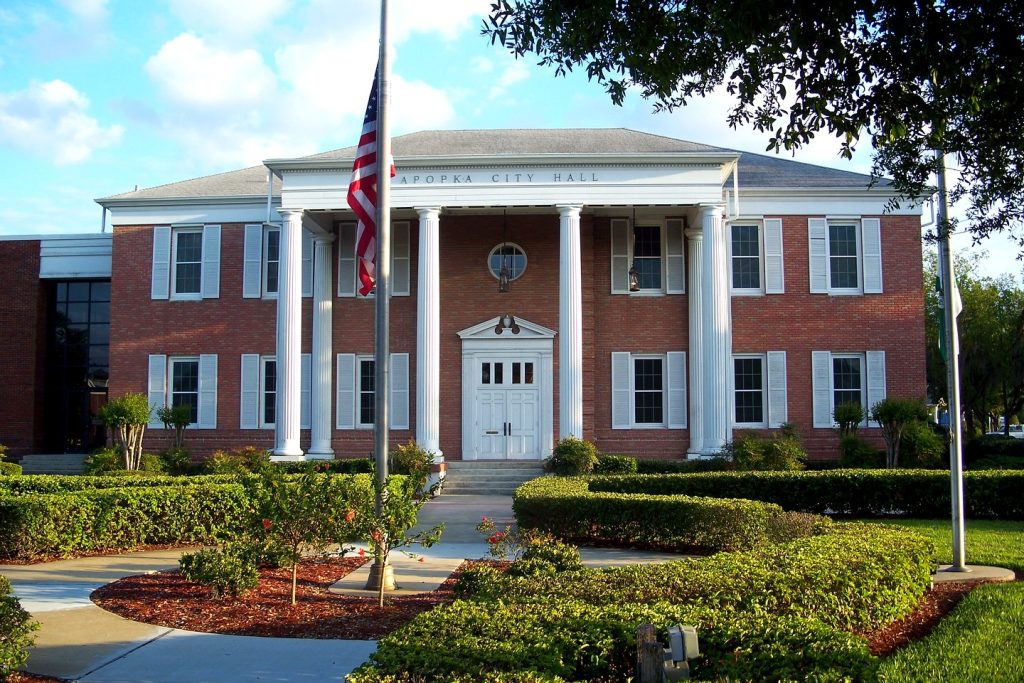
Apopka, Done Properly: Greenhouses, Springs and a Great Lake
Orange County's second-largest city still grows the world's houseplants — how to do Apopka well, from its 1859 Lodge and downtown cafés to the springs and lake at its edges.
3 minute read
Most Orlando suburbs explain themselves in subdivisions. Apopka explains itself in greenhouses. This is Orange County’s second-largest city — 54,873 people at the 2020 Census and still growing — yet the identity it prints on its own welcome signs is agricultural: the Indoor Foliage Capital of the World. That is not a slogan in search of a product. For a century the nursery rows along the US-441 corridor have grown the ferns and tropical foliage that end up in living rooms across America, and they still run alongside the new rooftops. Start with our Apopka hub for the full picture, then use this guide to do the city properly.
Begin on Main Street, where the city began
Apopka’s older core sits around Main Street, which is US-441, and it is older than the highway suggests. At Main Street and Alabama Avenue stands the Lodge, built in 1859 for Orange Lodge No. 36 and described as the oldest Masonic meeting hall in continuous use in Florida. The settlement around it was called simply “The Lodge” before Apopka incorporated in 1882, with city limits measured one mile in every direction from that building. Park near Forest Avenue and walk it: the blocks around Fifth Street hold the Museum of the Apopkans, the splash-pad lawns of Kit Land Nelson Park and the coffee-and-plants storefront of Propagate Social House — a compact, genuinely walkable downtown in a city otherwise built for cars.
The foliage is the point, not the backdrop
Commercial fern growing arrived in 1922, and Apopka briefly became “The Fern City” before diversifying into the tropical foliage that earned the bigger title. Growers organized early — the Zellwood Fern Growers Association dates to 1922 — and by 1927 local nurseries were shipping more than a million ferns. The honest visitor note is that most of this industry is wholesale: many greenhouses are not open to the public, and turning up at a production nursery expecting a shop will disappoint everyone. The public-facing version of the foliage story is the spring Apopka Art and Foliage Festival at Kit Land Nelson Park, where Central Florida growers display and sell alongside juried art, and the plant-filled cafés downtown that wear the heritage openly. Our deeper history is in the foliage capital story.
Water at every edge
What Apopka has that no amount of growth can manufacture is wild water on three sides. At its eastern edge — labeled plainly, because it sits at the edge — is Wekiwa Springs State Park, roughly 7,000 acres protecting the headwaters of the Wekiva River, with a 72-degree spring swimming area. To the north, also at the edge, Orange County’s Kelly Park wraps around the 68-degree Rock Springs and its natural tubing run. To the west lies Lake Apopka, Florida’s fourth-largest lake, whose restored north shore is now one of the state’s great birding landscapes. A resident can swim a spring before work, tube a run on Saturday and drive the wildlife levees on Sunday without leaving the city’s orbit. The Central Florida springs guide puts both springs in regional context.
How to do a day here
Do Apopka the way locals sequence it. Coffee first downtown — Canon Coffee in its converted house on West 2nd Street, or Propagate Social House on East 5th Street — then water while the day is young, because both Wekiwa Springs and Kelly Park manage entry carefully and reward early arrivals. Lunch back in town, an hour in the Museum of the Apopkans if it is a Wednesday-to-Saturday visit, and dinner at one of the destination tables that draw Orlando diners up 441: the New England seafood room at The Nauti Lobstah on South Forest Avenue, or the family-run Italian dining room at Caffe Positano on East Semoran Boulevard. Friday evenings in season belong to Market on Fifth, the night market outside Propagate. Plot the whole day on the Orlando Top Spots Map.
What Apopka is not
Apopka is not a theme-park suburb and does not try to be. Traffic on 441 is real, the city sprawls, and our magazine’s rankings have not reached the 441 corridor yet — this guide is research-led, and it says so plainly rather than inventing a league table. What the city offers instead is rarer in Central Florida: a working agricultural identity you can still see from the road, a downtown with an 1859 anchor building, and springs and a great lake at its edges. That combination is the story. Everything in this lane — the where-to-eat roundup, the wildlife drive, the festival — hangs off it.
Photo: Ebyabe, CC BY 2.5, via Wikimedia Commons.
Orlando Citizen by email
The weekly edition, in your inbox
One email, every Saturday: the week’s edition of Orlando Citizen — the week’s stories, rankings and winners, gathered in one place. Free, and you can unsubscribe at any time.
Related Stories
Editor’s Picks
Spotted an error? Tell us — corrections · How we rank