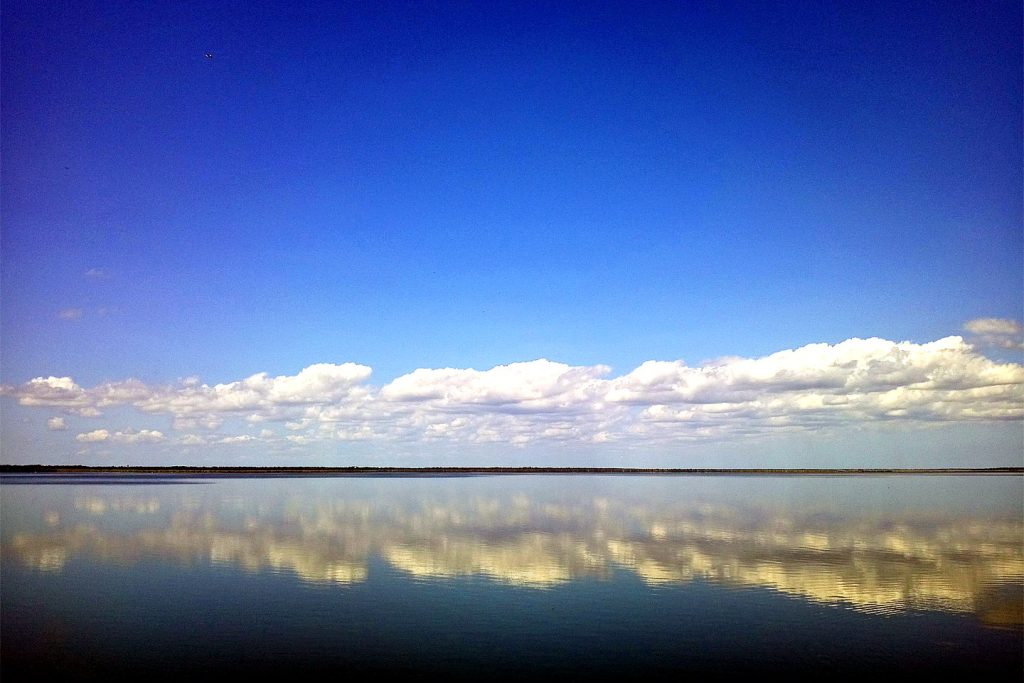
Winter Springs, Explained: The Oak-Canopied Suburb That Runs on Parks and Trails
No historic downtown, no theme-park noise — just oak canopy, a purpose-built Town Center, two great parks, a 23-mile trail and a famously gator-dense lake. How Winter Springs works, and how to do a day there.
4 minute read
Every Orlando suburb has a sales pitch. Winter Springs barely bothers with one, and that is the pitch. This is a city of older subdivisions under heavy oak canopy on the south shore of Lake Jesup, in east Seminole County, where the loudest thing on a Saturday is a ball game at Central Winds Park and the most useful infrastructure is a paved trail threading past back fences to two other trail systems. It never built a historic downtown. Instead, belatedly and quite deliberately, it built a Town Center — and then went back to being quiet. Our Winter Springs hub is where we keep the whole picture; this is how to read the place.
A city that changed its name and kept its trees
The city’s own history starts with land grants and steamboats: the shore of Lake Jesup — named in 1837 for General Thomas S. Jesup, a Seminole Wars commander — was a working waterfront when Tuskawilla landing had a wharf and a store in the years after the Civil War. The modern city was incorporated in 1959 as North Orlando, a developer’s name for a village of about 600 people, and took its current name in 1972. The city notes, with some pride, that it is now the largest city in Seminole County by land area. What filled that land was not a commercial core but neighborhoods — and, crucially, the trees stayed. Drive Tuskawilla Road or the older streets off SR 434 and the canopy does the civic branding: this reads as a settled, shaded, slightly stubborn suburb that grew up before the boom learned to hurry.
The Town Center is the downtown — use it like one
At SR 434 and Tuscawilla Road, beside City Hall, the Winter Springs Town Center does the work a main street would: an old-Florida-styled mixed-use district of restaurants, services and civic space, crossed by the Cross Seminole Trail so you can literally ride your bike into it. It is where the city gathers in December for its annual holiday parade and tree lighting, and where dinner is a genuine local decision rather than a chain corridor coin flip — an authentic Italian room, a family-run Greek kitchen and a sushi counter all sit within a short stroll. We walk the district properly in our Town Center guide, and the eating case is made in Where to Eat in Winter Springs Right Now.
Parks are not amenities here; they are the program
Most suburbs list parks in a brochure. Winter Springs runs its social life through them. Trotwood Park, 36 acres off Northern Way, is the neighborhood park perfected — a shaded playground locals call Mount Trotwood, a splash playground, courts for tennis, pickleball and basketball, a ball diamond, a fishing boardwalk and the Pam Carroll Memorial Pavilion. Central Winds Park, on SR 434 at the lake’s edge, is the city’s signature sports complex: more than a hundred acres of fields and courts with a walking track, a nature trail, a dog park and a fishing pier on Lake Jesup. One honest note for fall 2026: the city has closed Central Winds’ lower playground until further notice after a safety inspection, so families should check the city’s alerts before promising anyone a climbing day — Trotwood and Torcaso Park, the city’s other splash-playground park, are the stand-ins. Start with our Trotwood Park guide and Central Winds Park guide.
The trail and the lake frame everything
The Cross Seminole Trail is the city’s spine. Seminole County counts roughly 23 miles of it, running from the Cady Way Trail at the Winter Park line through Oviedo, Winter Springs and Longwood to the Seminole Wekiva Trail in Lake Mary, with pieces designated as the Florida National Scenic Trail and the statewide Coast-to-Coast Trail. In Winter Springs it passes the Town Center and Central Winds, crosses SR 434 on its own bridge, and offers the Black Hammock Trailhead on SR 434 for parking, restrooms and water. North of the trail sits the reason the light here feels different: Lake Jesup, Seminole County’s largest lake and part of the St. Johns River system, a shallow, wild, famously alligator-dense sheet of water that gives this suburb a frontier it never has to leave home to reach. Our trail guide and Lake Jesup guide take each in turn.
How to do a Winter Springs day
Start on the trail before the heat builds, coffee in hand. Swim nowhere — this is gator water — but fish the pier at Central Winds, let the kids run the splash pad at Trotwood, and eat lunch in the Town Center. In the afternoon, drive ten minutes to Stefano’s Trattoria on Tuskawilla Road, the Sicilian institution that has anchored local date nights for three decades, or keep it casual with gyros and baklava back at the Town Center. If it is January, the calendar bends around the Central Florida Scottish Highland Games at Central Winds; if it is a first or third Sunday, the farmers market takes over Trotwood. Plot the day on our Orlando Top Spots Map. Winter Springs will not entertain you the way the theme-park corridor does. It does something rarer: it lets you live like a local for a day, in a place built for exactly that.
Photo: Hammy365, CC BY-SA 3.0, via Wikimedia Commons.
Orlando Citizen by email
The weekly edition, in your inbox
One email, every Saturday: the week’s edition of Orlando Citizen — the week’s stories, rankings and winners, gathered in one place. Free, and you can unsubscribe at any time.
Related Stories
Editor’s Picks
Spotted an error? Tell us — corrections · How we rank