Gatorland Still Does It Best: Old Florida’s Alligator Capital, Just Up the Trail From Hunter’s Creek
Founded in 1949, still family-run, and No. 10 in our attractions rankings at 90.3: Jumparoo shows, a breeding marsh, a zip line over the gators — and 75 years of doing one thing completely.
3 minute read
Every other Orlando attraction was built to be discovered. Gatorland was built to be driven past — a roadside stop on what was then one of Florida’s most-traveled highways — and it has outlasted nearly everything that followed. Founded by Owen Godwin in 1949 as the Florida Wildlife Institute, renamed Gatorland in 1954, and still owned and run by Godwin’s family, the 110-acre park at 14501 S. Orange Blossom Trail — in Southchase, a short drive northeast of Hunter’s Creek — bills itself as the Alligator Capital of the World. In our Orlando attractions rankings it sits at No. 10 with a Net Score of 90.3 — not a Hunter’s Creek address, but the famous name nearest this hub, and a fair reflection of how completely it owns its niche.
Start with the shows
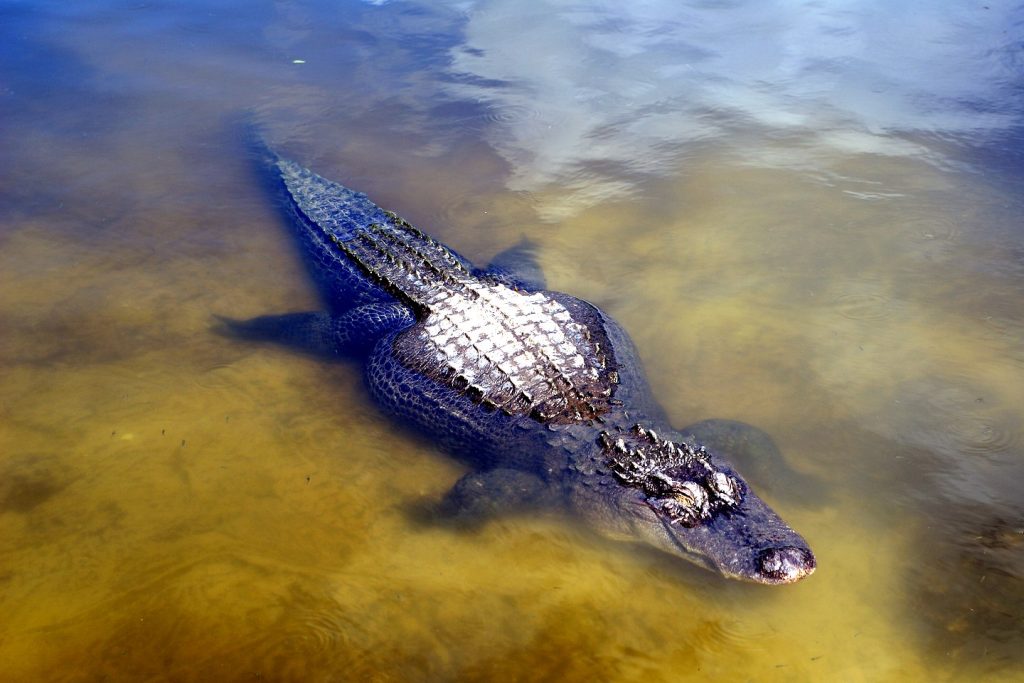
Gatorland’s grammar is the live show, and the headliner is the Gator Jumparoo, the show that made the park famous: big alligators launching themselves clear of the water to snatch chicken hung above the lake, timed to the crowd’s cheering. Alligators: Legends of the Swamp puts handlers in the water with six-to-eight-foot gators and leans into the park’s working knowledge of the animals, while Up-Close Encounters rotates the smaller, stranger residents through a presentation format. These are not animatronics with a script. They are the direct descendants of the gator wrestling that Seminole performers staged here in the park’s first years, and the unscripted edge is the point.
The marsh is the real park
Between shows, slow down. The Alligator Breeding Marsh — home to more than a hundred alligators when it opened in the park’s early-1990s expansion — is crossed by a boardwalk with an observation tower, and it doubles as a rookery: the nesting alligators keep predators away, so wading birds raise their young in the trees overhead. The Swamp Walk, a boardwalk through natural Florida wetlands that premiered in 1978, is the quietest acre in the park and the closest thing to the landscape Owen Godwin bought in 1947. Rare leucistic — white — alligators hold their own swamp, and the free-flight aviary and Allie’s Barnyard petting zoo round out the animal side. The Gatorland Express, the park’s little railroad running since the 1960s, is claimed as Central Florida’s first amusement attraction; ride it once for the history alone.
The adventure layer
The modern park layers thrills on top of the old Florida bones. The Screamin’ Gator Zip Line runs 1,200 feet across five lines from towers over seven stories tall, crossing directly over the breeding marsh — routinely voted among the best zip lines in the country in reader polls. The Stompin’ Gator Off-Road Adventure, part of a December 2017 expansion the park billed as its largest since 1949, sends three 12-foot-high custom monster vehicles — Bonecrusher, Cannibal Jake and Swamp Ghost, each named for a real resident gator or croc — on a 15-minute rumble through swamp country alongside the creeks that feed the Everglades headwaters. The newer Croc Rock three-in-one adventure adds climbing and rappelling. Younger kids get Gator Gully Splash Park, included with admission. The zip line and off-road tours are separate-ticket experiences, and the zip line takes advance reservations — book ahead rather than improvising at the gate.
How to visit from Hunter’s Creek
The park opens daily; arrive near opening if you want the marsh boardwalk quiet and the Jumparoo seats shaded. Half a day covers the shows and the marsh at a humane pace; add the zip line and you have a full day. Pair it with a morning walk in the Shingle Creek Management Area — the wild creek ten minutes west is the landscape Gatorland’s swamps imitate — and dinner back on Town Center Boulevard. Both stops, and everything else in this guide, are plotted on the Orlando Top Spots Map.
Gatorland’s trick, after 75-plus years, is that it never tried to become a theme park in the modern sense. It stayed a family business about one animal, told with total conviction. Orlando’s mega-parks do many things better. None of them does this.
Photo: An alligator in the shallows at Gatorland, Orlando. Photo: Jamie Sanford, CC BY 2.0, via Wikimedia Commons.
Orlando Citizen by email
The weekly edition, in your inbox
One email, every Saturday: the week’s edition of Orlando Citizen — the week’s stories, rankings and winners, gathered in one place. Free, and you can unsubscribe at any time.
Related Stories
Editor’s Picks
Spotted an error? Tell us — corrections · How we rank
