Leu Gardens: Fifty Acres of Quiet at Mills 50’s East Edge
A collector's estate gifted to the city in 1961, Leu Gardens holds one of America's great camellia collections, Florida-scale rose gardens and the deepest shade in the district.
3 minute read
At the east edge of Mills 50, the murals and noodle shops give way to fifty acres of quiet. Harry P. Leu Gardens, at 1920 N Forest Avenue on the shore of Lake Rowena, is Orlando’s botanical garden — a mature, oak-shaded estate that has been the city’s green counterweight for more than sixty years, and the single best reason to build a slow morning into a Mills 50 day.
A collector’s estate, given away
The story is unusually generous. Harry P. Leu, an Orlando industrial-supply magnate, bought the property with his wife Mary Jane in 1936 and spent twenty-five years transforming it, traveling the world and bringing home exotic plants — camellias above all, which became his signature collection. Mary Jane built the rose garden, begun in 1944 on the banks of the lake. Then, in 1961, the Leus deeded the entire fifty acres, gardens and historic house included, to the City of Orlando. The city has run it as a public garden ever since. The Leu House Museum at its center, a nineteenth-century home listed on the National Register of Historic Places, is temporarily closed at the time of writing — check the gardens’ site before you build a visit around it — but the grounds need no house to justify the trip.
What to walk, and when
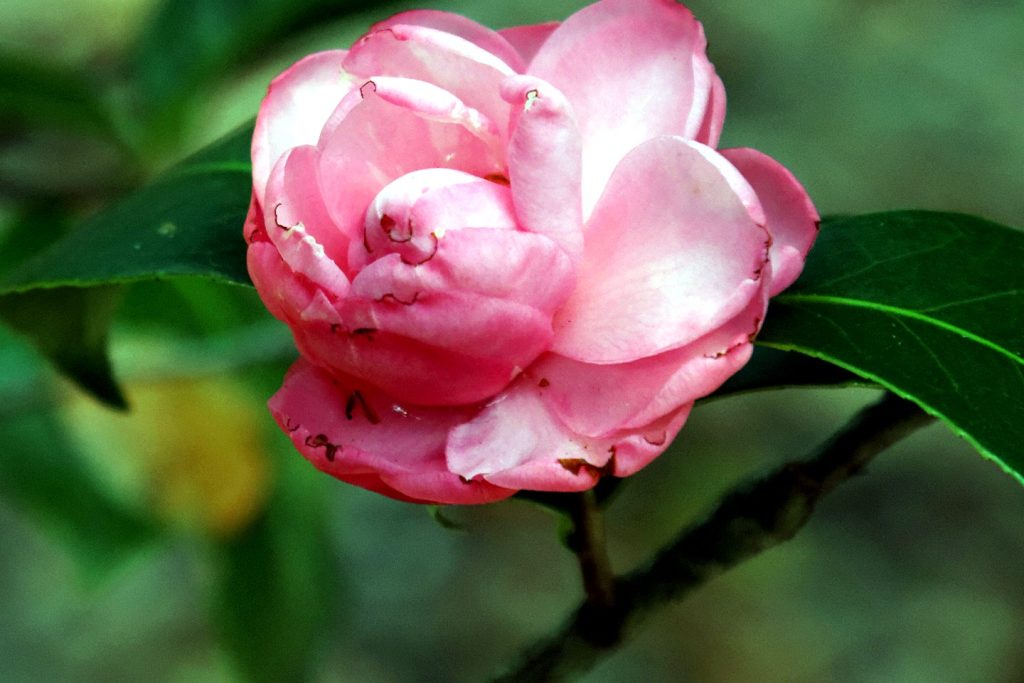
The gardens hold more than forty plant collections — palms, cycads, bamboo, azaleas, a butterfly garden, a tropical stream garden — but two define the visit. The camellia collection, among the largest in the United States with well over a thousand plants across hundreds of cultivars, blooms through the cooler months, roughly December through March: the rare Florida attraction that peaks in winter. The formal rose garden, one of the largest in Florida, runs to hundreds of roses arranged around a fountain in the formal style Mary Jane started. The rest of the year, the camphor and live-oak canopy does the work, keeping the main walks shaded enough to make even a summer stroll civilized, with Lake Rowena’s overlook at the end of it.
Leu Gardens also earns its place in this magazine’s rankings from an unexpected direction: it places No. 9 among Orlando’s best wedding and event venues (Net Score 90.8), which tells you something about the light here in the late afternoon. Whether you come for a wedding, a camellia in January, or just the deepest shade in the district, pair it with lunch on the corridor ten minutes away and you have the most complete day Mills 50 offers. Find it on the Top Spots Map, go in the cool of the morning, and let the city’s loudest food district show you its quietest room.
Beyond the two headline collections, the depth rewards wandering: bamboo and cycad groves, a butterfly garden, a vegetable garden that teaches as much as it shows, and the tropical stream garden’s ravine of heliconia and ginger. This is a collector’s garden, planted by people who brought specimens home from across the world — the variety is the point, and the labels reward anyone who slows down enough to read them.
Plan for two unhurried hours at minimum. The route that works: the camellia walks first, while the light is soft; the rose garden and the floral clock at mid-morning; the tropical stream garden as the day warms; and the Lake Rowena overlook last, where herons and turtles work the shoreline. Benches are everywhere and nobody is in a hurry — the gardens run on estate time, and visitors tend to adopt it within about ten minutes of passing the gate.
Photo: KimonBerlin, CC BY-SA 2.0, via Wikimedia Commons.
Orlando Citizen by email
The weekly edition, in your inbox
One email, every Saturday: the week’s edition of Orlando Citizen — the week’s stories, rankings and winners, gathered in one place. Free, and you can unsubscribe at any time.
Related Stories

Editor’s Picks
Spotted an error? Tell us — corrections · How we rank
