Lake Lorna Doone and Parramore’s Parks: Where the Neighborhood Plays
In 1955 Lake Lorna Doone Park hosted the first integrated Little League game in the South; rebuilt in 2021, it anchors a park system that includes Z. L. Riley Park's youth-built mosaics and Lake Dot. Parramore's green story.
3 minute read
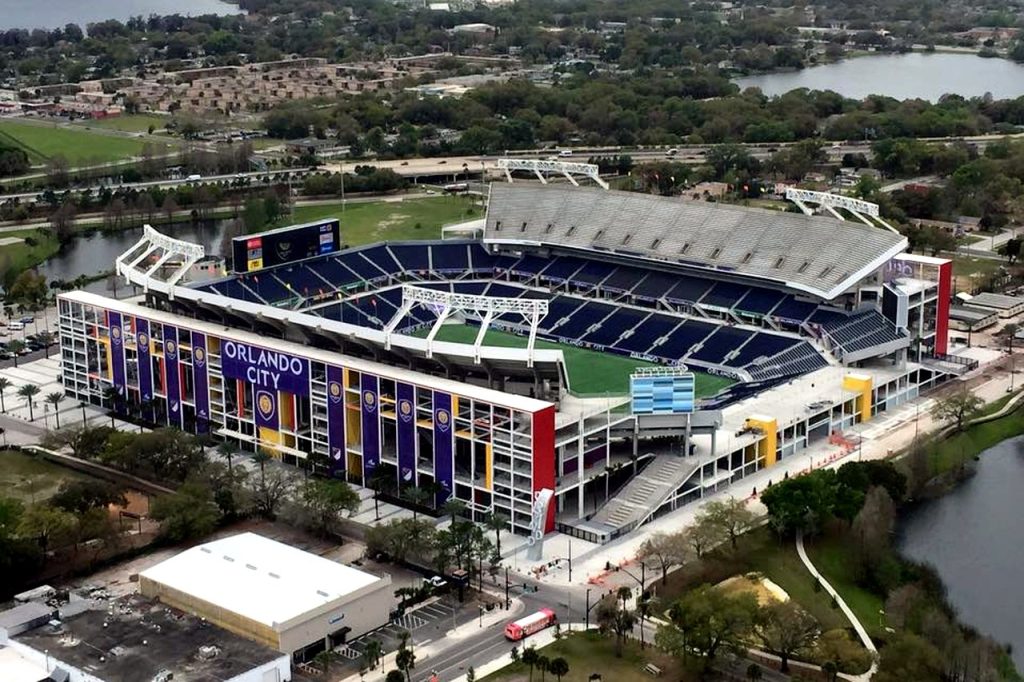
The most important sports moment in Parramore‘s history did not happen in either stadium. It happened on a ballfield at Lake Lorna Doone Park on August 9, 1955, when the park hosted the first integrated Little League baseball game ever played in the South. The stadiums are the loud neighbors. The parks are where this neighborhood’s own story — recreation, dignity, and a hard-won rebuild — is written in green. Here is how to read it.
Lake Lorna Doone Park: the jewel of the West Side
Lake Lorna Doone Park, at 1519 West Church Street, just north of Camping World Stadium at the neighborhood’s western edge, is a 12-acre park wrapped around its lake. After years of planning led with resident leaders, Florida Citrus Sports and the City of Orlando rebuilt it entirely; the park reopened in the summer of 2021 after a reconstruction reported at eight to nine million dollars, and it now calls itself, with some justice, the Jewel of the West Side. The rebuilt park runs a walking loop around the water with fitness stations, a barrier-free inclusive playground, basketball courts, a splash pad, a putting experience, a 100-yard football field, a covered performance pavilion, an interactive arts garden and a fountain centerpiece.
But stand on that field and remember 1955 first. In a segregated city, in a segregated decade, an integrated children’s baseball game at this park was national news and a genuine risk — and Parramore’s families played it anyway. The new pavilion and playground sit on ground that earned them. That layering, recreation on top of courage, is the park’s real amenity list.
Z. L. Riley Park and the tailor in the mosaics
At 619 South Parramore Avenue, Z. L. Riley Park honors Zellie L. Riley, a Parramore tailor whose shop, Made to Measure, stood at 571 West Church Street — a founding member, and later president and secretary, of the Orlando Negro Chamber of Commerce. Riley was murdered in his home in 1974; the city first honored him with a park in 1977, on South Parramore Avenue under the State Road 408 overpass, and in 2010 the park was expanded and moved a few yards south. Its character is art: mosaics built by Parramore Kidz Zone youth run through it, reflecting Riley’s contributions and African themes, with his portrait at the entrance. A tailor, a chamber of commerce, a park built by the neighborhood’s own kids — that is a Parramore biography in one small green space.
Lake Dot, Heritage Park and the green everyday
Round out the circuit with the quieter greens. Lake Dot, the small, almost round 5.4-acre lake that names the northern neighborhood, anchors Lake Dot Park on West Concord Street. Parramore Heritage Park, at 726 West Central Boulevard, and the Parramore Community Garden on West Robinson Street carry the neighborhood-scale end of the system: shade, gatherings, food grown where people live. None of these will trend. All of them are the point.
Walk the parks as the counterweight to game day: our game-day guide covers the stadiums, our Parramore guide covers the whole neighborhood, and every park here is pinned on the Orlando Top Spots Map. Go in the morning, when the loop around Lake Lorna Doone belongs to the run clubs and the dog walkers, and the West Side is simply itself.
A practical word: Lake Lorna Doone Park sits directly in the stadium district’s weather system, so on Camping World Stadium event days the surrounding streets run on event rules — closures, event parking, crowds — while on ordinary days the park is on neighborhood time, and the difference is the whole experience. The community garden and the smaller parks keep neighborhood hours in the other sense: they are working local infrastructure, tended by the people who live beside them, and a visitor’s job there is simply to be a good guest — take the walk, enjoy the shade, leave the place as found. Parramore’s greens are not amenities added to the neighborhood. They are the neighborhood, outdoors.
Photo: Poomfang, CC BY-SA 4.0, via Wikimedia Commons.
Orlando Citizen by email
The weekly edition, in your inbox
One email, every Saturday: the week’s edition of Orlando Citizen — the week’s stories, rankings and winners, gathered in one place. Free, and you can unsubscribe at any time.
Related Stories
Editor’s Picks
Spotted an error? Tell us — corrections · How we rank
