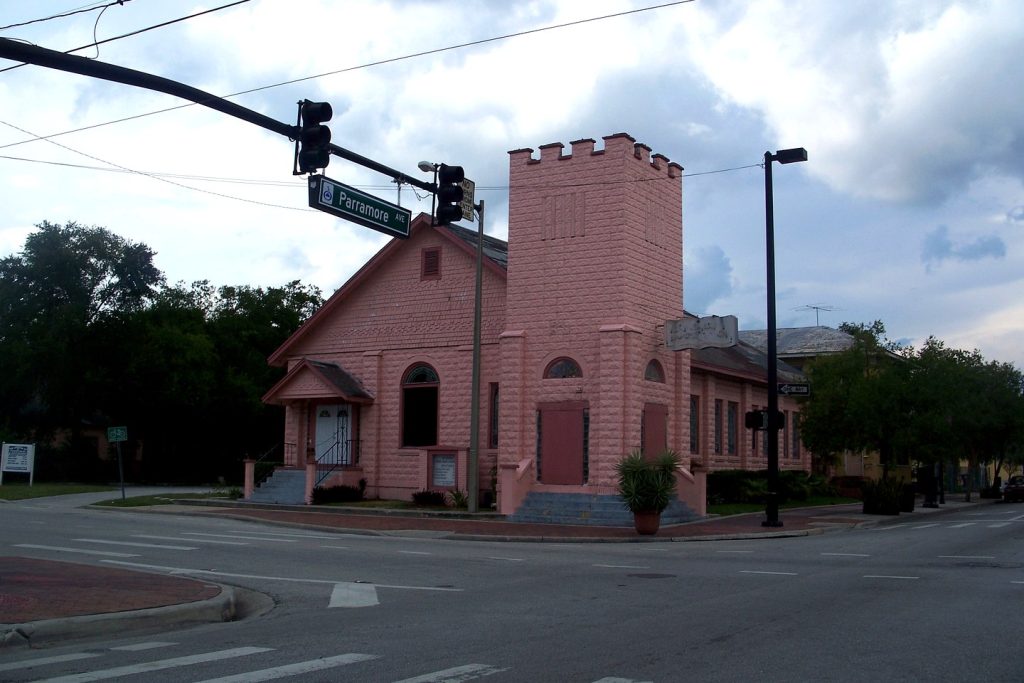
Mt. Zion and FAMU Law: The Institutions That Built Parramore
A church organized in 1880 — Orlando's oldest Black congregation — and a law school the state closed in the 1960s and had to restore in Orlando in 2002. Parramore's pillars, read together.
3 minute read
Stadiums get the headlines in Parramore, but institutions built this neighborhood — and the two that frame its story best are a church organized in 1880 and a law school the state closed, then had to bring back. Between Mt. Zion and FAMU Law, you can read the whole Parramore argument: a community that built its own pillars when the city would not, and kept them standing until the city needed them too.
Mt. Zion: Orlando’s oldest Black church
Mt. Zion Missionary Baptist Church was organized in April 1880 by the Reverend C. J. Scott, on land donated by the family of James B. Parramore — the mayor for whom the neighborhood is named. The Callahan Neighborhood Association’s church history calls it what it is: the oldest African American church in the City of Orlando. In 1952 the church was incorporated and renamed Mt. Zion Missionary Baptist Institutional Church — the word Institutional doing real work, marking what the association describes as a first among the city’s Black churches: a congregation that built community and political activism into its vision and mission, particularly under the more than twenty years of leadership of the Reverend Nathaniel G. Staggers.
In 1962, Mt. Zion realized its long-held ambition and built its current edifice at Washington and Chatham streets in Callahan, at 535 West Washington Street. In 2007 the City of Orlando designated it a historic site. Think about what that building has witnessed from its corner: the whole arc of Parramore, from a nineteenth-century congregation organizing under a new pastor, through Jim Crow, the civil rights years, disinvestment and the stadium era — with the doors open the entire time. Churches like Mt. Zion were never only houses of worship here. They were meeting halls, organizing centers, mutual-aid societies and the neighborhood’s longest-running institutions, full stop.
FAMU Law: the school the state had to restore
A few blocks east, at 201 Beggs Avenue, stands the other pillar: Florida A&M University College of Law. Its history is a Parramore-shaped story told at state scale. FAMU’s law division was founded in Tallahassee in 1949, in the separate-but-equal era, and graduated 57 students before the Florida Legislature voted to close it in 1965 — its funds redirected to a new law school at Florida State — with the last class graduating in 1968. The 2000 Legislature, unanimously, voted to restore it, this time in Orlando; the first class was admitted in fall 2002, the permanent building opened in January 2006, designed by Rhodes + Brito Architects, whose partners are FAMU alumni, and full American Bar Association accreditation followed in July 2009. It is the only public law school in Central Florida, planted deliberately in the city’s historic Black neighborhood, a short walk from the federal courthouse.
Why these two, together
A church that incorporated activism into its charter and a law school re-founded on a promise the state had broken: that is Parramore’s institutional character in one walk. Add the Callahan Neighborhood Center and the Wells’Built Museum, pin them all on our Orlando Top Spots Map, and you have the circuit our Parramore guide recommends — institutions first, because in this neighborhood the institutions are the story, and the story is still being written by the people inside them.
Mt. Zion is the senior partner in a wider churchscape — the Callahan Neighborhood Association’s own survey of Parramore’s past and present congregations runs long, a reminder that on these streets the church was the original community institution, predating the stadiums by more than a century and likely to outlast the current naming rights. Visitors are welcome to appreciate these buildings from the street and to attend services as guests where congregations invite it; the respectful rule is the neighborhood rule — you are looking at living institutions, not exhibits, and the families inside them have been holding this ground since before Orlando had a downtown worth the name.
Photo: Ebyabe, CC BY-SA 2.5, via Wikimedia Commons.
Orlando Citizen by email
The weekly edition, in your inbox
One email, every Saturday: the week’s edition of Orlando Citizen — the week’s stories, rankings and winners, gathered in one place. Free, and you can unsubscribe at any time.
Related Stories

Editor’s Picks
Spotted an error? Tell us — corrections · How we rank