Seven Buildings, One Young City: The Clermont Historic Village
The Townsend House, an 1895 home moved by a town that refused to lose it; a 1925 depot that never moved; a WWII Quonset hut. Clermont's open-air museum is the fastest-growing city's memory, kept by volunteers.
3 minute read
Clermont is one of the youngest-feeling cities in Central Florida — Lake County’s largest, and among its fastest-growing. So the Clermont Historic Village lands as a gentle shock: seven old buildings gathered on the Lake Minneola waterfront at West Avenue and Osceola Street, holding the town’s first century in furnished rooms. The village is a cooperative effort of the South Lake County Historical Society and the City of Clermont, and it is the best hour a history-minded visitor can spend in town. The rest of the modern city is mapped on our Clermont hub.
The buildings, and why each one matters
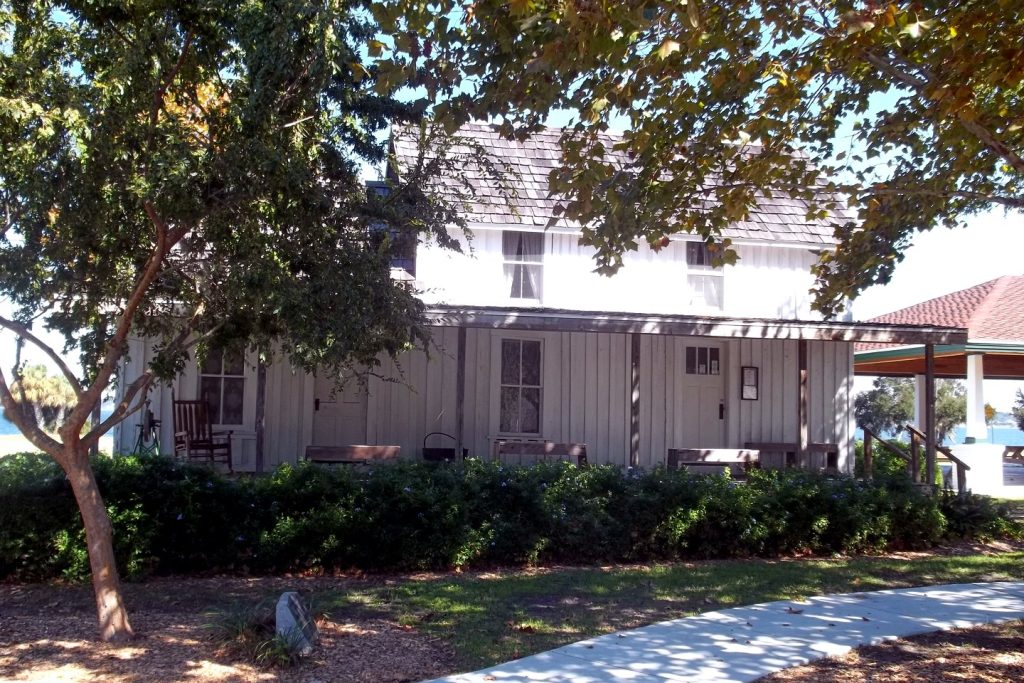
The anchor is the Townsend House, built around 1895 and moved to the site in 2002 from its original location off what is now Highway 50. It was the home of James and Sallie Townsend, the first African-American couple to make their home in Clermont, and it has been open to the public since 2005 — the village’s most important room, and the one docents rightly linger on. The second house, the Kern House, was built around 1895 on Montrose Street and moved here in 2008. Around them: the Cooper Memorial Library, the Herring Hooks Schoolhouse — a replica of the original 1881 one-room school, dedicated in 2013 — and the small outhouse that completes the period picture whether visitors expect it or not.
The depot and the Quonset hut
Two buildings never moved, because they were already home. Clermont’s train depot, built around 1925, stands on its original site; the city has renovated it with restrooms, a covered picnic area and a meeting room seating 30 to 40. Beside the domestic buildings sits the village’s outlier: an original World War II Quonset hut, renovated in 2012 to house a WWII museum — a reminder that Clermont’s quiet citrus decades overlapped a very loud century. Each building is furnished with restored or replica pieces typical of its original life, which keeps the village in the register of a place people lived rather than a set of labeled artifacts.
The rescue story behind it
The village exists because the city and its historians moved faster than the bulldozers. The city purchased the Historic Village property — depot and Quonset hut included — in 1996; the Historical Society formed in 1998 to operate it, and the houses arrived one rescue at a time over the following decade. In a county where growth routinely erases the evidence, that sequence is the exhibit: Clermont chose to keep its receipts. The Historical Society’s mission — to preserve, maintain and share the history of South Lake County’s pioneering families — is carried out by volunteers who staff the weekend openings and lead tours.
Visiting well
One more detail rewards attention: the village keeps growing by rescue. The Herring Hooks Schoolhouse arrived as recently as 2013, and each addition has come the same way — a building with a Clermont past, a move the community paid for, and a restoration done to period standard. In a region where “historic” often means a plaque on a new building, a museum assembled from actual saved structures carries a different weight, and the docents know it.
The village opens on weekend afternoons — Saturday and Sunday, 1 to 4 p.m. — and admission is free, with donations appreciated; school and group tours can be arranged through the village manager. Pair it with the waterfront: the village sits steps from Waterfront Park’s beach and trail, so the natural Clermont afternoon runs history first, then the lake, then dinner downtown from our dining rundown. Go while the docents are in the Townsend House. The buildings are the archive, but the volunteers are the index — and in a city changing this fast, an afternoon spent on who Clermont was is the surest way to understand what it is becoming. Find the village among the region’s stops on the Orlando Top Spots Map.
Photo: Ebyabe, CC BY-SA 3.0, via Wikimedia Commons.
Orlando Citizen by email
The weekly edition, in your inbox
One email, every Saturday: the week’s edition of Orlando Citizen — the week’s stories, rankings and winners, gathered in one place. Free, and you can unsubscribe at any time.
Related Stories
Editor’s Picks
Spotted an error? Tell us — corrections · How we rank
